The Cherubinic Wanderer
Angelus Silesius
The Cherubinic Wanderer
Preface
O reader yearning for God! Some years ago, I sent you The Seraphic Lover in my Enamored Psyche, followed later by an expanded edition titled Holy Desires of Love, which sought to enkindle your heart in the holy love of God. More recently, I published The Sensitive Contemplation of the Four Last Things, which can fervently inspire you to love God. Now I present you with my Cherubinic Pilgrim, or Spiritual Rhymes and Maxims, augmented with a companion, to guide and lift the eyes of your soul to the contemplation of God. You can consider yourself fortunate if you allow yourself to be captivated by both and, while still bodily life, either burn with heavenly love like a seraph or keep your gaze fixed on God like a cherub. This would mean that, even in this mortal state and to the extent it is possible, you would already begin your eternal life and confirm your vocation or choice. The verses you are about to read contain many rare paradoxes and thoughts that go against common sense, as well as some maxims, little known, about the mystery of divinity. They also conceal certain assertions about union with God, the essence of God, and even about equality with God, deification or divinization, and many other things of that nature. Due to the brevity of the exposition, all this could give rise to a condemnable interpretation or a malicious intention. For this reason, it is necessary that I provide you with some preliminary warnings.
It must be stated, once and for all, that the author’s opinion is by no means that the human soul should or could lose its nature as a creature and, through transformation, become God or His uncreated essence—that is impossible for all eternity. For, although God is omnipotent, He cannot (and if He could, He would no longer be God) make a creature to be, naturally and essentially, God. In this regard, Tauler, in the Spiritual Institutions (Chapter IX), states: “For since He could not make us natural gods—for this belongs to Him alone—He made us gods by grace, so that we might share with Him the same blessedness, joy, and kingdom.” Tauler means that the chosen and holy soul reaches such an intimate union with God and His divine essence that it becomes entirely penetrated by, transformed into, and united with it. If it were possible to see the soul, one would see and recognize nothing in it but God. And this is what will happen in eternal life, inasmuch as the soul will, so to speak, be wholly assimilated by the splendor of divine glory. Indeed, the soul can become such a perfect image of God that, by grace, it becomes what God is by nature. In this sense, it may rightly be said to become light in the Light, a word in the Word, and a god in God (as we say in the maxims). Furthermore, as an ancient teacher states, God the Father has only one Son, and this Son we all are in Christ. Therefore, if we are children in Christ, we must also be what Christ is and possess the same essence as the Son of God. “Because we have the same essence,” says Tauler in the fourth sermon of the Nativity, “we can become like Him and can see Him as the true God that He is.” All the saints who contemplate God agree with this assertion, particularly the aforementioned Tauler, who, in the third sermon for the third Sunday after Trinity, says: “The soul (through the restoration of its image) becomes like God and divine; indeed, it becomes by grace all that God is by nature. In this union and immersion in God, the soul is raised above itself in God and becomes so similar to God that, if it were to see itself, it would mistake itself for God. And anyone who saw it would not see it in its natural form but in that essence, that form, and that divine manner that have been communicated to it by grace; and this vision would fill them with happiness. In this union, God and the soul are one and the same; obviously, not by nature, but by grace.” And a little later, he adds: “From all eternity, the divine and pure soul, freed from the love of creatures as God Himself is, has been regarded by others and regards itself as divine and from itself.”
Ruusbroec, in the third book of The Adornment of the Spiritual Marriage, Chapter I, states: “In the essential unity of God, all interior spirits achieve union with Him and flow toward Him through love. What exists in God by unity of essence occurs in them according to the measure of their blessedness.” And in the same passage, he says: “For to comprehend and understand God beyond all form, as He is in Himself, is to be God with God without mediation or (so to speak) without sensible otherness.” Furthermore, in the same book, Chapter II, he writes: “If the human spirit, through the love of fruition, has lost itself, it receives the clarity of God without mediation. It becomes (to the extent that this is possible for a creature) the very clarity it receives.”
Saint Bernard speaks in a similar manner in On the Life of Solitude, where he says: “We shall be what He is. For to those who have been granted the power to be children of God, the power has also been given not to be God, but to be what God is.” And further on, he adds: “The unity of the spirit is called likeness with God, not only because the Holy Spirit directs its works or because it clothes the human spirit, but because it itself is the Holy Spirit, God as Love. Moreover, through the Holy Spirit, who is the love of the Father and the Son, unity and delight, goodness, and kiss and embrace—and everything that may be common to both—a relationship is produced in this supreme union of truth and truth of union. For man, in a human manner, it is the very same relationship with God as that which, in their substantial unity, the Son has with the Father or the Father with the Son when, in the kiss and embrace of the Father and the Son, there is born within them, in some sense, the awareness of their happiness. That same thing occurs when, in an inexpressible and inconceivable way, the man of God deserves to become, not God, but what God is by nature and man by grace.” This is what Bernard says. You ask: how can all of this happen, if the divine essence is incommunicable? I will respond to this first with Saint Bonaventure: “If you wish to know, ask grace, not doctrine; desire, not intellect; the sigh of prayer, not diligent reading; the bridegroom, not the teacher; God, not man; the twilight, not the clarity; not the light, but the fire that inflames everything and leads to God with burning desire, a fire that is God Himself.”
Secondly, it is true that the divine essence is incommunicable because it cannot mix with anything else to form a single nature or essence. However, in a certain sense, it could be called communicable due to the intimate and close union it has with holy souls. Saint Peter says that we must partake in the divine nature, and Saint John states that we are children of God because we are born of God. Now, “these souls could not be called children of God and partakers in the divine nature” (says Thomas de Iesus in De oratione divina, book IV, chapter IV), “if this nature were not within us, but rather separated and distant from us.” “For just as a man cannot be wise without wisdom” (as Tauler says in the fourth sermon of the Nativity), “neither can a man be a child of God without divine filiation—that is, without possessing the true essence of the Son of God Himself. Therefore, if you want to be a son or daughter of God, you must also possess the essence that the Son of God has; otherwise, you cannot be a child of God.” However, such great glory is inaccessible to us in the present time. This is why Saint John, in the cited passage, writes further: “Beloved, we are truly children of God, but it has not yet been revealed what we shall be. Yet we know that when it is revealed, we shall be like Him, that is, we shall also possess the same essence that He possesses, etc.” Regarding this, Nicholas de Iesus (Elucidatio theologica in Joh. a cruce, book II, chapter XVI) states: “The soul, through the effects of the love with which it loves God, attains that God not only communicates His gifts to it but that, in a personal way, the divine substance and essence are substantially present to the soul.” This is confirmed by the words of Saint Augustine in Sermon 185 De tempore: “The Holy Spirit descended on this day to prepare the hearts of the apostles as a rain of sanctification, not as a hurried visitor, but as an eternal comforter and a perpetual companion.” “For, just as He said of Himself to His apostles, ‘I will be with you all the days until the end of the world,’ He also said of the Holy Spirit, ‘The Father will give you the Comforter, who will remain with you forever.’ Therefore, on this day, He was with His faithful not only through the grace of justification but also through the presence of His majesty. And into these vessels was poured not only the perfume of the balm but also the very substance of the holy anointing.”
To understand all of this and explain it adequately and without error, I have always relied on images such as the union of the sun with the air, the fire with the iron, the wine with the water, and others like these, which the Holy Fathers use to describe, in some way, the high union of God with the soul. Among them, Saint Bernard, in the book On Loving God, says: "Just as a drop of water poured into a great quantity of wine seems to have disappeared and to take on the taste and strength of the wine; just as iron, glowing and sparkling, becomes entirely like fire, losing its primitive and proper form; just as air, penetrated by sunlight, is transformed into the clarity of the light itself, so that it seems less illuminated than to be the light itself—so too it is necessary that, in the saints, every human desire, ineffably, melts and is completely transformed into the will of God. For how could God be all in all if there remained anything of man in man?" And in chapter XXV of the Book of Love, after presenting these analogies, he writes: "The spirit of man, when it is clothed with divine love, is wholly love. Therefore, the one who loves God is dead to himself, and while living only for God, he becomes (so to speak) coessential and consubstantial with the beloved (consubstantia se dilecto). For just as the soul of David was united to that of Jonathan, or as the one who unites with God becomes one spirit with Him, so too, if the union is judged correctly, all desire penetrates into God according to a certain coessentiality, with a mode of union not unlike this, etc." Similar ideas are found in Ruusbroec, Herp, Tauler, and others, particularly in Ludovico Blosius, who in chapter XII of his Spiritual Instructions writes these beautiful words: "In mystical union, the loving soul flows and flees from itself and plunges, as if annihilated, into the abyss of eternal love, where it has died to itself and lives only for God, knowing or feeling nothing other than the love in which it delights. For it loses itself in the vast wilderness and darkness of divinity. But to lose oneself in this way is better than to find oneself. Certainly, the dispossession of what is human and the clothing of what is divine is equivalent to a transformation into God, just as iron in the fire takes on the appearance of fire and is transformed into fire. However, the essence of the soul thus deified remains the same, just as incandescent iron does not cease to be iron. Therefore, the soul that was once cold is now ardent; what was once dark is now radiant; what was once hard is now pliable: it is wholly of the color of God because its essence has been penetrated by the essence of God and consumed by the fire of divine love, such that it has melted and united with God, becoming one spirit with Him, in the same way that gold and ore melt together into a single metallic mass."
With these words and similar expressions, the holy contemplators of God have sought to express, to some extent, the intimate union of God with the sanctified soul. However, they caution that no words can fully describe the profound reality of this union.
Therefore, if the kind reader encounters here and there some analogous ideas in these verses, may they judge and understand them in this sense.
Although I believe I have sufficiently explained this point, I must still cite a beautiful text by Dionysius the Carthusian, taken from his In Exod., art. 42: "Then the soul unfolds entirely in the infinite light, and, lovingly and intimately united to the supra-essential divinity and the Most Holy Trinity, feels nothing at all and perceives not even its own action. Rather, it is enraptured in the very riches of glory, consumed in the fire of uncreated and immeasurable love, submerged and engulfed in the abyss of divinity, to such an extent that it seems, at least to some degree, to have been stripped of its created being and clothed with the uncreated and archetypal essence (esse ideale). It is not that its substantiality has been transformed or its own essence removed, but simply that the attributes of its being and its mode or quality of life have been deified. This means that, by grace, the soul becomes equal to God and His supremely holy beatitude. Thus, the Apostle's words are marvelously fulfilled: ‘He who is joined to the Lord becomes one spirit with Him,’ etc. (1 Corinthians 6:17)."
When, therefore, a person has reached such equality with God and has become one spirit with God, and furthermore, in Christ, has attained full filiation, then they are as great, as rich, as wise, and as powerful as God. At that point, God does nothing without such a person, for they are one with Him. God reveals to them all His glory and riches, and there is nothing in God's house—which is God Himself—that is kept hidden from them. As He says to Moses: "I want to show you all my goodness." For this reason, the author does not exaggerate when, in number 14, speaking of such a person, he states: "I am as rich as God," for whoever possesses God possesses, along with God, everything that God has. Likewise, what is said in numbers 8, 95, 96, and many others must be understood in the context of this union. It should be noted that the first two numbers refer to the person of Christ, who is truly God and, through His incomparable works of love, has made us understand that God, so to speak, would not be happy if we were to be lost.
For this reason, He not only desired to come into this misery and become man but also to die the most ignominious death, so that He might lead us to Himself and eternally rejoice with us in His delights. As He also says: “My joy is with the children of men.” Oh, admirable and inexpressible nobility of souls! Oh, indescribable dignity that we can attain through Christ! Who am I, my King and my God? What worth does my soul possess, oh infinite Majesty, that You should humble Yourself to me and lift me up to You, that You should seek joy with me, You who are the delight of all spirits, that You should wish to unite with me and I with You, You who, eternally, are sufficient unto Yourself! Yes, what is my soul that it should be as close to You as a wife to her husband, as a beloved to her lover? Oh my God, if I did not believe in Your truthfulness, I could not believe that such communion could exist between You and me, You, the incomparable Majesty. But since You have said that You wished to unite Yourself with me for all eternity, I can only marvel at this suprarational grace, of which, with humility of heart and spiritual rigor, I will never feel worthy. Only You, oh God, are the One who works incomparable miracles, for You alone are God. To You be praise, honor, thanksgiving, and glory for all eternity.
In relation to the sayings and propositions that are not commonly used in everyday life, I hope that the kind reader, if they know anything about the masters of mystical wisdom, will not only not be disturbed by them but will even find them attractive and pleasant, since, briefly, they will encounter here what they had already read more extensively in those authors, and even what, with the grace of God, they had truly tasted and experienced. But if the reader does not yet have experience in these matters, then I consider myself to have introduced them to these topics in a friendly manner, especially to Ruusbroec, Tauler, Herp, the author of Theologia Deutsch, and others. Furthermore, I recommend Maximilian Sandaeus of the Society of Jesus, who, with his Theologia Mystica and Clavis, has gained exceptional merit among lovers of this divine art.
The interested reader will find all the doctrine, expressed in the most comforting language, with great and extraordinary passion and ardent desire of the heart, in the recently published Vita of the venerable virgin Marina of Escobar, who, solely by the grace and gift of God, has been deemed worthy of knowing all that these experts of God's mystical art have written and recorded.
Because offering, one by one, a thorough and clear explanation of the words would require extensive explanations that would greatly tire the reader. Currently, due to the lack of moderation in the writing of books, more is written than read. These verses, in the way they have been granted to the author to weave together in a very short time (the first book, for example, was written in four days), have been written without premeditation or laborious reflections, drawing from the source of all good; these verses should remain as they are, encouraging the reader to seek God hidden within themselves, to contemplate His face with their own eyes. However, where the meaning has seemed too doubtful or obscure, we have added a brief explanation. But let the reader continue meditating and live with sincere love in the contemplation of divine miracles, for the greater glory of God, to whom I commend myself.
Written in Silesia, on the 7th day of the month of August in the year 1674.
Tr. Maria Shrady
Angelus Silesius
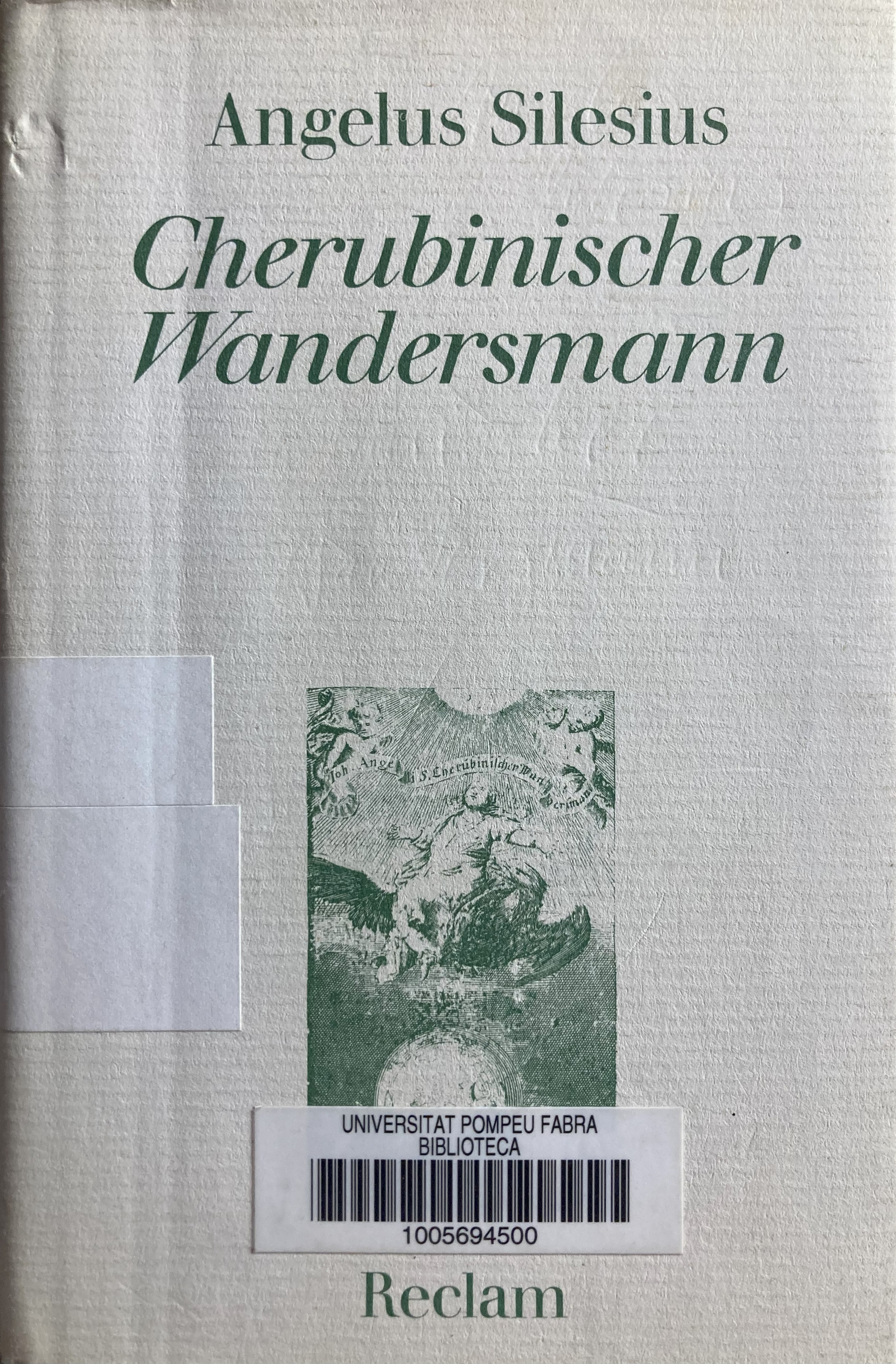
Der Cherubinischer Wandersmann (ed. Louise GNÄDINGER), Stuttgart: Reclam, 1984.
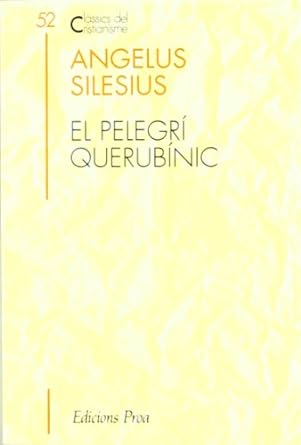
El pelegrí querubínic (ed. tr. Lluís DUCH), Barcelona: Proa, 1995.
El peregrino querúbico (ed. tr. Lluís DUCH), Madrid: Siruela, 2005.
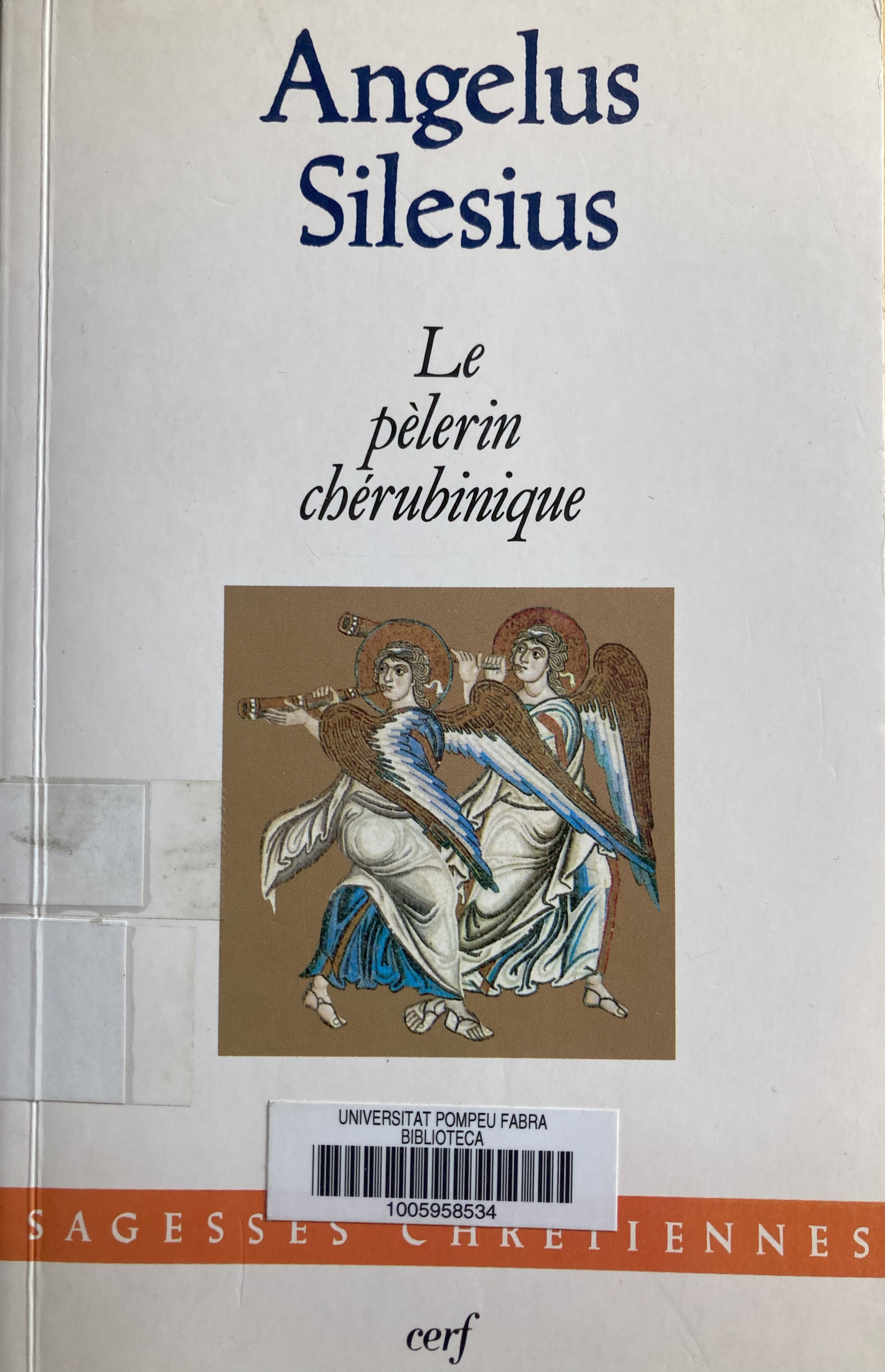
The Cherubinic Wanderer (tr. Maria SHRADY), New York / Mahwah: Paulist Press, 1986.