Content
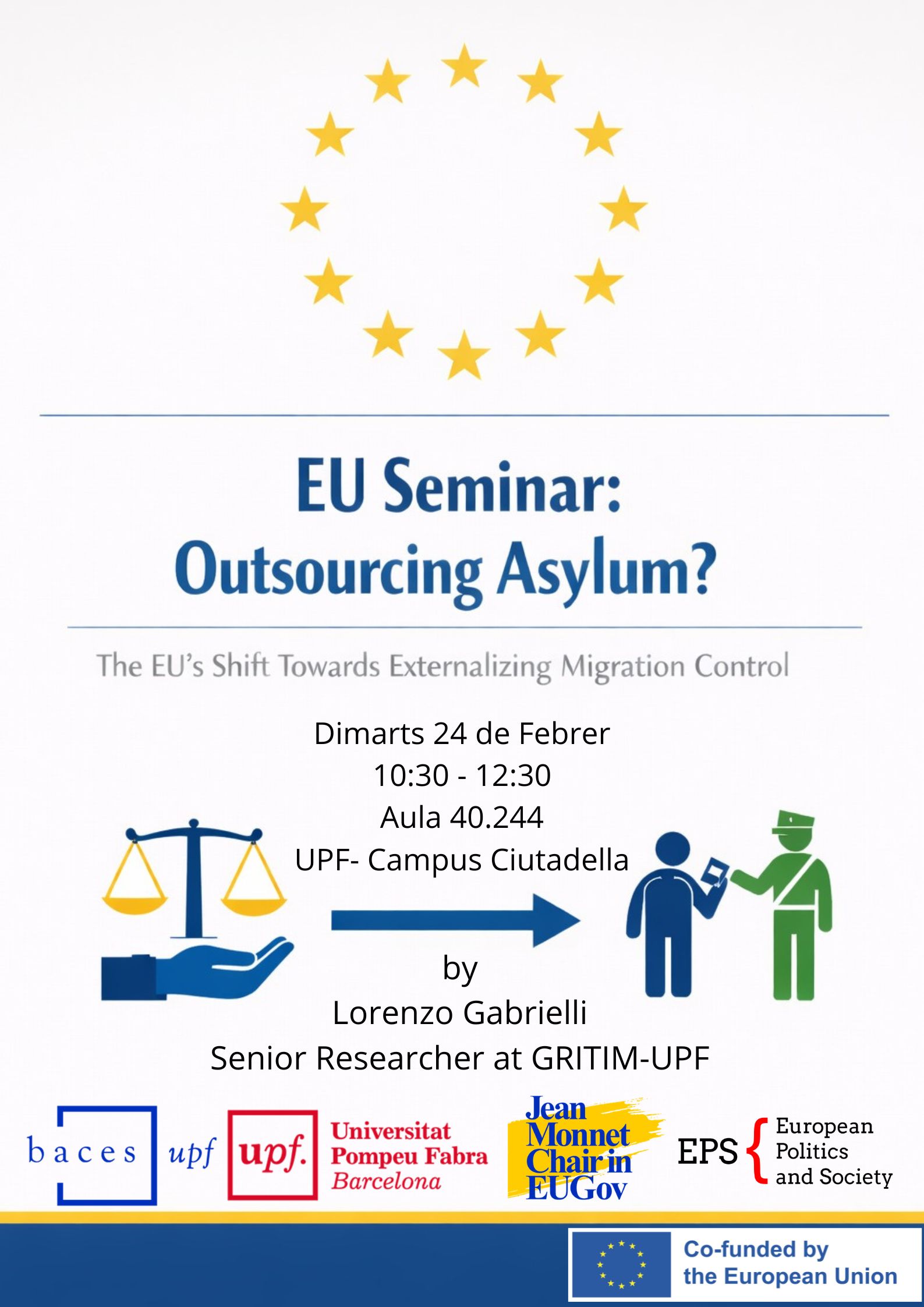
This seminar explores the evolution of the EU’s external dimension of migration control. It traces the development of policies and governance frameworks that have promoted the externalisation of border control and asylum, highlighting shifting power dynamics between the EU and its member states.
Focusing on Spain, it examines how processes of Europeanisation and policy diffusion transformed the country from a norm-taker into a norm-maker in EU migration policy. A comparative perspective on Spain and Italy further reveals key features of EU externalisation strategies, including the “crisis framing” of migration, policy ambiguity, and their symbolic functions.
The presentation concludes by linking the growing use of exceptional measures in migration and border control to broader patterns of democratic backsliding, with particular attention to asylum outsourcing and the diffusion of responsibility.
Target Audience
It is open to students from related fields such as Political Science, International Relations, and Global Studies, as well as faculty members and researchers with an interest in the European Union and its migration policies.
About the Speaker
Lorenzo Gabrielli holds a PhD (with honours) in Political Science from Sciences Po Bordeaux. He is Senior Researcher at GRITIM - Universitat Pompeu Fabra and Associate Researcher at the Group of African Studies - Universidad Autónoma de Madrid. He also teaches at Universitat Pompeu Fabra and Universitat Oberta de Catalunya.
He is currently Principal Investigator of the project Defend the Earth, a researcher in the Horizon Europe project UNDETERRED, and a PhD supervisor in the Marie Curie EuroMedMig PhD Network.
His research focuses on borders and bordering processes at international and internal levels, including the geopolitics of mobility in the Mediterranean and Euro-African space, the external dimension of EU migration policy, and issues of racism, discrimination, and racialisation.