¿Por qué la UPF envía investigadores a África o acoge investigadores de la India?
¿Por qué la UPF envía investigadores a África o acoge investigadores de la India?
Para Mar Coll, investigadora del Departamento de Ciencias Políticas y Sociales de la Universitat Pompeu Fabra (UPF), especializada en cambio climático y estudios de género, es fundamental intercambiar conocimientos con investigadores e investigadoras de todo el mundo, también de aquellas zonas consideradas periféricas como las del Sur Global. Convencida de esta necesidad, realizó una estancia de movilidad internacional en la Universidad de Ciudad del Cabo (Sudáfrica) a finales de 2014, donde compartió experiencias con los investigadores de este centro que investigan sobre este tema.
Coll es una de las beneficiarias del programa Erasmus+, pero de una rama específica de estas ayudas mucho menos conocida que la que permite a miles de jóvenes cursar parte de sus estudios en otro país de la UE. Se trata del programa Erasmus+ International Credit Mobility y está concebido para que profesorado, estudiantes, investigadores y personal de las universidades puedan realizar estancias de movilidad y acoger visitantes de diversas partes del mundo.
Este año, la UPF sigue impulsando este programa, en el que participa desde hace una década. En 2025, ha obtenido financiación para abrir una nueva convocatoria Erasmus+ de becas y ayudas destinadas a estancias de movilidad con instituciones de países del Mediterráneo (Marruecos, Túnez, Egipto, Líbano y Palestina) y de Asia (China, Hong Kong, Filipinas y Pakistán). Las universidades han sido seleccionadas entre los socios habituales de la UPF y las instituciones colaboradoras, propuestas por el profesorado de los departamentos, de modo que la movilidad acompañe y refuerce las líneas de trabajo existentes.
Más de 200 estudiantes y profesores de la UPF han hecho estancias de movilidad fuera de las fronteras de la UE con el apoyo de Erasmus+ Internacional
Con esta nueva convocatoria, la UPF mantiene su compromiso con la movilidad internacional de estudiantes y profesorado a través del Erasmus+ internacional. Mediante este programa, la UPF ha promovido desde 2015 la movilidad con países del Mediterráneo, África subsahariana, América Latina, Estados Unidos, Asia industrializada, Australia y el sudeste asiático, el Próximo Oriente y Oriente Medio. La llamada dimensión internacional del Erasmus+ se suma a otras oportunidades de movilidad para las investigadoras e investigadores.
La UPF ha sido proactiva a la hora de solicitar proyectos en el marco del programa Erasmus+ Internacional con un doble objetivo: por un lado, contribuir a la internacionalización de estudiantes y profesorado de la UPF mediante estancias de movilidad en diferentes universidades del mundo; y, por otro, atraer talento y profesorado visitante de estos territorios. Cabe destacar que la UPF forma parte de la Alianza 4 Universidades (A4U) que, como consorcio, también gestiona convocatorias de ayudas Erasmus+ Internacional, ampliando así el abanico de oportunidades geográficas, con un enfoque particular en África y Asia.
Según los últimos datos disponibles, entre los años 2015 y 2025, un total de 108 estudiantes, en su mayoría de doctorado, y 99 profesores de la UPF han realizado estancias de movilidad internacional gracias a las ayudas de este programa. Esto representa una media de 20 beneficiarios por curso, con la única excepción de los dos cursos que coincidieron con la pandemia de la covid (2019-2020 y 2020-2021), en los que esta actividad se interrumpió casi por completo.
Las satisfactorias experiencias de muchos de los profesores y estudiantes de la UPF que se han beneficiado hasta ahora del Erasmus+ Internacional, como las que se presentan a continuación, avalan la necesidad de seguir promoviendo estas estancias de movilidad de cara al futuro.
Mar Coll, investigadora en cambio climático y género en la UPF, ha hecho una estancia en la Universidad de Cape Town (República Sudafricana)
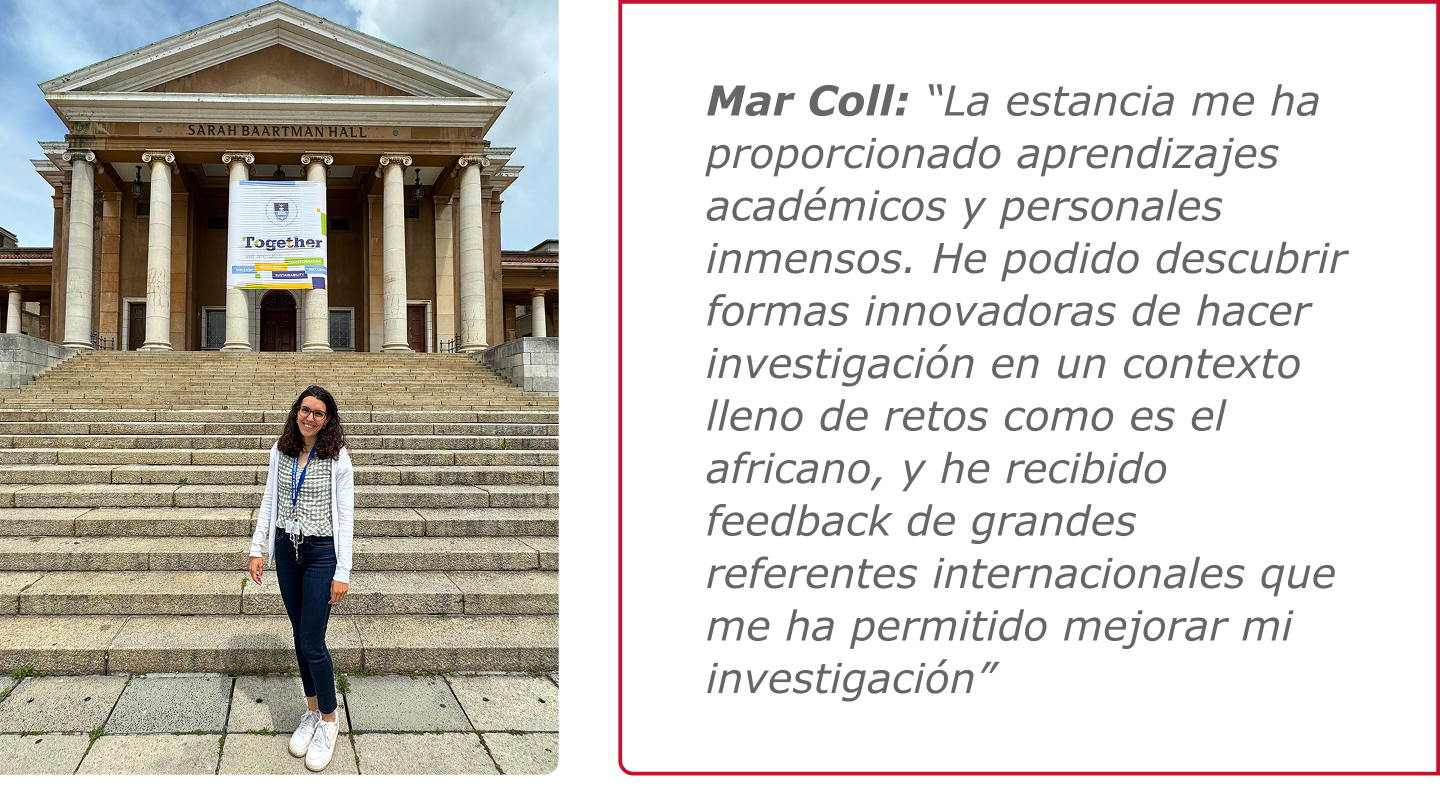
Mar Coll es una de las más de cien estudiantes de doctorado que ha vivido una experiencia de este tipo. Vinculada al grupo de investigación GRETA (Gender and Inequalities) del Departamento de Ciencias Políticas y Sociales de la UPF, pasó el último trimestre de 2024 en la Universidad de Ciudad del Cabo (República de Sudáfrica), una de las instituciones punteras de África en estudios sobre el cambio climático. La investigadora de la UPF desarrolla una investigación sobre el impacto del cambio climático en la población catalana desde una mirada interdisciplinaria y, con esta estancia de movilidad, quería establecer puentes entre los estudios de género y las ciencias climáticas de la UPF y de la universidad sudafricana. “El Climate Systems Analysis Group (de esta universidad) integra diversas metodologías participativas y sociales que me parecían muy interesantes”, explica.
La inmersión en el contexto africano ha tenido un impacto doble: académico y vital. Coll destaca el valor de compartir espacios con investigadoras de zonas del mundo consideradas periféricas, a menudo menos visibles en los foros internacionales, y remarca que las sugerencias recibidas por parte de estas otras referentes internacionales son una fuente clave de aprendizaje. También ha colaborado en el proyecto CASCADE, que une colectivos de la sociedad civil que protegen el medio ambiente con expertos en la adaptación de entornos naturales al cambio climático para fortalecer la resiliencia de la región del mar Báltico. Otra de las iniciativas en las que ha participado es Tuwe Panoja, centrada en la prevención de los riesgos climáticos en espacios naturales y urbanos desde una perspectiva interseccional, que tiene en cuenta el punto de vista y las necesidades de mujeres y hombres de diferentes condiciones económicas y sociales. La colaboración de la investigadora de la UPF con los investigadores de estos proyectos continúa a pesar de la distancia geográfica que los separa.
Más allá de su experiencia académica, Mar recuerda con entusiasmo el entorno natural de Ciudad del Cabo: “Corrí mi primera media maratón entre los viñedos de Constantia (distrito de Ciudad del Cabo)”. Una experiencia que ilustra la riqueza de un intercambio que va mucho más allá de la investigación y que abre nuevas vías de conexión entre la UPF y la investigación en los países de África.
Stefano Biagetti, investigador del Departamento de Humanidades de la UPF, ha realizado una estancia internacional en la Universidad de Namibia
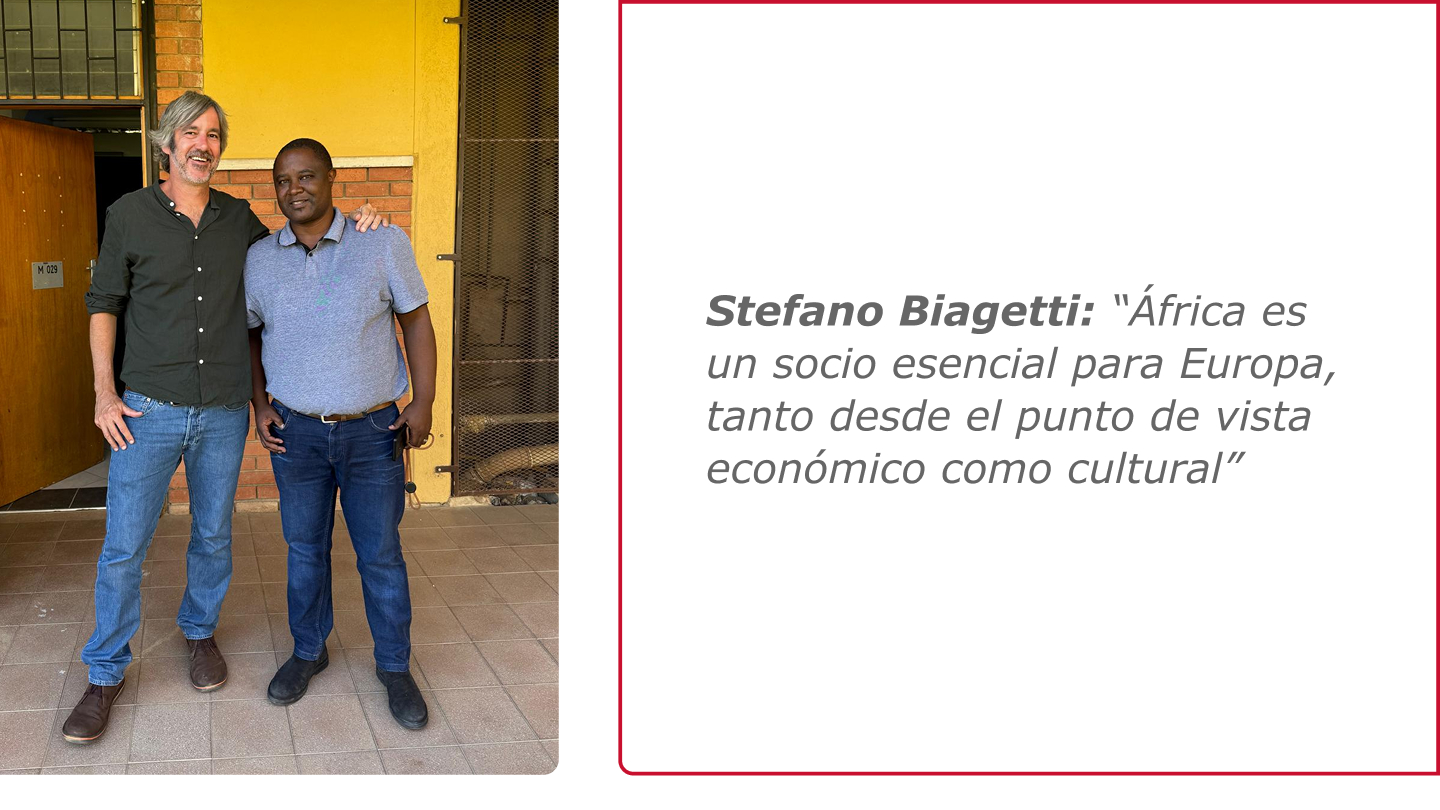
A otro país africano, Namibia, viajó el profesor Stefano Biagetti, investigador del Departamento de Humanidades de la UPF. Biagetti trabajaba habitualmente en Botsuana y Sudáfrica y, a principios de septiembre de 2024, también realizó una estancia en la Universidad de Namibia (UNAM), que, a pesar de su brevedad, le dejó huella. Durante cinco días con una agenda intensa de actividades, este viaje le sirvió para ampliar horizontes y profundizar en el conocimiento del contexto namibio. “Quería conocer más sobre el país y conectar con arqueólogos locales. La UNAM es la única universidad donde se hace arqueología”, explica. Biagetti compartió su estancia de movilidad en la UNAM con la profesora Carla Lancelotti (en la foto de portada impartiendo una charla), directora del Centro de Bienestar Planetario de la UPF y también investigadora del Departamento de Humanidades.
Durante su estancia en Namibia, Biagetti ha podido establecer contactos con profesorado y estudiantes interesados en futuras colaboraciones con la UPF. De hecho, ya mantiene comunicación con algunas personas de la universidad africana que se plantean realizar el doctorado en la UPF. Este tipo de intercambio, asegura, es clave para tejer alianzas estratégicas: “África es un socio esencial para Europa, tanto desde el punto de vista económico como cultural”.
Además de su interés por la investigación en el país africano, también guarda buenos recuerdos personales de su viaje a Namibia. Biagetti describe el país como un lugar “espectacular, magnético...”, donde el desierto se adentra hasta el mar y las ciudades modernas contrastan con la inmensidad natural. “Es un destino totalmente recomendable”, concluye.
Casi 300 estudiantes e investigadores procedentes de países externos a la UE han sido acogidos en la UPF con el programa Erasmus Internacional.
La experiencia de Mar Coll y Stefano Biagetti muestra cómo las líneas de investigación desarrolladas en la UPF pueden enriquecerse y nutrirse de otros proyectos que se llevan a cabo en universidades de todo el mundo. Pero, al mismo tiempo, el bagaje y la experiencia del personal investigador de la UPF también pueden contribuir a aportar nuevas perspectivas y conocimientos, y beneficiarse de la acogida de estudiantes e investigadores. Por ello, más de 300 beneficiarios de universidades extracomunitarias han realizado estancias de movilidad en la UPF entre 2015 y 2025 gracias al programa Erasmus+ Internacional.
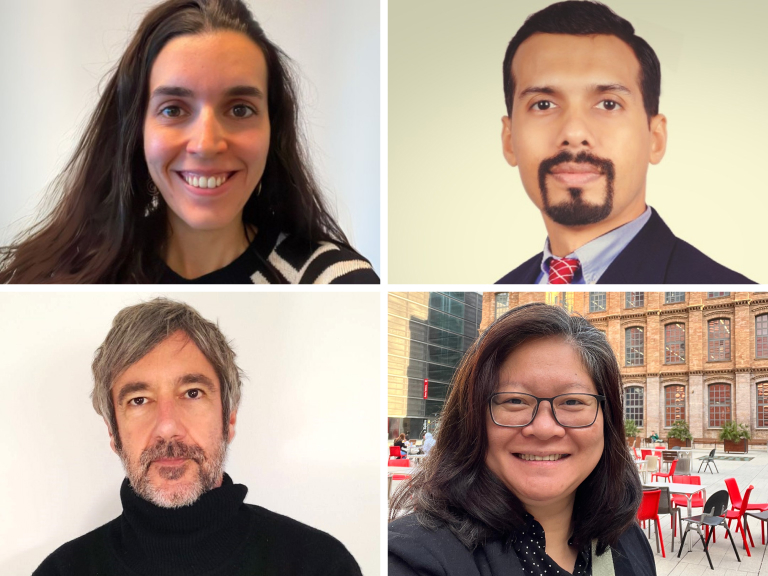
Meilinda Meilinda, investigadora en comunicación procedente de Indonesia, ha sido acogida por el grupo de investigación MEDIUM de la UPF.
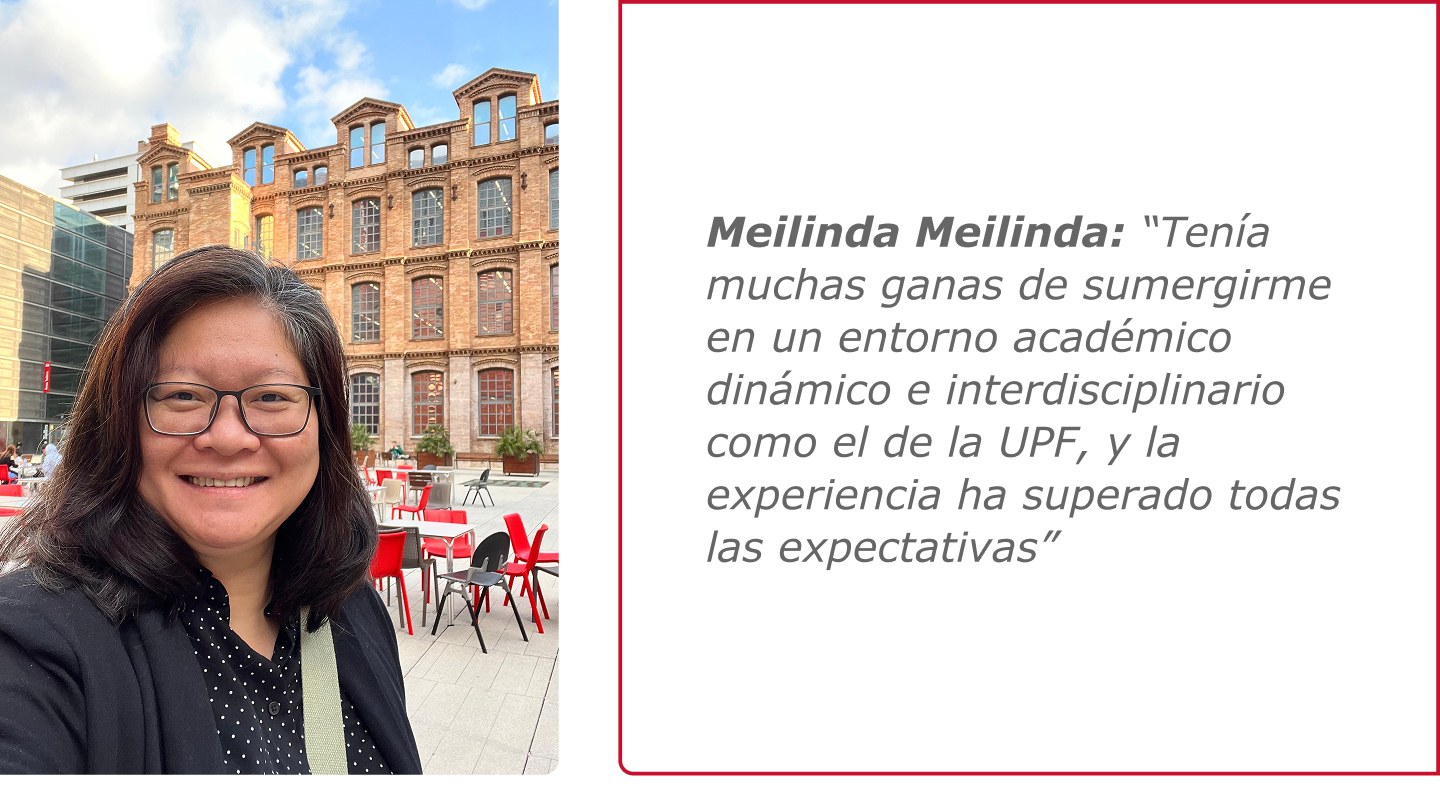
Una de las investigadoras acogidas en la UPF es Meilinda Meilinda, doctoranda en la Facultad de Comunicación de la Universidad Airlangga de Indonesia. Eligió realizar una estancia en la Universitat Pompeu Fabra para profundizar en el análisis del discurso multimodal —el que combina diferentes formas de lenguaje (verbal, no verbal…)—, que constituye el eje central de su tesis. Durante su estancia, entre octubre de 2024 y enero de 2025, se integró en el grupo de investigación MEDIUM, donde trabajó codo con codo con su coordinadora, Lorena Gómez, una de las referentes en su ámbito. “Tenía muchas ganas de sumergirme en un entorno académico dinámico e interdisciplinario como el de la UPF, y la experiencia ha superado todas las expectativas”, afirma.
El balance, tanto personal como académico, ha sido excepcional. En solo tres meses, Meilinda completó cuatro artículos, tres de los cuales ya han sido publicados en revistas científicas, y escribió un capítulo de un libro sobre narrativa transmedia a partir de las conversaciones mantenidas con el catedrático del Departamento de Comunicación de la UPF Carlos A. Scolari, también investigador de MEDIUM. “La interacción constante con el grupo MEDIUM me ofreció nuevos marcos teóricos y metodologías aplicadas a los estudios de medios que han enriquecido profundamente mi mirada investigadora”, explica.
Aunque aún no hay ningún proyecto conjunto formalizado, Meilinda confía en que las relaciones forjadas en Barcelona deriven en futuras colaboraciones. Además, defiende la importancia de establecer puentes entre universidades del sudeste asiático y europeas como la UPF, para promover un intercambio real de conocimientos.
Lorena Gómez, coordinadora de MEDIUM, valora así la importancia de estancias de movilidad internacional como la de Meilinda: “Poder acoger a investigadoras en formación de otros ámbitos geográficos y socioculturales, y en el caso de Meilinda desde la transdisciplinariedad a la que nos abrimos desde MEDIUM, es una oportunidad de enriquecimiento mutuo. Creo que el programa de Doctorado en Comunicación de la UPF, al acoger estudiantes internacionales, se fortalece como comunidad de aprendizaje, tejiendo miradas desde la diversidad y el reconocimiento de los otros, cosas que son necesarias hoy más que nunca”.
Abhra Roy, investigador en robótica e IA, ha sido acogido por el grupo de investigación en IA y aprendizaje automático de la UPF.
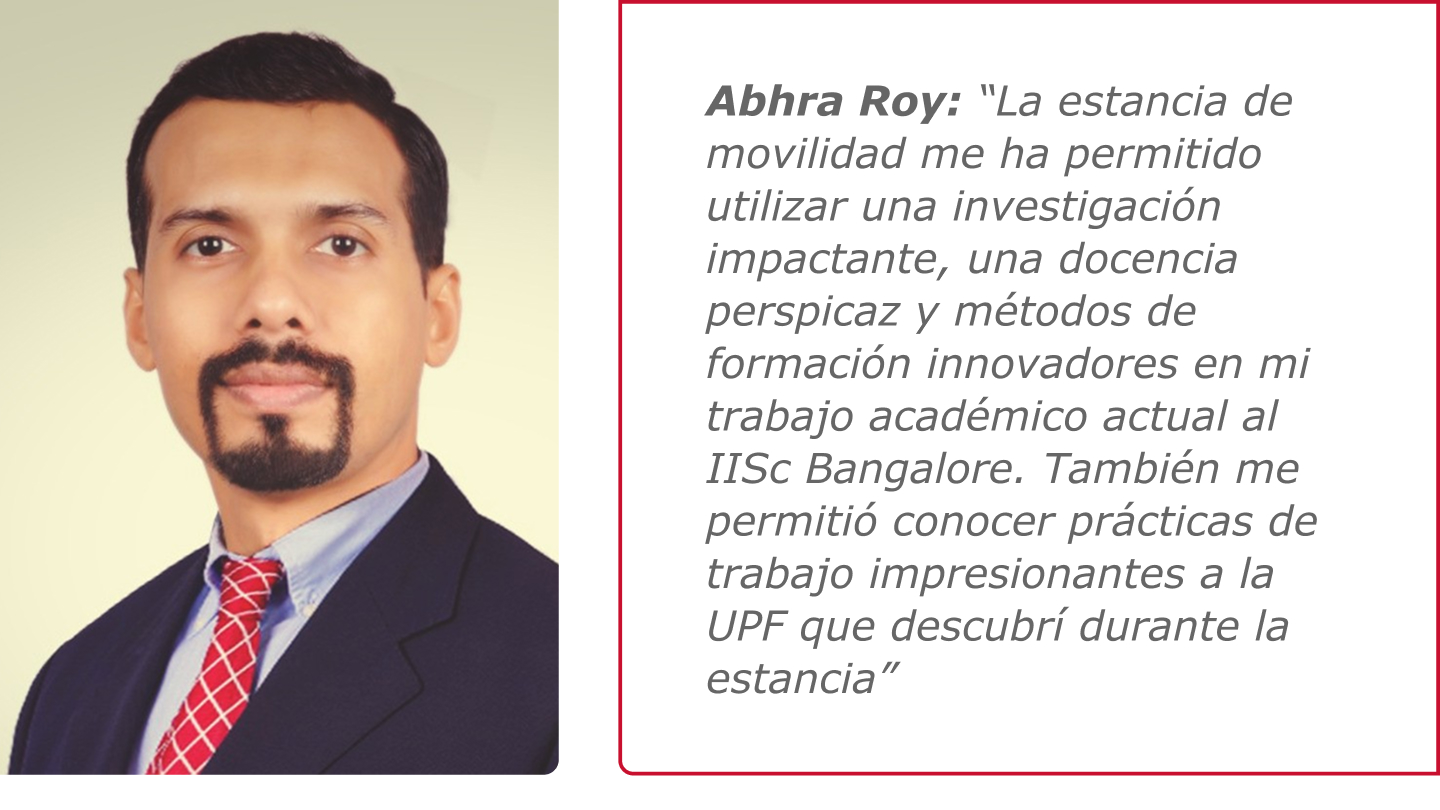
Otro de los profesores de procedencia extranjera que ha realizado una estancia de movilidad internacional en la UPF es Abhra Roy, investigador del Instituto Indio de Ciencia (IISc) de Bangalore. Explica que eligió la UPF como destino para impulsar sus competencias en robótica e inteligencia artificial (IA), profundizar en las prácticas docentes y establecer nuevos vínculos académicos. Fue acogido por el grupo de investigación Artificial Intelligence and Machine Learning del Departamento de Ingeniería de la UPF el pasado mes de marzo bajo la supervisión de Vladimir Estivill. Fascinado por el trabajo del grupo, Roy encontró en la UPF el ecosistema idóneo para enriquecer su trayectoria: “El grupo de investigación es un referente en sistemas computacionales e inteligentes, alineado plenamente con mi investigación”.
Su país de procedencia, India, también es un referente mundial en el ámbito tecnológico. Se encuentra entre los 10 mejores países en cuanto a la producción de documentos de investigación en informática. Los investigadores indios publican regularmente en conferencias de primer nivel y el país mantiene una colaboración muy activa entre el mundo académico y la industria, lo que está impulsando el crecimiento de startups de IA y de incubadoras de investigación en ciudades como Hyderabad o Pune Bangalore, donde se encuentra el IISc al que está adscrito Abhra Roy.
Con su estancia en el Departamento de Ingeniería de la UPF, Roy ha podido sumar nuevas ideas y métodos a su amplio bagaje en este campo. Una vez retornado a India, tras su estancia de una semana en la UPF, ahora está aplicando en el IISc métodos de investigación más innovadores y prácticas de enseñanza que conoció en Barcelona.
Además, ya trabaja con el profesor Vladimir Estivill en la preparación de proyectos conjuntos, como propuestas para los programas Horizon Europe de la UE y las becas del European Research Council (ERC), centrados en la colaboración segura entre humanos y robots en ámbitos como la industria flexible, la sanidad o la atención social. En este sentido, Estivill detalla que, a partir de los campos de expertise de ambos, presentarán a la convocatoria de Horizon Europe un proyecto sobre “métodos para garantizar y certificar la seguridad de los entornos de fabricación flexibles con humanos y robots móviles”.
Roy destaca la importancia estratégica de fomentar alianzas entre universidades europeas e indias, que pueden dar lugar a investigaciones punteras, nuevas empresas derivadas (spin-offs) y redes académicas sólidas. Personalmente, se muestra muy agradecido por la acogida: “Espero poder volver a la UPF y también recibir a mis compañeros en Bangalore”.
Vladimir Estivill (UPF): “para investigar muchos temas, hay que ir más allá de las fronteras y las regiones"
Vladimir Estivill (UPF) comparte con Roy la importancia de estas estancias de movilidad internacional: “Las visitas de investigación internacionales son un elemento crucial en el benchmarking de la investigación de ambas partes. Ofrecen información sobre las mejores prácticas de investigación y multiplican el potencial de encontrar habilidades, conocimientos e instalaciones de investigación complementarias para la progresión de investigaciones efectivas”. Estivill está convencido de que, “para investigar muchos temas, hay que ir más allá de las fronteras y las regiones”.
Abierto el período para presentar solicitudes a la nueva convocatoria de Erasmus+ Internacional hasta el próximo 30 de septiembre
Si, como los testimonios anteriores, estás interesado/a en realizar una estancia de movilidad a través del programa Erasmus+ Internacional, puedes encontrar más información en este espacio web.