
Tomàs Marquès Bonet, appointed corresponding academician of the Spanish Royal Academy of Sciences
Tomàs Marquès Bonet, appointed corresponding academician of the Spanish Royal Academy of Sciences
Last Wednesday, the Natural Sciences section of the Royal Academy of Exact, Physical and Natural Sciences of Spain (RAC) hosted Tomàs Marquès Bonet’s admission conference as a corresponding academician. A full professor and ICREA researcher at the UPF Department of Medicine and Life Sciences (MELIS), principal investigator of the IBE and of the CNAG, Marquès will take charge of the Genomics and Evolution area and joins the institution at the proposal of the academics Ana Crespo, Ángela Nieto and Miguel Delibes. “I have been studying primates for more than 20 years”, said Tomàs Marquès, “my question is what can we learn from ourselves as a species by looking molecularly at primates?”. “It's not the perfect method”, Marquès admits, “but today we don't have another one to answer the questions we pose ourselves”. The UPF ICREA researcher was most grateful for his appointment and went as far as defining it as “probably the greatest milestone in my scientific career”.
The numerary academic, Ángela Nieto was tasked with welcoming and giving a brief summary of the figure of Tomàs Marquès Bonet, whom she has defined as “one of the world's leading experts in his discipline" and valued "his extraordinarily significant contributions to the knowledge of the evolution of primates”. Tomàs Marquès’s appointment took place at the same session as that of the scientist María Mittelbrunn, who specializes in the study of the immune system, inflammation and ageing.
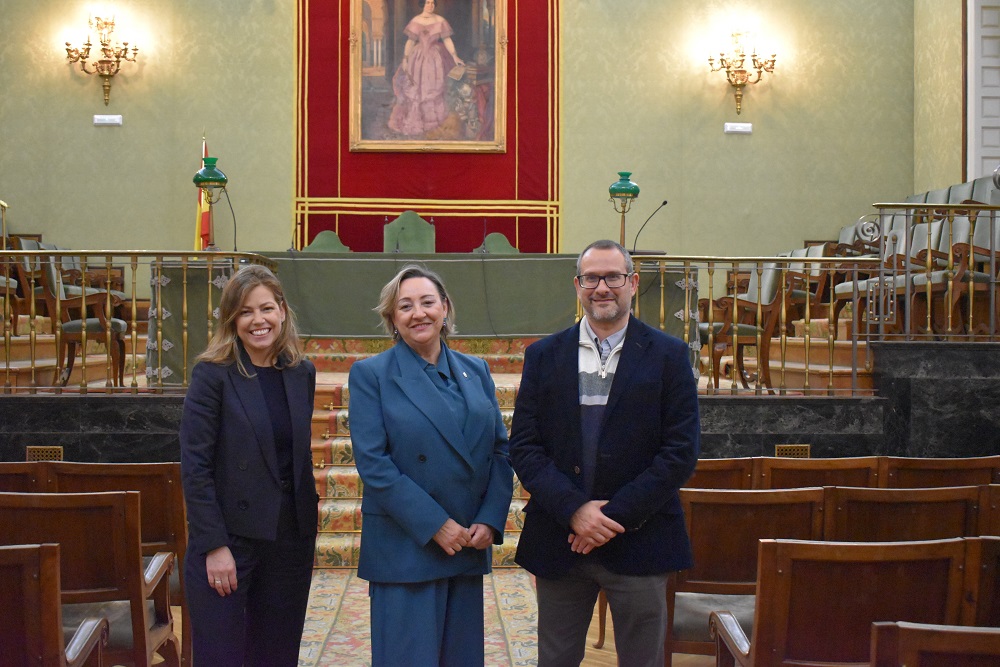
María Mittelbrunn, Ángela Nieto and Tomàs Marquès, at Real Academia de Ciencias. Foto: RAC
RAC corresponding academicians are recognized experts in the fields of exact, physical, natural or related sciences, but they are not part of the nucleus of the academy (numerary academics). To be appointed a corresponding academician is, for any researcher, a great honour and a sign of scientific recognition. It is an opportunity to contribute to science and academic activity in a meaningful way.
Tomàs Marquès’ conference
Studying the genomes of primates, our closest evolutionary relatives, has become one of the keys to understanding human biology. Through the analysis of genomes, transcriptomes and functional data, it has improved our understanding of a fundamental question concerning our biology: what makes us human?
Along the way, we have learned about how to use their genetic properties to better understand the consequences of mutations in the human genome and found new molecular tools to aid in their conservation.
Genomics, primates and human evolution
Tomàs Marquès Bonet (Barcelona 1975) is a principal investigator at the Institute of Evolutionary Biology (IBE), a joint centre of the Spanish National Research Council (CSIC) and Pompeu Fabra University (UPF), where he is head of the IBE's Comparative Genomics Group. An ICREA researcher at UPF, he is also a professor of the Department of Medicine and Life Sciences at Pompeu Fabra University, also affiliated with the National Centre for Genomic Analysis and the Miquel Crusafont Catalan Institute of Palaeontology (ICP).
Among the awards and grants he has received throughout his career, an ERC Starting Grant in 2010 and a Consolidator Grant from the same institution in 2019 are most noteworthy. In 2011 he was appointed an ICREA research professor at UPF; in 2013 he received the EMBO Young Researcher Award, and since 2017 he has been accredited as a young international researcher by the Howard Hughes Medical Institute (HHMI). He was also director of the IBE (CSIC-UPF) between 2017 and 2020.