
Desenvolupat el primer model de laboratori per estudiar la gastrulació dels primats
Desenvolupat el primer model de laboratori per estudiar la gastrulació dels primats
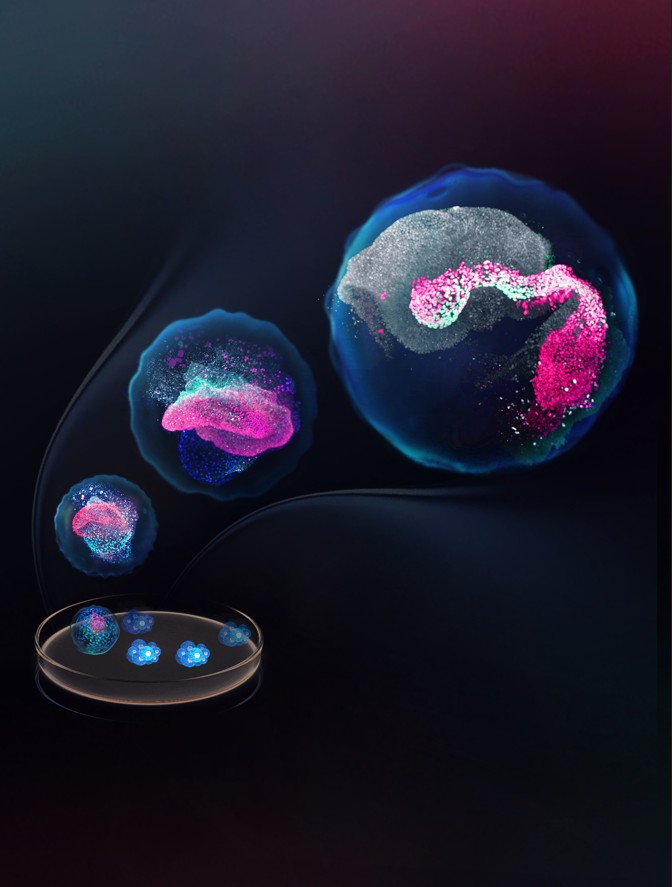
Un equip internacional de científics ha desenvolupat, en un laboratori, el primer model fet de cèl·lules mare per estudiar la gastrulació dels primats. Es tracta d’un estudi liderat pel Centre d'Excel·lència en Ciència del Cervell i Tecnologia de la Intel·ligència de l'Acadèmia Xinesa de Ciències (CAS per les seves sigles en anglès) a Xangai (República Popular de la Xina) i la Universitat Pompeu Fabra. El model, desenvolupat amb cèl·lules mare pluripotents de mico, forma primer un blastoide que després experimenta la gastrulació i genera les llavors dels diferents òrgans i teixits del cos. Tot i que l'ús d'aquest model implica una càrrega ètica menor en comparació amb la dels models humans —perquè es fa a partir de cèl·lules de primats no humans—, podria ser un indicador de l'origen de les malalties humanes i dels efectes del medi ambient i dels fàrmacs en el desenvolupament de l'embrió.
Lewis Wolpert va dir, de broma, que el moment més important de la nostra vida no és el casament, el naixement o la mort, sinó la gastrulació. És el procés que transforma la massa de cèl·lules resultant de la fecundació d'un òvul en el contorn d'un organisme; l’origen del que esdevindrà un organisme. En els humans, el procés s'inicia el dia 14 des de l'inici del desenvolupament i, com que té lloc a la part més profunda de l'úter, és inaccessible a l'observació i l'experimentació. Les raons no són només la dificultat d'accedir als embrions en aquestes primeres etapes, sinó també les barreres ètiques i reguladores que impedeixen fer créixer embrions humans al laboratori més enllà del dia 14. No obstant això, aquest és un moment crític en la construcció de teixits i d’òrgans, i els estudis mèdics suggereixen que moltes patologies tenen el seu origen en els mecanismes que hi ha al darrere d’aquest procés.
Avui, el laboratori de Zhen Liu al CAS, en col·laboració amb Alfonso Martinez Arias, del Departament de Medicina i Ciències de la Vida de la UPF, publica a Nature un model de gastrulació de primats organitzat al laboratori a partir de cèl·lules mare pluripotents de mico. Per fer-lo, van reunir primer les cèl·lules en un blastoide —una estructura cel·lular creada al laboratori que imita l'organització del blastocist—, que després va transitar cap a una estructura que imita l'epiblast, el substrat cel·lular per a la gastrulació. Al llarg d'una setmana, l'estructura va experimentar la gastrulació, que va generar les llavors dels diferents òrgans i teixits en relació amb un sistema de coordenades que emergeix amb el procés.
“Hi ha descripcions meticuloses de la gastrulació en embrions de mico que, per comparació, asseguren que el nostre model reflecteixi amb precisió el que passa a l'embrió”, explica Zhen Liu (CAS). “Hem volgut assegurar-nos que tenim un model fiable, un fet inusual quan es treballa amb rèpliques d'embrions basades en cèl·lules mare”, afegeix Alfonso Martinez Arias (UPF).
Rastrejar l'origen de les malalties
Com que el model es fa amb cèl·lules de mico –on la càrrega ètica és menor que amb les cèl·lules humanes–, els autors també van poder introduir mutacions en gens del desenvolupament i avaluar-ne les conseqüències per a la formació del pla corporal. Així, per primera vegada, van manipular experimentalment un model d'embrió de primat. “Amb el nostre model, hem demostrat que es poden introduir i analitzar mutants associats a algunes malalties ja descrites, així com estudiar els efectes dels fàrmacs en el desenvolupament de l'embrió”, afirma Liu.
Segons Martinez Arias, “Múltiples estudis d'embriologia mèdica i teratologia ens han mostrat que moltes malalties tenen el seu origen durant la gastrulació. Per exemple, sabem que alguns defectes cardíacs són causats per una mala especificació dels primordis durant la gastrulació”. I afegeix: “Amb aquest model, ara podem reproduir les malalties per estudiar-les en detall i intentar entendre-les millor”.
Aquest treball obre, doncs, la possibilitat d'utilitzar aquest model com a indicador de l'origen de les malalties humanes, així com estudiar els efectes de l'entorn i dels fàrmacs en el desenvolupament de l'embrió. Un esforç que obre camí per fer estudis similars amb cèl·lules humanes.
Sobre el cap de recerca
Durant els darrers deu anys, les cèl·lules mare pluripotents s'han utilitzat per crear models de les primeres etapes del desenvolupament dels mamífers. Aquests models ofereixen la possibilitat d'aprendre sobre l'origen del desenvolupament normal i anormal. Per exemple, els blastoides imiten l'organització del blastocist, l'estructura a partir de la qual es desenvoluparà l'embrió després de la implantació a l'úter, i s'utilitzen per estudiar fenòmens associats al desenvolupament primerenc i a la implantació en ratolins, micos i humans.
El treball amb cèl·lules de ratolí ha pogut recapitular la gastrulació in vitro i l'emergència del cos, i ha donat lloc a estructures que, en alguns casos, imiten gairebé l'embrió. Aquests estudis han plantejat la possibilitat de fer el mateix amb cèl·lules humanes i, així, accedir a la gastrulació humana. No obstant això, malgrat els esforços de molts laboratoris, els intents similars amb cèl·lules humanes no han tingut èxit. En el millor dels casos, els models actuals arriben a les etapes inicials de la gastrulació, però no progressen més enllà.
Tant Alfonso Martinez Arias com Zhen Liu han estat pioners en gran part d'aquest treball, i la seva col·laboració en l’estudi representa un avenç important cap al desplegament de models útils del desenvolupament humà i la comprensió de les patologies neonatals.
Article de referència:
Li, J., Li, J., Cao, J., Shang, S., Zhang, L., Gao, F., Fu, J., Chen, H., Cui, G., Wu, H., Wang, X., Martinez-Arias, A., Sun, Q., & Liu, Z. (2025). Modelling late gastrulation in stem cell-derived monkey embryo models. Nature. https://doi.org/10.1038/s41586-025-09831-0