
Planetary wellbeing research at UPF is growing, fuelled by five years of grants
Planetary wellbeing research at UPF is growing, fuelled by five years of grants
The annual funding calls for research on planetary wellbeing from 2019 to 2023 provided support for 55 projects from all the university’s departments. Nearly 70 junior and senior researchers have participated in the funded projects, offering them the opportunity to apply interdisciplinary methods and collaborate with colleagues from other UPF departments.

UPF launched its Planetary Wellbeing initiative in 2017 with the primary aim of contributing to knowledge and understanding of the complex, interconnected and systemic issues affecting human, animal and planetary wellbeing as a global ecosystem. The goal was to identify integrated, innovative and interdisciplinary solutions to address these challenges. Four years later, the university published the first paper on planetary wellbeing, a collaborative effort built from myriad interactions, entitled ‘The Planetary Wellbeing Initiative: Pursuing the Sustainable Development Goals in Higher Education’ (J.M. Antó et al., 2021).
As a result of the activities arising from this initiative, in 2022, the UPF Centre for Studies on Planetary Wellbeing was founded, with the aim of consolidating the initiative and ensuring its enduring success. The centre, which works to build the necessary capacities and synergies both inside and outside the university, is organized into three areas: teaching, research, and internal and external relations.
Carla Lancelotti: ‘We are developing various programmes and tools related to planetary wellbeing for all the university’s students and teaching and research staff in order to encourage inter- and cross-disciplinary research between the different UPF departments and other institutions’
‘Within these fields, we are developing various programmes and tools related to planetary wellbeing for all the university’s students and teaching and research staff in order to encourage inter- and cross-disciplinary research between the different UPF departments and other institutions’, said Carla Lancelotti, the centre’s director. She also highlighted the university’s pioneering role in promoting planetary wellbeing at the local, national and international level. Since its creation, the centre has managed the various calls for research funding in this field.
A wide range of planetary wellbeing research actions
The Planetary Wellbeing initiative has provided seed funding to promote interdisciplinary partnerships for research on the concept. From 2019 to 2023, the programme was structured in different categories to meet different academic needs and support a variety of research activities. These categories include funding for PhD students, postdoctoral researchers, and workshops and conferences, as well as seed funding for collaborative research projects.
The programme has provided funding for PhD students, postdoctoral researchers, and workshops and conferences, as well as seed funding for collaborative research projects
The funding calls have yielded rich results in the form of projects tailored to each category, although some projects could not ultimately be carried out due to the pandemic. In the PhD student category, the results were mainly focused on supporting students’ training and development, facilitating their participation in international conferences and courses, and providing them with platforms to present their results. In the postdoctoral researchers category, the emphasis was on organizing workshops and conducting research.
In the seed funding or pilot project category, the results primarily enabled the launch of new scientific initiatives. In addition to focusing on planetary wellbeing issues, one of the requirements for projects in this category was to have a multidisciplinary team, to the extent possible, involving researchers from multiple UPF departments.
Finally, the workshops and conferences category sought to facilitate the organization of numerous local and international events. These initiatives often also led to progress on different publications, thereby helping to disseminate knowledge and research results.
Breakdown of funding by action type
The funding, which was impacted by the pandemic, had the following breakdown over the five-year period (2019-2023):
In 2019, fourteen grants were awarded to projects in different UPF departments across four categories: three grants were awarded to PhD students, three to postdoctoral researchers, four for pilot projects, and four for workshops and conferences. In all, more than 84,000 euros were awarded. However, due to Covid-19, three of the projects from the workshops and conferences category had to be suspended. As a result, 86% of the initial budget was executed.
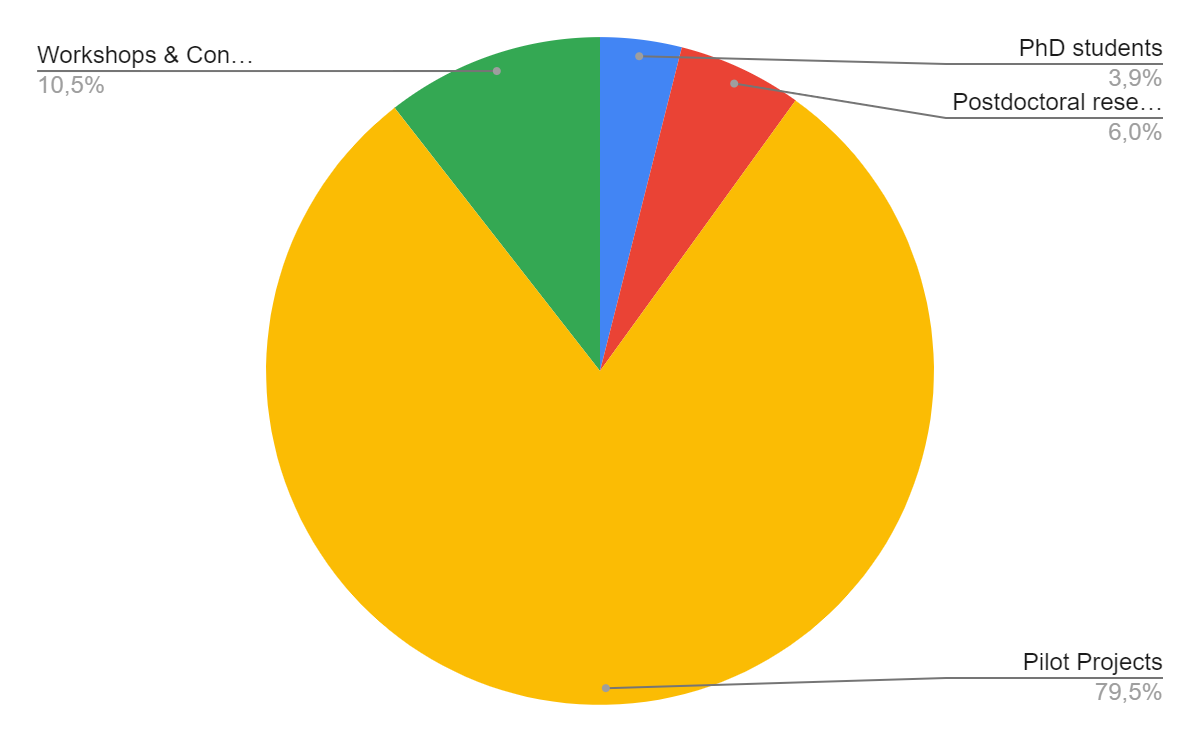
In 2020, 21 grants were awarded, with the following breakdown by category: seven to PhD students, four to postdoctoral researchers, five for pilot projects, and five for workshop and conference initiatives. Although a total of 146,000 euros of funding was awarded, due to the pandemic, four projects could not be carried out: two from the PhD student category and two from the postdoctoral researcher category. As a result, 91% of the budget was executed.
In 2021, fifteen projects were approved in three categories – one by a PhD student, nine pilot projects, and five workshop and conference initiatives – amounting to a total of around 146,000 euros. However, again due to Covid-19, one of the workshop and conference projects could not be implemented. The final budget execution rate was thus 96%.
The money that could not be used during the pandemic has been reinvested, in accordance with the Planetary Wellbeing initiative, in other related activities
In 2022, nine grants were awarded (and fully executed) in two categories – two to PhD students and seven for pilot projects – for a total of 95,000 euros.
Finally, in 2023, four grants were awarded, exclusively in the category of research projects to promote interdisciplinary research on planetary wellbeing. The aim was to provide support for applications for competitive research grants from the European Research Council or Horizon Europe programme, with a focus on projects already at an advanced stage of application development. As a result, fewer grants were awarded than in previous years. In all, a total of around 50,000 euros was awarded.
The money that could not be used during the pandemic has been reinvested, in keeping with the Planetary Wellbeing initiative, in other related activities. Additionally, several extensions were granted to mitigate the impact of Covid-19 on the submitted research projects.
An enriching initiative in terms of scientific output, training and networking
Since being launched, the funding initiative has supported a total of 55 projects through different departments (with more than 80 people receiving funding and directly involved in the grants) and allocated nearly 490,000 euros to advance research on planetary wellbeing. The awarded funding has contributed significantly to the publication of more than 50 scientific papers since 2019, a figure that does not include publications from 2022 and 2023, which have not yet been reported.
The grants have supported the training of thirteen PhD students and facilitated their participation in courses and conferences
Additionally, the initiative has enabled the organization of more than ten conferences, facilitating interaction between experts from a variety of fields, and the creation of the International Research Group on Sport Sustainability. ‘These initiatives have fostered both internal interdisciplinary collaboration between UPF departments and units and external collaboration with organizations such as hospitals, foundations and other universities’, Lancelotti explained.
According to several researchers who have participated in the calls over the years, the grants have been highly beneficial, providing them with opportunities to gain insight into relevant and valuable methodologies from other disciplines, which they have then been able to incorporate into their own projects. Learning about different approaches and techniques from other fields has allowed these researchers to draw on a wider range of knowledge and tools, which, in turn, has enabled them to conduct better and more comprehensive research. This interdisciplinary learning has helped them advance their projects and gain a broader understanding of their research topics.
Carla Lancelotti: ‘"These initiatives have fostered both internal interdisciplinary collaboration, between different UPF departments and units, and external collaboration with organizations such as hospitals, foundations and other universities"
The grants have also supported the training of thirteen PhD students and facilitated their participation in courses and conferences. This has given them the chance to meet and talk with people from different fields and backgrounds, opened their eyes to new ideas and viewpoints, and greatly enriched their research. Participating in conferences and other academic events has also allowed them to network and make valuable contacts and start working with experts from other fields.
At the other end of the spectrum, the grants have permitted more established researchers to launch and advance their projects. This support has moreover encouraged them to seek new and additional sources of funding to continue their research. In this regard, they have taken part in competitive European programmes within the framework of the European Research Council (ERC), the Marie Curie grants, the EU Next Generation initiative and Horizon Europe. At the national level, they have participated in programmes run by the Spanish Ministry of Science, Innovation and Universities and the State Research Agency. And at the local level, they have capitalized on programmes sponsored by the Barcelona Zoo Foundation, the International Catalan Institute for Peace (ICIP), and La Caixa, as well as the university’s own CLIK Plan grants.
End of the grants and evaluation process
‘In view of the efforts made since 2019, it was decided that 2023 would be the last year for the grants. Once all the current projects are finished, in 2024, both the grants and the funded projects will be reviewed and evaluated’, said Lancelotti.
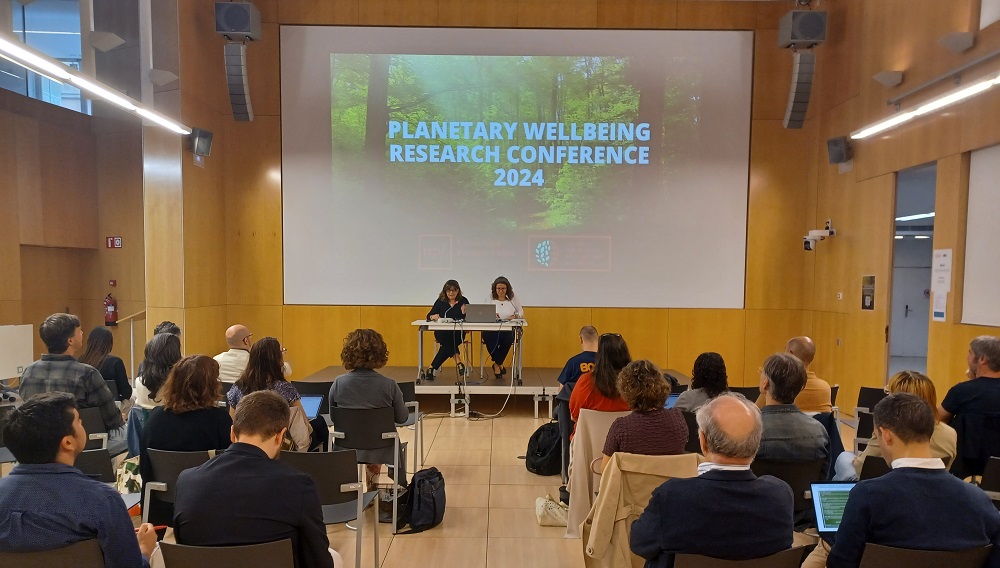
In the meantime, the Centre for Studies on Planetary Wellbeing will offer other types of opportunities to members of the UPF community interested in this field. One example is the organization, on 3 October, of the Planetary Wellbeing Research Conference 2024 on the Ciutadella campus, intended to encourage interdisciplinary cooperation at the university to address planetary challenges from various fields of knowledge and approaches.
Examples of funded projects from all departments and action types
To provide a better understanding of the type of projects carried out over the five calls (2019-2023), and of the participation of the different UPF departments, a dozen of the funded initiatives are highlighted below.
Project: Youth Engagement for Climate Action - YOUGECA
Researcher: Mariona Ferrer-Fons
Department: Political and Social Sciences
Action type: Pilot Project
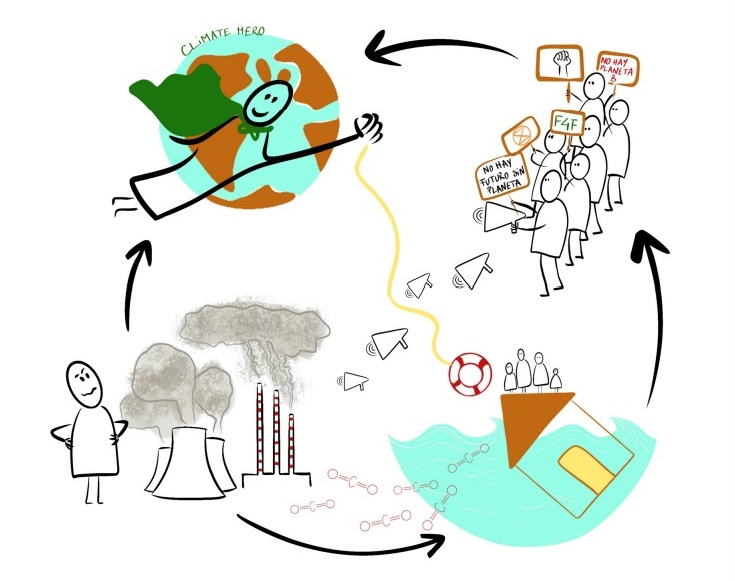
At a glance: The YOUGECA project analyses the causes and implications of youth engagement in the most recent wave of climate protests and generational environmental awareness. ‘The project explores the impact of the 2018-2020 climate protests on the political engagement of young people at the local and global level, the role of social media, and climate change narratives’, explained Mariona Ferrer Fons, a researcher in the Department of Political and Social Sciences. As the research was conducted during the outbreak of the Covid-19 pandemic, it also provided an opportunity to examine how the global health and social crisis impacted the movement and its climate-related causes.
Project: Food, Fertility and Footprints
Researchers: Paula Casal and Andrew Williams
Department: Law
Action type: Pilot Project
At a glance: Individual and collective decisions clearly influence food consumption and family size, making a real difference in total greenhouse gas emissions and the likelihood of harmful climate change. Drawing on contemporary political philosophy, ‘Food, Fertility, and Footprints’ examines whether it is fair and legitimate for politicians to use population and food policy as tools to protect human beings from climate change. Assuming that countries and their citizens can be held responsible for their carbon footprints, the project concludes that there is no compelling reason to deny our responsibility when our emissions are the result of our dietary or reproductive decisions. More specifically, and regardless of tradition, universities can play an important role by encouraging their members to adopt plant-based diets.
Project: Syntony
Researchers: Manel Jiménez-Morales and Marta Lopera-Mármol
Department: Communication
Action type: Pilot Project
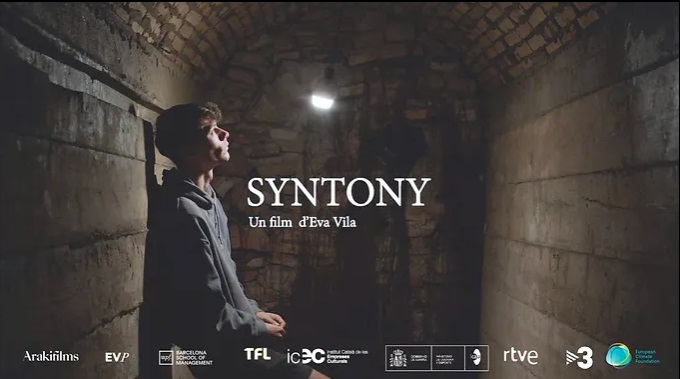
At a glance: Syntony is an art-based research project that grew out of the Green Shooting initiative, a previous project funded by a Planetary Wellbeing call that sought to promote sustainable production policies in the audiovisual industry. In collaboration with Radiotelevisión Española (RTVE), the Catalan Institute of Cultural Enterprises (ICEC), and the European Climate Foundation (ECF), among others, the project provides an examination of the outcomes of the dialogues held at the Spanish Citizens’ Assembly for Climate Change in the form of a creative documentary. The audiovisual work was directed by Eva Vila and produced at the Barcelona School of Management-UPF and ArakiFilms by Jordi Balló, a retired professor from the UPF Department of Communication, Marta Lopera-Mármol, a Juan de la Cierva postdoctoral researcher at Carlos III University of Madrid who earned her PhD at UPF, and Manel Jiménez-Morales, a UPF lecturer on leave who is currently vice-rector of the Open University of Catalonia (UOC). ‘Syntony is a film produced according to the precepts of sustainable film-making that, drawing on experimental research, reformulates content related to climate change discussed at the national level’, said Jiménez-Morales and Lopera-Mármol, the project’s principal investigators.
Project: 7th IATIS International Conference
Researcher: Patrick Zabalbeascoa
Department: Translation and Language Sciences
Action type: Workshops & Conferences
At a glance: Under the theme ‘The Cultural Ecology of Translation’, the 7th International Association for Translation and Intercultural Studies (IATIS) Conference explored the interactions both between human and non-human organisms in translation and between translation and interpreting and their physical environment. These interactions were approached from multiple perspectives, including cultural, social, environmental, political, literary, technological and ethical ones, among others. ‘The inspiration for our researchers comes from a recognition of the growing importance of multiple forces that impact and are impacted by the work of translators and interpreters’, explained Patrick Zabalbeascoa, a professor in the Department of Translation and Language Sciences at UPF.
Project: Environmental exposures and molecular markers: a potential link with health outcomes
Researcher: Paula de Prado Bert
Department: Medicine and Life Sciences
Action type: PhD Student
At a glance: Through the Planetary Wellbeing initiative, Paula de Prado Bert was able to participate in several courses on environmental and epigenetic epidemiology, affording her new knowledge to develop the papers included in her doctoral thesis. She was also able to take part in an online international conference on this subject, where she presented her research. ‘Because of Covid-19, the International Environmental Epidemiology Society conference for young researchers was held online. I had the opportunity to give an oral presentation at it and experience what it is like to participate in one of the world’s most important conferences in the field of environmental epidemiology’, said de Prado Bert, an alumna of the Human Biology undergraduate and master’s in Public Health programmes at UPF who is currently affiliated with the Institute of Environmental Science and Technology at the Autonomous University of Barcelona (ICTA-UAB).
Project: Understanding Our Climate Emergency Through Art and Aesthetics
Researchers: Santiago Zabala and Isabel Valverde
Department: Humanities
Action type: Workshops & Conferences
At a glance: This academic conference brought together philosophers and artists working on the environmental emergency through art and aesthetics. The aim was not only to show how the prevailing technological-economic approach has failed to mitigate a dramatic environmental emergency that has now reached levels of no return, but also to propose alternative transformative actions to counter this situation. ‘Art and the humanities, broadly understood, can provide us with a different conceptual platform to address these issues outside the technological-economic framework’, explained Santiago Zabala and Isabel Valverde, an ICREA research professor and a lecturer on Art History in the Department of Humanities, respectively.
Project: Optimise Vertical Farming - Feed the world, reduce emissions, promote healthy diets
Researcher: Alberto Santini
Department: Economics and Business
Action type: Pilot Project
At a glance: This project consisted of a pilot study for the use of vertical farming techniques to grow food on-site at public schools. Vertical farming is a technology for growing produce on stacked shelves in controlled indoor environments that makes it possible to: increase the yield per square meter, thereby reducing the need for arable land; stop using pesticides and chemical fertilizers; ensure high-quality yields year-round; limit water consumption; and reduce emissions. ‘We want to prove that vertical farming is well-suited to growing produce for public school cafeterias’, said Alberto Santini, a Ramón y Cajal researcher in the Department of Economics and Business.
Project: The digital revolution and sustainable consumption
Researchers: John Palmer and Mireia Artigot
Departments: Political and Social Sciences and Law
Action type: Workshops & Conferences
At a glance: This project resulted in several published papers, a workshop and two international conferences at UPF related to the impact of artificial intelligence (AI) on consumers and consumption in the context of the climate crisis, as well as broader issues of health, technology and climate change. ‘The workshop and conferences brought together perspectives on these issues from a variety of disciplines, including law, political and social sciences, economics and ecology’, said John R. B. Palmer and Mireia Artigot Golobardes, researchers in the Department of Political and Social Sciences and the Department of Law, respectively. These activities leveraged ongoing research by teaching staff and graduate students at UPF and helped connect them to broader academic networks.
Project: Communication strategies for sustainability: the potential of human rights and equality-based narratives for urgent climate action
Researcher: Ana García Juanatey
Department: Law
Action type: Postdoctoral Researcher
At a glance: The project’s main outcome was an open-access paper, published in 2022 in Spanish, entitled ‘Los derechos humanos como herramienta para la acción climática: una propuesta comunicativa’ [Human rights as a tool for climate action: a communicative proposal]. ‘The project’s aim was twofold: first, to conduct a meta-review of the relevant literature in the field of climate change communication and translate it into easy-to-read advocacy recommendations; and, second, to explore the connection between human rights agendas and climate movements and propose human rights-based narratives capable of stimulating urgent climate action’, said Ana García Juanatey, currently a lecturer on international law and international relations at CEI International Affairs, a school affiliated with the University of Barcelona.
Project: WellbeingTEL: Multimodal learning analytics and human wellbeing indicators in technology-enhanced learning scenarios
Researcher: Davinia Hernández-Leo
Department: Engineering
Action type: Pilot Project
At a glance: The WellbeingTEL project capitalizes on and integrates previous work by the Research Group on Interactive and Distributed Technologies for Education (TIDE) at UPF on learning design and orchestration technologies, learning analytics, ethics, and novel data collection and analytics methods. ‘Our project seeks to prepare scientific advances for ethically driven digital transformations of education, where educators are part of a collective learning effort, enabling them to be change agents through active participation and the promotion of wellbeing’, said Davinia Hernández-Leo, a researcher in the Department of Engineering and head of the TIDE research group.
Project: For Whose Benefit?: A Critical Analysis of Forest Carbon Offsetting Projects and Conflict
Researcher: Dominique Schmid
Department: Political and Social Sciences
Action type: PhD Student
At a glance: Initially, the budget was to be allocated to fieldwork in Uganda to investigate the relationship between forest carbon offsetting projects and social conflict. To this end, the grant recipient initiated a partnership with Makerere University (Kampala, Uganda). In both cases, the common goal was to perform a broader statistical analysis of the topic, which was carried out and published as an academic paper in Climate and Development. However, ‘due to the Covid-19 pandemic and uncertainty surrounding travel, I had to adapt the approach to my thesis, to make it less reliant on fieldwork’, explained Dominique Schmid, a PhD student in the Department of Political and Social Sciences at UPF. As a result, the funding was ultimately used to further her training.
Project: Research workshop ‘Colonialism and Gender in the Making of the Global Modernity (16th-18th Centuries): The Patriarchal Turn and Its Long-Lasting Implications’
Researcher: Sandra Montón Subías
Department: Humanities
Action type: Pilot Project
At a glance: Early modern colonialism brought into co-existence people with different sex and gender systems, sometimes separated by huge cultural gaps. Local understandings that proved incompatible with those brought or imposed by colonial agents were often disrupted, resulting in a trend towards gender standardization. ‘The project aims to discuss this global-planetary patriarchal turn and the ensuing exploitation or discrimination against all those who were progressively defined as “others” by the emerging modern patriarchal subject, at both the local and global scale, through specific mechanisms’, said Sandra Montón Subías, an ICREA research professor in the Department of Humanities and coordinator of the Research Group on Colonialism, Gender and Materialities.