Young people from all over Europe share innovative proposals at UPF to combat fake news at a meeting of the EUTOPIA alliance of universities
Young people from all over Europe share innovative proposals at UPF to combat fake news at a meeting of the EUTOPIA alliance of universities
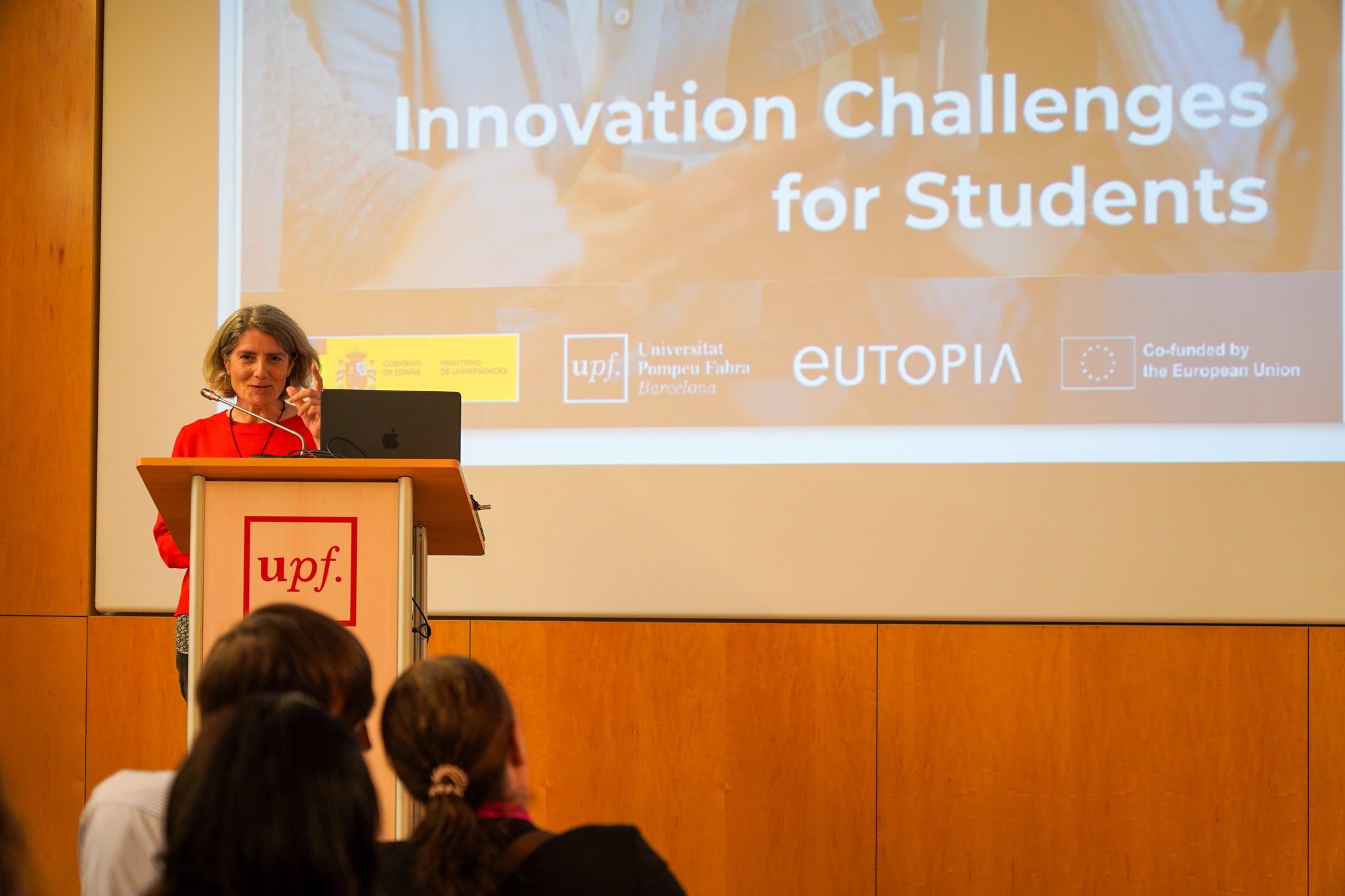
“The search for truthful information is not just important, it’s urgent”. With this in mind, Karma Peiró, a consultant specializing in information and communication technologies (ICT), kicked off the third edition of the Innovation Challenges for Students, an initiative driven by EUTOPIA and hosted by UPF, as coordinator of the alliance of European universities.
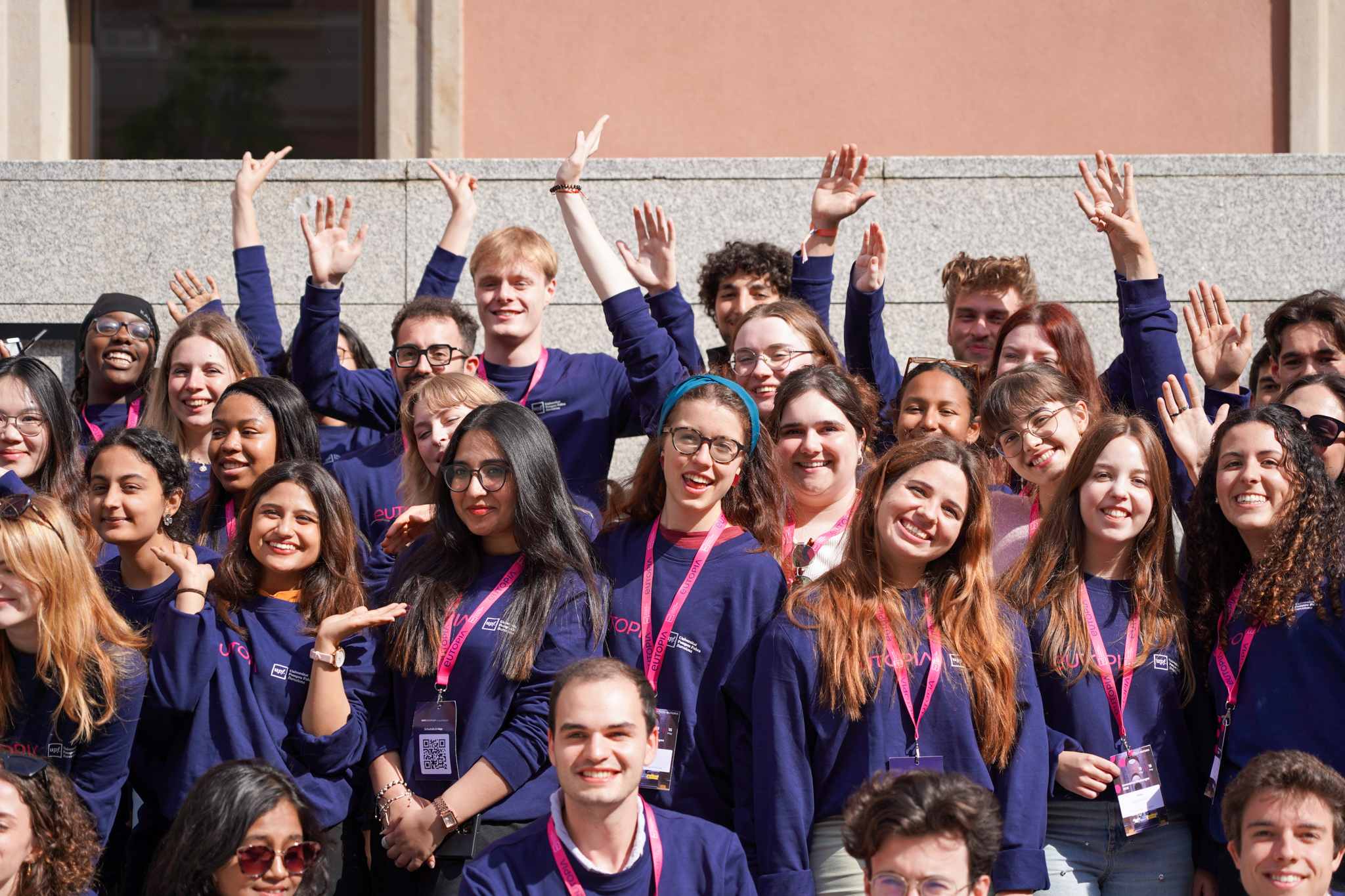
The EUTOPIA Alliance is committed to creating connected campuses through multidisciplinary learning and teaching innovation, placing students at the centre. A good example of this are the Innovation Challenges for Students, the latest edition of which was held on the UPF Ciutadella campus between 13 and 15 May. The conferences connect students from various EUTOPIA universities to tackle challenges that have a real impact on the territory, posed by companies and entities from different fields. This latest edition focused specifically on the fight against misinformation. With the slogan Unmasking the Truth: Tackling Fake News Together, some eighty students from ten European universities put forward creative solutions to counter the proliferation of misinformation.
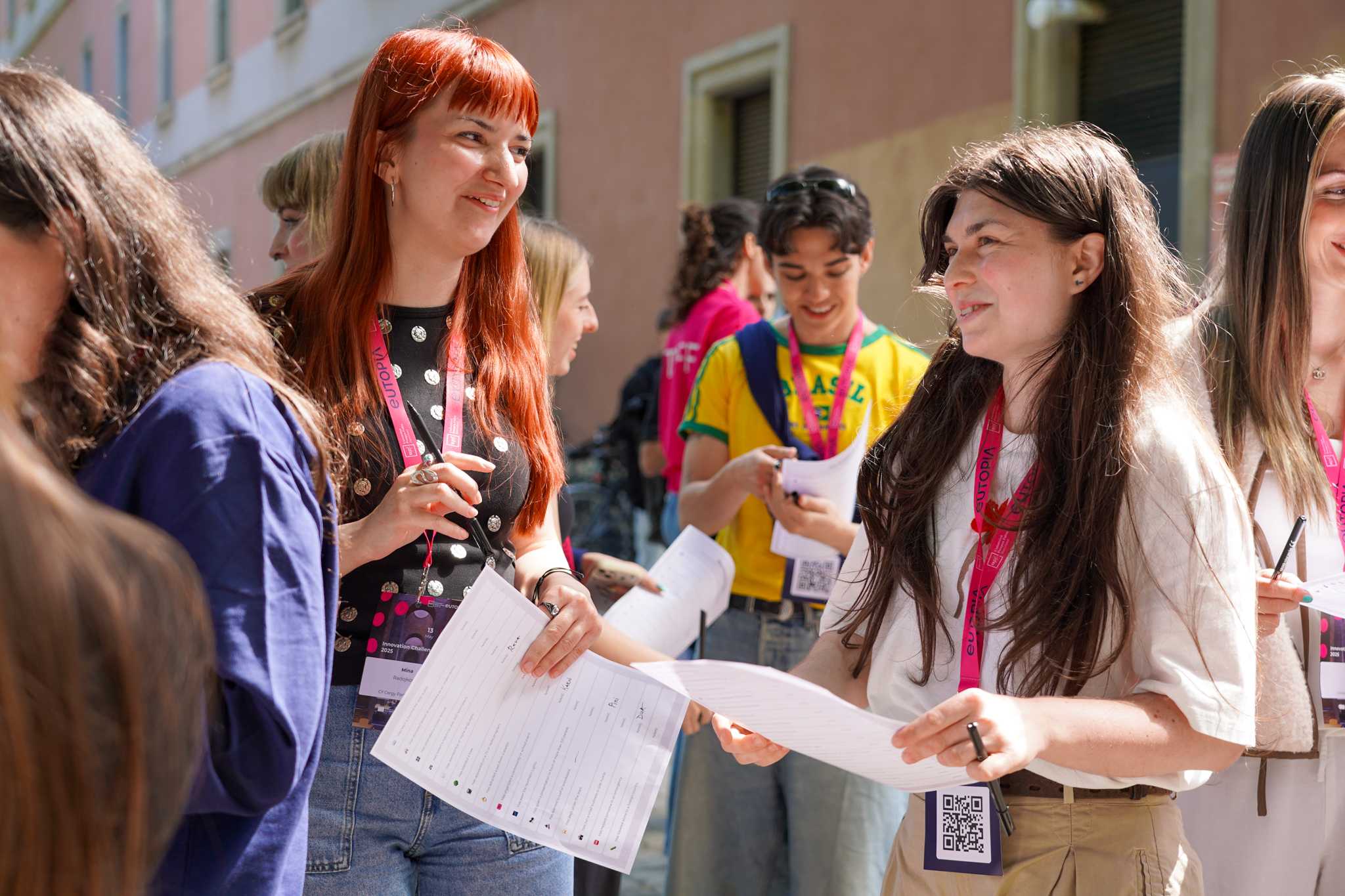
At the start of the conference, the UPF commissioner for EUTOPIA and International Programmes, Josep Ibáñez, welcomed the students highlighting that gathering people from different backgrounds is useful to deal with challenges that require collaboration, as is the fight against fake news. For his part, Nil Cassany, president of the UPF Student Council, stressed that many of the activities and meeting spaces provided by EUTOPIA offer “a great opportunity to get involved in improving Europe”, in addition to inviting the participants to immerse themselves “in our city and culture”. In fact, at the event, beyond the challenges concerning misinformation, the international students also had the chance to learn about Catalan traditions such as castells (human towers), under the guidance of the UPF Trempats association, in addition to participating in other recreational and cultural activities.
Four challenges, one common problem
During the conference, the students of the universities of the EUTOPIA alliance demonstrated their commitment to tackling the threat of misinformation, a growing problem according to the data presented by Karma Peiró during her talk (see the summary of her presentation). Misleading news spreads six times faster than real news, and 63% of young Europeans come across fake news more than once a week.
To find innovative solutions to this social problem, the participants of the hackathon were divided into sixteen interdisciplinary teams, with students from different fields of knowledge, to solve four challenges linked to the need to make it easier for citizens to verify information in their daily lives; to counter misinformation in the field of mental health; to identify and dismantle deepfakes; and to use open data from the administration (open access) as a tool to combat fake news. The organization and dynamization of the work groups enjoyed the collaboration of four entities, companies or projects (one per category): Verificat, Canòdrom, Fundació Joia and +Rain Film Festival. These collaborators appointed tutors and mentors to steer the students throughout their work process.
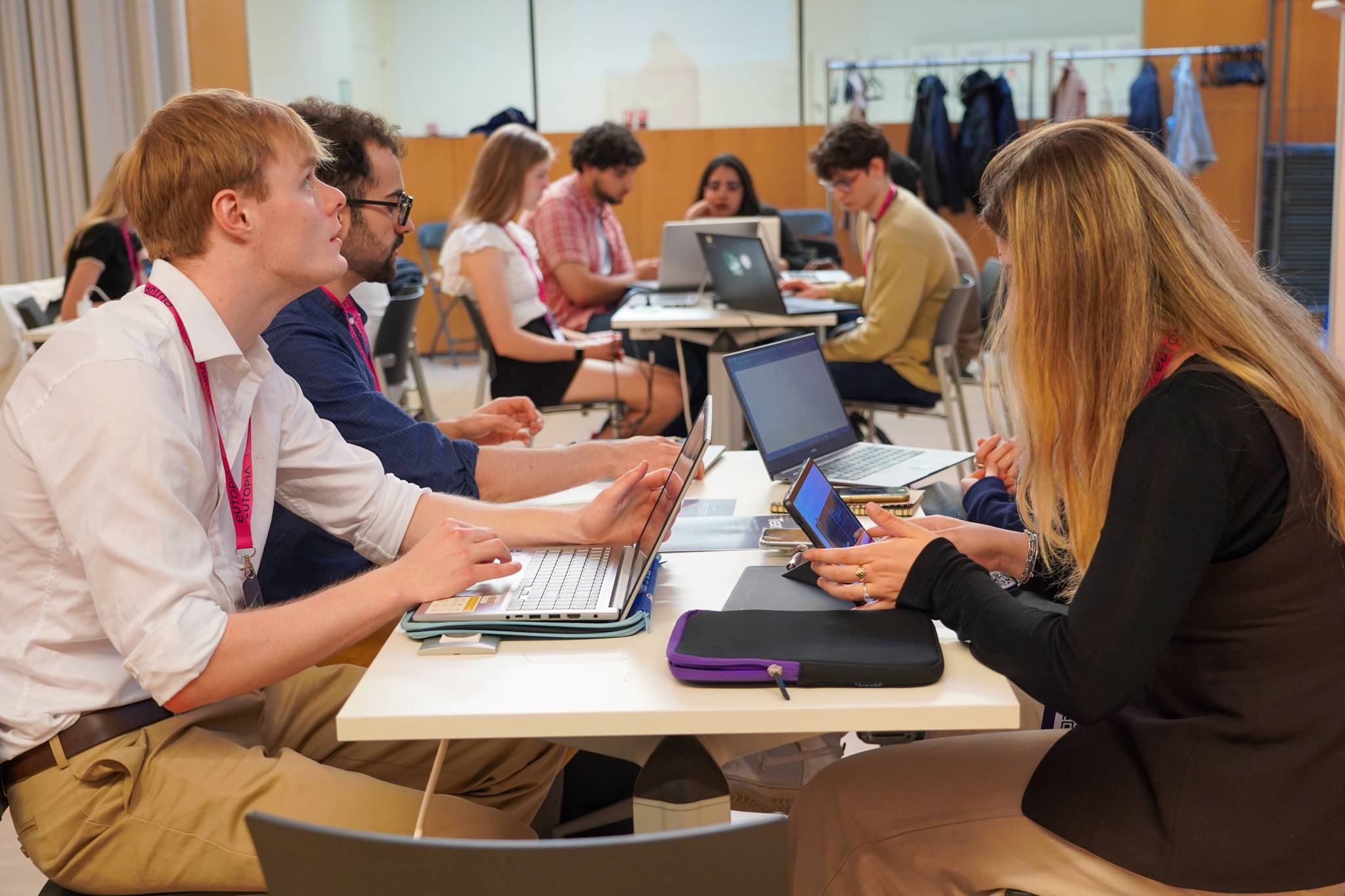
In each of the previous thematic categories, four teams of students participated, of which one was awarded at the end of the meeting. A general prize for the best proposal to combat misinformation was also awarded to one of the 16 groups of students (see list of winners).
The panel of this edition of the Innovation Challenges, which assessed the students’ proposals, included Andrés González-Nandín, a journalist and coordinator of the Diari de Barcelona; Josep Ibáñez, UPF commissioner for EUTOPIA and International Programmes, and Diego Sáez, UPF alumni and senior research scientist at Wikimedia Foundation. Other panel members included representatives of the companies that collaborated in posing the different challenges: Lucía Abadías of Verificat, Mar Escarrabill of Canòdrom, Meritxell Vilanova and Beatriz Castillo of Foundació Joia, and Àlex Valverde of +Rain Film Festival.
This edition of the Innovation Challenges was funded by the EU and the Spanish Ministry of Universities.
Dismantling fake news through gaming
The first challenge was organized in collaboration with Verificat, Catalonia’s renowned fact-checking platform. The aim of the challenge, as explained by the Diari journalist Lucia Abadías, was to find out how to combat the speed with which false content is disseminated and promote accessible and rigorous verification initiatives. “Students can learn to identify which news is fake and see what methods should be followed to verify information. It is about learning how to do it in order to be able to pass it on to other people around them”, Abadías explained at the beginning of the meeting.
Team 13 —made up of the students Alexandru Ciobotaru (Babeș-Bolyai University), Célia Felizardo Rey (CY Cergy Paris University), Hirishita Rangoonwala (University of Warwick), and Laura Gabor (Babeș-Bolyai University)— won with “Clarificat”, a gamification proposal based on a mobile application where users must identify what is misinformation and what is real news by means of challenges and a leaderboard. One of the members described it “like a game to put your brain into practice”.
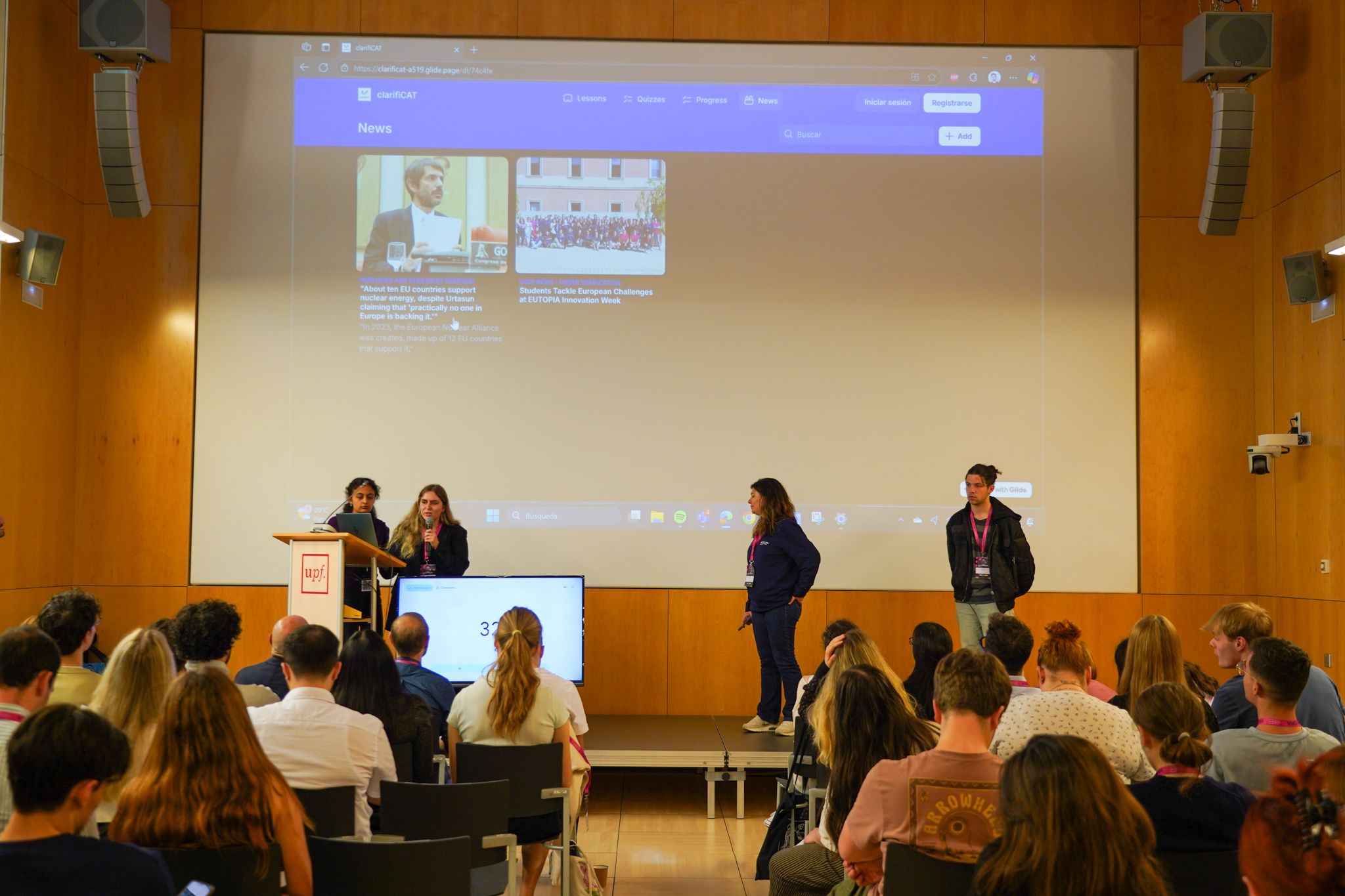

As the students outline, the initiative arose after detecting a clear necessity: “People need to be willing to become critical thinkers. They have to know how to identify and combat fake news. At the same time, we want to help reduce the workload of verification experts”.
Misinformation and mental health
The second challenge addressed the relationship between fake news and mental health and enjoyed the collaboration of Fundació Joia, an entity that supports people with health problems so that they can develop their skills and improve their quality of life. The teams had to improve media education to help individuals critically analyse the information they receive and thus prevent negative consequences on mental health resulting from consulting unreliable sources.
“What they propose can be applied to reduce the difficulties that many young people have in accessing reliable information concerning mental health”, explained Meritxell Vilanova, head of digital content and strategy at Fundació Joia on the first day of the hackathon.
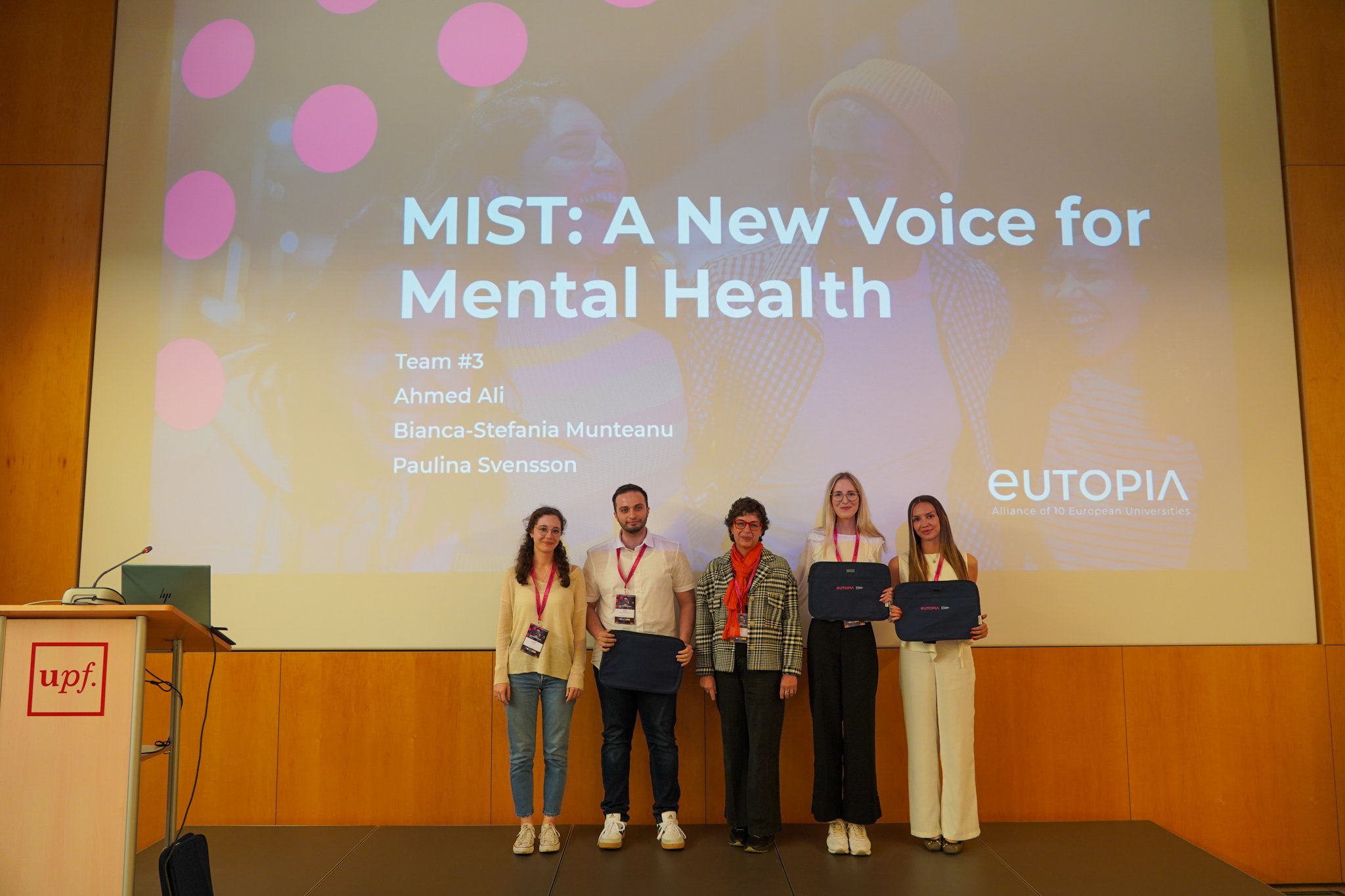
The winning project was by team 3 —made up of Ahmed Ali (Babeș-Bolyai University), Bianca-Stefania Munteanu (Babeș-Bolyai University), and Paulina Svensson (University of Gothenburg)— and was entitled “MIST: A New Voice for Mental Health”. Their proposal was based on the creation of a database with reliable scientific articles on mental health, which would serve to train a language model (LLM). This system would enable generating brief and rigorous scripts, reviewed by professionals, in order to produce information videos generated by artificial intelligence.
Deepfakes and their real impact
The third challenge focused on the reliability of digital images, in the face of the growing proliferation of deepfakes, AI-generated videos that fake a person’s identity or voice. The aim was to analyse the lack of algorithmic transparency of social networks and call for greater accountability by digital platforms in view of the dissemination of manipulated content.
These groups were supported by +RAIN Film Festival, the first European festival dedicated exclusively to the intersection between artificial intelligence and audiovisual creation, driven by UPF. According to Alex Valverde, spokesperson for the festival at the EUTOPIA hackathon, the intention was to “empower young people in the age of artificial intelligence” and make them aware of the ethical and cultural implications of what is consumed and shared online.
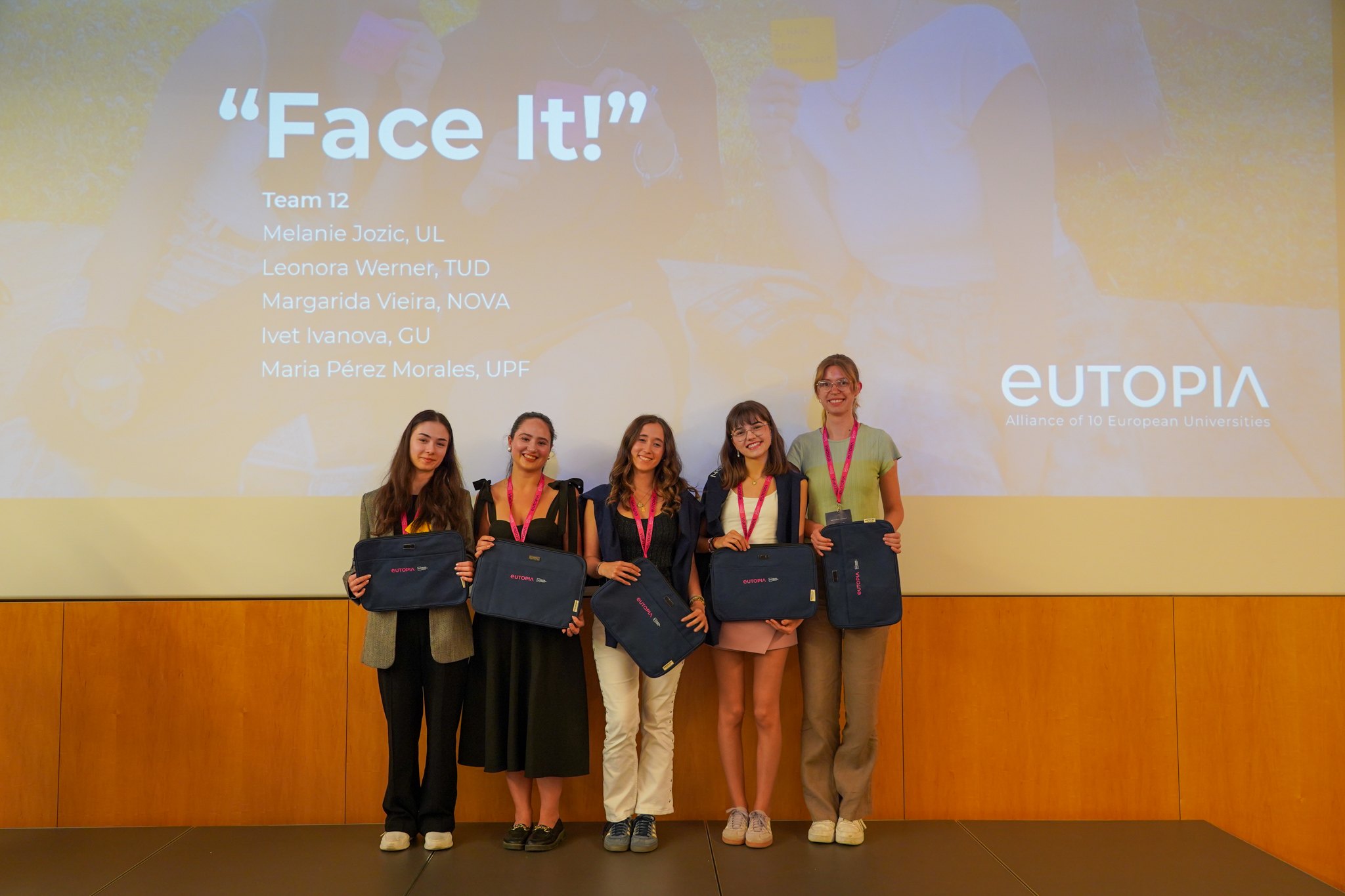
Team 12 —with Melanie Jozic (University of Ljubljana), Leonora Werner (TU Dresden), Margarida Vieira (NOVA University Lisbon), Ivet Ivanova (University of Gothenburg), and Maria Pérez Morales (UPF)— was the winner with “Face It”, an immersive, multidimensional experience that combines reality and artificial intelligence to raise awareness on deepfakes and visual misinformation. This group also received the overall award of the Student Hackathon for creating a feasible proposal with a social impact.
The activity gives participants the role of media manipulators, putting them in the shoes of the creators of misleading content. The aim is to arouse critical reflection, especially by groups of people who are less sensitized to digital literacy, on the ease with which visual reality can be faked. “The approach of the project is recreational and interactive, as a gateway to educate and foster critical awareness in an environment that is full of manipulated images and videos”, they highlighted.
Open data for a transparent democracy
The fourth and final challenge had the support of the Canòdrom, Ateneu d’Innovació Digital i Democràtica, and was based on the relationship between two fundamental pillars: fake news and democracy. The proposal invited students to reflect on misinformation as a direct threat to democratic institutions and to think about initiatives that might promote regulatory frameworks to sanction its deliberate dissemination.
Mar Escarrabill, a member of the Canòdrom technical team, underlined the key role of open data in combating misinformation: “Barcelona is a pioneer in this field, and its Open Data BCN portal offers a wealth of information that can help verify rumours and fake news”. According to Escarrabill, the challenge was for the students to discover “the value of open data for themselves”, learn to “discriminate what is relevant in a large volume of data” and know how to “turn it into understandable messages for citizens, with a real capacity to have an impact”.
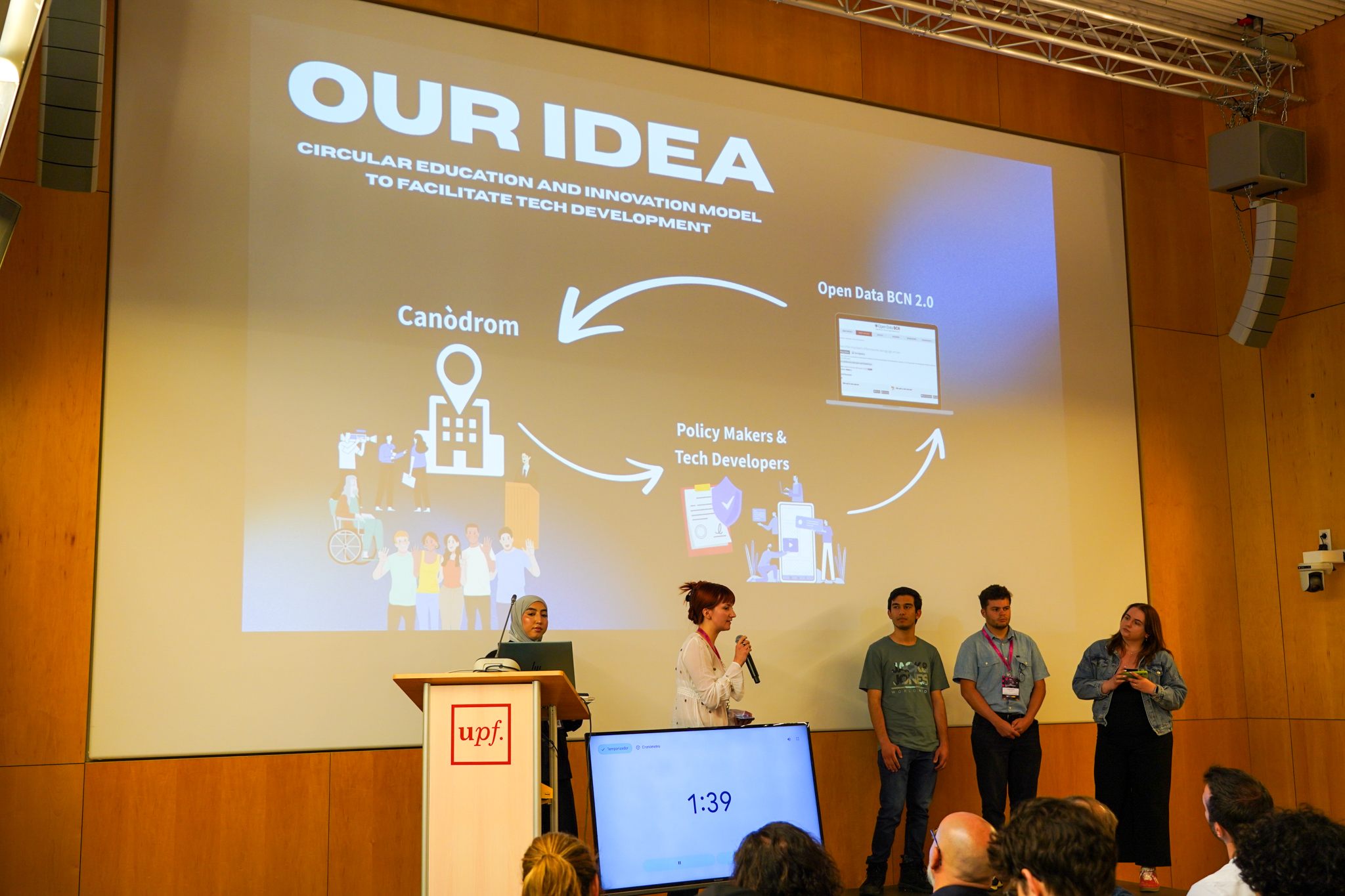
Team 10 —whose members were Oumaima Alibrahimi (Vrije Universiteit Brussel), Tamara Podolski (University of Ljubljana), Mina Radojković (CY Cergy Paris University), Philipp Steinkopf, and Fahri Eren Ögütlü (TU Dresden)— won this challenge with “CTRL+TRUTH”, a proposal to redesign the Open Data platform to make it more intuitive, accessible and useful for citizens. According to the students on the team, its goal is to “facilitate technological development through a circular model of education and innovation”.
A call to shared responsibility
Following on from the presentation of the students’ project, the hackathon was brought to a close at which the UPF vice-rector for Internationalization, Helena Ramalhinho, appealed to individual responsibility in the fight against misinformation. “If you listen and ask questions, it’s not so easy for someone to sell you fake news”, said Ramalhinho, who believes that this ability to listen is fundamental to understanding others. She also insisted that this task does not fall solely on the media or institutions, rather it “depends on each of us”.
With this appeal for empathy, criticism and dialogue, the vice-rector brought to a close three days of innovation, learning and cooperation among students from all over Europe sharing a common goal: to tackle the challenges that threaten the quality of information and, therefore, the health of democracies.
Award-winning proposals from the 3rd edition of the Innovation Challenges for Students
Overall winner and winner of the misinformation and deepfakes category
- Face It: an immersive, multidimensional experience that combines reality and artificial intelligence to raise awareness concerning deepfakes and visual misinformation. Project of team 12 made up of Melanie Jozic (University of Ljubljana), Leonora Werner (TU Dresden), Margarida Vieira (NOVA University Lisbon), Ivet Ivanova (University of Gothenburg), and Maria Pérez Morales (UPF).
Winner of the fact-checking in everyday life category
- Clarificat: a gamification proposal based on a mobile application where users must identify what is misinformation and what is real news. Project by team 13 made up of Alexandru Ciobotaru (Babeș-Bolyai University), Célia Felizardo Rey (CY Cergy Paris University), Hirishita Rangoonwala (University of Warwick), and Laura Gabor (Babeș-Bolyai University).
Winner of the misinformation and mental health category
- MIST: A New Voice for Mental Health: a proposal based on the creation of a database with reliable scientific articles on mental health to train a language model (LLM). Project by team 3 consisting of Ahmed Ali (Babeș-Bolyai University), Bianca-Stefania Munteanu (Babeș-Bolyai University), and Paulina Svensson (University of Gothenburg).
Winner of the misinformation, democracy and open data category
- CTRL+TRUTH: a proposal to redesign the Open Data platform to make it more intuitive, accessible and useful for citizens. Project by team 10 involving Oumaima Alibrahimi (Vrije Universiteit Brussel), Tamara Podolski (University of Ljubljana), Mina Radojković (CY Cergy Paris University), Philipp Steinkopf and Fahri Eren Ögütlü (TU Dresden).
Karma Peiró, journalist specializing in technology: “In a world full of noise, you have to keep vigilant to be informed”
Lately, we are hearing a lot about fake news, but in reality, it’s nothing new. Karma Peiró, who gave a talk on the subject at the start of the EUTOPIA hackathon, recalled that the first reference to this term dates back to the late 19th century, to refer to deliberately false information published in the Milwaukee Daily Journal (Wiscosin). What is more recent, however, is the ability of digital technologies and social networks to amplify and accelerate its spreading.
“Technology experts themselves admit that the tools they have created are dangerous”, assured Peiró during her presentation, during which she cited some of the documentaries that show some of the risks of social networks in terms of personal data control and the amplifying effects of fake news, such as The social dilemma (2020) or The Great hack (2019).
The expert also referred to the interested political use of these digital media to spread false information among millions of voters, of which the Cambridge Analytica scandal is the paradigmatic example. Between 2010 and 2020, this British consultancy firm collected data from millions of Facebook users without their consent for political propaganda purposes, for example in favour of Donald Trump’s candidacy during the 2016 US presidential election.
The proliferation of misinformation practices for political purposes has led to a greater use of terms such as post-truth, a phenomenon whereby objective facts have less influence on public opinion than manipulated messages that arouse emotions or appeal to personal beliefs.
Karma Peiró looked at these and many other terms that are often included under the general name of fake news. For example, she referred to pseudoscience, in reference to messages that are not supported by any scientific evidence but are presented as such; or to conspiracy theories, which maintain, without any reliable proof, that certain events are secretly controlled by powerful groups. She also referred to “hyperpartisan news”, referring to information distorted due to being aligned with radical or extremist messages, among other denominations.
Given the growing seriousness of the phenomenon of misinformation, Peiró insisted on the need to seek solutions at different levels, involving public institutions and professionals of journalism and communication, but also citizens in general, due to the individual responsibility we have when checking information and deciding whether or not to share it. In respect of institutions, the speaker explained that the EU has the Digital Services Act (DSA), its general regulatory framework for regulating digital platforms, preventing illegal activities and curbing the dissemination of biased content. Regarding journalistic initiatives against misinformation, she pointed out that it is increasingly widespread and that, by 2020, there were already 237 fact-checker organizations in 80 countries around the world, according to the most recent data available from the Reporters’ Lab research centre.
Finally, regarding individual responsibility, Peiró recommended adopting a critical attitude towards information from unreliable sources and asking yourself where each news story comes from, who is spreading it, why, how... before sharing it automatically. In the expert’s view, “in a world full of noise, you have to keep vigilant to be informed”.