
UPF organizes the 2nd Congress of Ecological Humanities to rethink the relationship with the planet from a transdisciplinary point of view
UPF organizes the 2nd Congress of Ecological Humanities to rethink the relationship with the planet from a transdisciplinary point of view
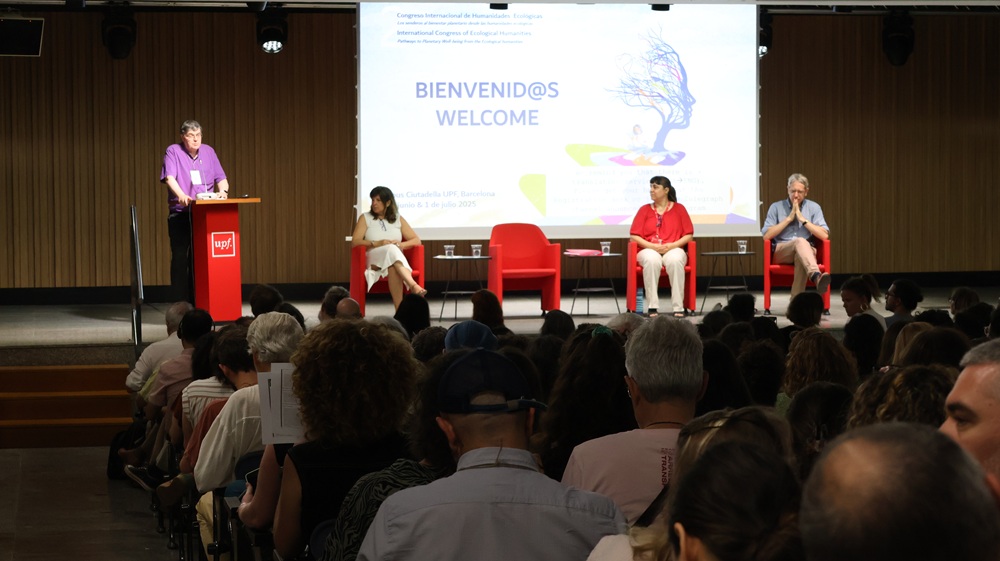
During the 2nd International Congress of Ecological Humanities (CIHE), which will take place on 30 June and 1 July 2025, the Ciutadella campus of Pompeu Fabra University in Barcelona will become the international epicentre of academic and social dialogue on ecosocial crises. At a time when reflection (and action) is more important than ever, this congress assumes the political and moral character of the debates on social metabolism as a pathway towards planetary well-being.
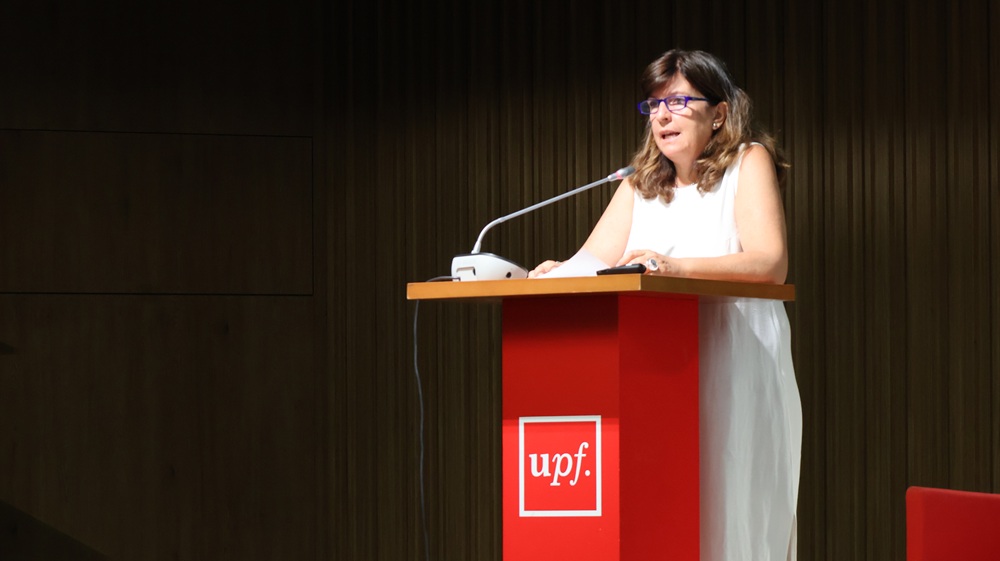
The opening of the congress took place on June 30, in the morning, in the auditorium of the Ciutadella campus, chaired by Eva Pujadas, Vice-Rector for Social Commitment and Sustainability at UPF. In her words, she welcomed all attendees and pointed out the importance of an academic meeting of this nature, which helps to find solutions, in the current context of global inequalities.
The opening was completed with the interventions of Joan Benach, co-director of the JHU-UPF Public Policy Center and director of the GREDS-EMCONET research group of the UPF Department of Political and Social Sciences; John Palmer, researcher of the Department of Political and Social Sciences and co-director of the Mosquito Alert project, and the scientific coordinator of the congress Beatriz Jiménez Labajos, researcher of the UPF Department of Political and Social Sciences and linked to the University's JHU-UPF Public Policy Center.
"Human progress has had an unsustainable environmental and social cost, generating unprecedented ecological destruction and unacceptable inequalities in health and wealth. Faced with this urgency, UPF has launched a transversal and transdisciplinary initiative to develop innovative solutions to this global crisis," said Beatriz Rodríguez-Labajos.
Opening speech by Eliane Brum
The opening speech was given by Eliane Brum, journalist, writer and documentary filmmaker, founder and editor-in-chief of the trilingual platform Sumaúma – journalism from the center of the world, based in the Amazon. In her words, Brum assured that "the true centers of the world are the places where there is life that sustains us, and not the stock markets. The world needs to be recentered."
Eliane Brum: "The true centers of the world are the places where there is life that sustains us, and not the stock markets. We need to recenter the world"
According to Brum, "by separating from nature, man separated from humans. Every colonial experience is an experience of separation between man and nature, between man and human." She pointed out that "countries like Brazil were built on the ruins of indigenous peoples, on the ruins of the bodies of Africans kidnapped from their territories, on the ruins of the bodies of other humans and animals, plants and fungi."
“Human progress has had an unsustainable environmental and social cost, causing unprecedented ecological destruction and unacceptable inequalities in health and wealth. In view of this emergency, UPF has launched a cross-cutting, transdisciplinary initiative to devise innovative solutions to this global crisis”, asserts the scientific coordinator of the congress, Beatriz Rodríguez-Labajos, a researcher with the UPF Department of Political and Social Sciences and linked to the University’s JHU-UPF Public Policy Center.
Thus, the academic meeting seeks to provide a space for reflection to understand the political transformations required in the face of the ecosocial crisis and to rethink the economic future in an ecologically transforming world, and an opportunity to imagine resilient, inclusive and sustainable cities, to rethink the crisis and redesign structures.
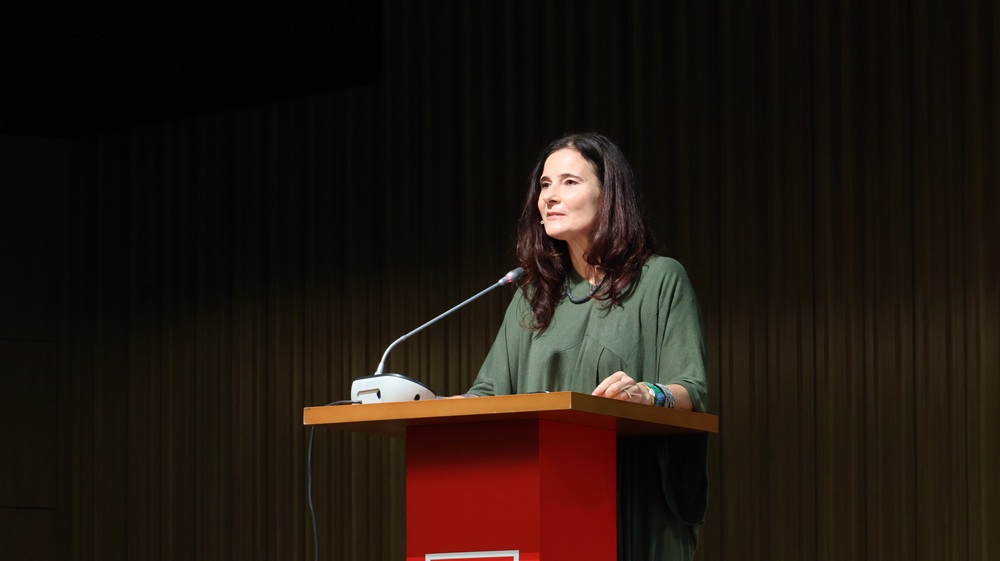
A high impact meeting of international scope combining academic research and artistic creation
The congress will gather more than 300 participants, leading international experts from 170 institutions in some thirty countries on five continents, to promote interdisciplinary reflection, under the theme: “Pathways to planetary well-being from the Ecological Humanities”. They belong to such diverse disciplines as art and literature, philosophy and ethics, sustainability, ecological transitions, environmental justice, political ecology, communication, and health.
The three keynote presentations will be given by Eliane Brun, a journalist, writer and documentary filmmaker, founder and editor-in-chief of the trilingual platform Sumaúma – journalism from the centre of the world, based in the Amazon; Miram Lang, a professor with the Department of Environment and Sustainability at the Simón Bolívar Andean University (Ecuador), and Aurélien Berlan, a professor of Social Philosophy and Political Ecology at the University of Toulouse (France).
In addition, the congress will promote a space to learn about the most pioneering theories and proposals of various researchers working at the intersection of philosophy, art, politics and environmental justice. Thus, apart from the strictly academic content, it will feature artistic and experiential sessions, which will include photography and art exhibitions, video screenings, performances, theatre, and creative workshops.
Five thematic axes to explore the concept of Ecological Humanities and advance in the direction of change
The Ecological Humanities provide a space where science, politics and ethics converge, allowing a deeper and more complex understanding of the socio-environmental challenges we are facing.
The congress, which aims to deal with issues ranging from academic analysis to collective action, proposes exploring the concept of Ecological Humanities through five thematic axes that are gaining increasing intellectual and political relevance on an international scale:
1. Fair ecosocial transformations: Institutional governance and grassroots movements to build new sustainable realities.
How do community initiatives contribute to the ecosocial transition? What tensions arise? What historical trajectories shape the current crisis and what can we learn from the past to move towards sustainable and equitable transformations?
2. Transformative relationships: Relational approaches from ecofeminism and indigenous worldviews.
How can we foster fairer, more balanced relationships between cities and rural areas, between living beings and between academic disciplines?
3. Aesthetics and political ecology: The power of art and activism to build sustainable futures.
How is environmental activism intertwined with contemporary arts, anthropocentric imagination and the transformation of the aesthetics of fossil capitalism towards new ways of imagining the future such as science fiction, speculative literature or animation?
4. Commons, geopolitics and environmental justice: Socio-environmental conflicts and new narratives on natural resources.
What dynamics, actors, narratives, and injustices are shaping the struggles for access to, the protection, securitization and/or use of the commons both locally and globally? How do these disputes affect the governance of the commons?
5. Philosophy in transition. Culture, ethics and nature: rethinking modern foundations to transform our worldviews.
What types of ontology, epistemology, and hermeneutics should guide the ecological humanities? And how can we transform our social relationships with the non-human world?
An organization that reflects the cross-disciplinary and transversal nature of the meeting
The CIHE is organized by Pompeu Fabra University, in collaboration with the Johns Hopkins University – Public Policy Center (JHU-UPF PPC), the Centre for Studies on Planetary Wellbeing, and the Departments and Faculties of Political and Social Sciences, Humanities, and Medicine and Life Sciences.
In addition, it has the support of academic institutions and research groups such as the Barcelona Institute of International Studies (IBEI), the History of Science Institute of the Autonomous University of Barcelona, and the Institute of History of the CSIC.
Also participating in the congress organization are the GHECO research group of the Autonomous University of Madrid, THECO, of the Carlos III University of Madrid, and Ekopol of the University of the Basque Country/ Euskal Herriko Unibertsitatea, and the Department of Philosophy of the University of Salamanca through the RHECO network, managed by the University of Valencia.
The congress is one of a series of activities organized and coordinated by the JHU-UPF Public Policy Center between the months of May and July 2025 under the umbrella of “Planetary Health in 50 Days”, and which will be rounded off with the Conference on Green Transition and Post-Growth Futures (2 July) and the congress Green Colonialism and Green Sacrifice: Critical Perspectives of Green Transitions (3 and 4 July). The first activity was the international conference “Rethinking the Eco-Social Determinants of Health Inequities” (ESDHI-EU), which took place on 22 and 23 May.