
UPF receives twelve Marie Curie 2025 postdoctoral grants strengthening its leadership in attracting international talent
UPF receives twelve Marie Curie 2025 postdoctoral grants strengthening its leadership in attracting international talent
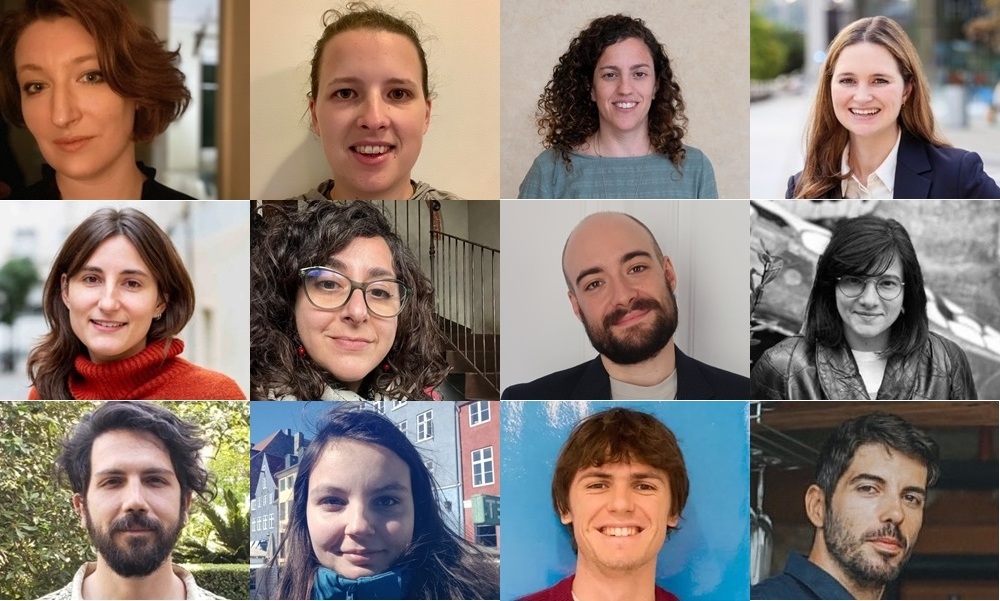
UPF has obtained funding for 12 projects within the 2025 call for Marie Skłodowska Curie postdoctoral fellowships (MSCA-PF) and is the first university and the second scientific institution in Spain for the number of grants received. The initiative is part of Horizon Europe, the European Union’s flagship funding programme for doctoral and post-doctoral training for researchers. These results consolidate the University’s leadership in Europe in Marie Skłodowska-Curie Actions and showcase the strength and competitiveness of its research, as well as its ability to attract international talent of excellence.
UPF submitted a total of 70 applications and has obtained funding for 12 projects, led by 12 postdoctoral researchers (8 women and 4 men), who will be supervised by senior researchers from five different departments of the University (Economics and Business, Political and Social Sciences, Humanities, Engineering, and MELIS). These figures represent a success rate of 17.4% for UPF, almost double the overall success rate for the call and nearly twice that for Spain as a whole: the European Commission has financed a total of 1,610 of the 17,066 projects submitted (success rate of 9.43%), and in Spain, of the 1,935 proposals by Spanish institutions, 182 projects have been financed yielding a success rate of 9.41%.
These figures represent a success rate of 17.4% for UPF, almost double the overall success rate for the call and nearly twice that for Spain as a whole
Of the sixty Spanish institutions awarded funding, with 12 projects UPF is the second institution in Spain for the number of grants obtained (only behind the CSIC, which has obtained 35). If we focus on universities, UPF comes in first place, ahead of the University of Barcelona, with 10, and the University of Santiago de Compostela, with 8.
The sum of the funding for the 12 UPF projects amounts to some 2.5 million euros, or almost 6.5% of the total funding obtained by Spain (38.8 million euros in all). The grants awarded to the twelve Pompeu Fabra University projects range from 194,074.56 to 242,593.20 euros.
In global figures, the MSCA 2025-PF call has allocated 404.3 million euros to 1,610 postdoctoral researchers. The selected applicants, representing almost 80 nationalities, will work in 45 countries across Europe and the rest of the world. The MSCA-PF call finances the recruitment of research staff of any nationality who have less than eight years of research experience, with the aim of acquiring new skills through advanced training and international, interdisciplinary and intersectoral mobility.
Which are the twelve projects for which UPF has obtained funding?
Resilience to major life shocks, tropical linear spaces, temporary parental leave policies, and fertility and reproductive policies, four projects in the Department of Economics and Business
Project title: Harnessing Empathy as a Pathway to Resilience in Behavioural Responses to Shocks
Acronym: EmPath
MSCA researcher and university of origin: Alina Velias, London School of Economics (London, United Kingdom)
UPF supervisor: Rosemarie Nagel, ICREA research professor at the Department of Economics and Business, co-director of the Behavioral Experimental Sciences Laboratory Research Group (BESLab) and research professor at the BSE.
Amount granted: €194,074.56

Summary: EmPath will study how individuals build resilience in the face of major life shocks (economic hardship, environmental disasters, and health crises) and will integrate knowledge of behavioural economics and psychology. The project advances a framework that combines literature on the “empathy gap” with models of strategic reasoning. Its central hypothesis is that resilience can be fostered when individuals recognize the transience of current emotional states and, through empathy, anticipate both their own future states and the perspectives of others. “The EmPath project is aligned with the EU’s priorities regarding resilience, climate adaptation and public health, in order to improve democratic stability and individual well-being”, Alina Velias states.
Project title: Tropical Statistics: New Frontiers in Max-Linear Data Analysis
Acronym: Tropical Statistics
MSCA researcher and institution of origin: Shelby Cox, Max Planck Institute for Mathematics in the Sciences (Leipzig, Germany)
UPF supervisor: Piotr Zwiernik, senior Serra Húnter professor and researcher of the Statistics, Probability and Machine Learning Research Group at the UPF Department of Economics and Business and affiliated professor of the BSE
Amount granted: €209,914.56

Summary: Classical statistics assumes that data are in a Euclidean space, but many problems involve non-Euclidean spaces, including varieties or polyhedral complexes. In this group we find tropical linear spaces, which are a promising though underdeveloped frontier for statistics. These spaces capture data from a variety of domains (such as phylogenetics, extreme value theory, and the global economy) where classical methods fail. The research will develop fundamental statistical measures in order to further the understanding of this tropical environment. “Through my research I aim to lay the groundwork for a rigorous statistical framework for tropical linear spaces. This will provide new knowledge and practical tools for researchers in phylogenetics, extreme value theory and global economics”, Shelby Cox explains.
Project title: When a Child Falls Ill: Parental Leave Flexibility and its effects on Caregiving and Labor Market Outcomes
Acronym: FLEX- CARE
MSCA researcher and university of origin: Noa Delavega, European University Institute (Florence, Italy)
UPF supervisor: Libertad González, professor of the UPF Department of Economics and Business and affiliated professor of the BSE
Amount granted: €209,914.56

Summary: FLEX-CARE will investigate how the design of parental temporary leave (PTP) policies, specifically those that allow parents to alternate paid leave days to care for a sick child, affects the dynamics of care and labour market outcomes in two-income households. While most research focuses on leave around childbirth, FLEX-CARE addresses unexpected care needs, offering a fresh look at gender equity and policy design. “By translating research into practical guidance for policymakers, FLEX-CARE supports the development of equitable family leave systems and reinforces the EU’s commitment to social rights and sustainable development”, Noa Delavega asserts.
Project title: Family Policies, Gender Equality, and the Economics of Fertility
Acronym: MacroFertility
MSCA researcher and university of origin: Corinne Stephenson, Boston University (USA)
UPF supervisor: Libertad González, professor of the UPF Department of Economics and Business and affiliated professor of the BSE
Amount granted: €209,914.56

Summary: Declining fertility, persistent gender gaps in labour markets, and unequal opportunities for children are urgent challenges in Europe and other high-income countries. While previous research has shown that access to contraception, subsidized nurseries and parental leave policies are important, their long-term macroeconomic consequences have yet to be sufficiently studied. This project will address this gap and quantify how reproductive and family policies shape women’s fertility, parental investments, and women’s career paths. “MacroFertility’s findings will provide policymakers with quantitative tools to assess the long-term impacts of reproductive rights, childcare subsidies, and family policy design”, Corinne Stephenson outlines.
Ownership and democracy regime, empowering people of migrant orign, and the legitimacy of migration control, three projects in the Department of Political and Social Sciences
Project title: A property-owning democracy or an asset-based regime? Competing meanings of property and transformation of the social contract into a post-homeownership property regime
Acronym: PropRegime
MSCA researcher and university of origin: Marta Ill Raga, Ghent University (Belgium)
UPF supervisor: Mònica Clua Losada, senior Beatriz Galindo professor and member Social and Political Theory Research Group of the UPF Department of Political and Social Sciences
Amount granted: €242,593.20 (includes a 6-month stay at the Barcelona Urban Research Institute, IDRA)

Summary: PropRegime will investigate how the property crisis in Europe is reshaping property regimes and democratic social contracts. Following the 2008 financial crisis, the ownership model became unstable: the result is a contradictory social formation in which property-based inequalities are more intense. The project proposes theorizing the concept of property regime as the nexus of legal frameworks, market mechanisms and normative discourses that structure access to housing and opportunities for social reproduction. “By linking housing studies with political theory, my project aims to reposition housing ownership at the centre of debates on democracy, inequality and social reproduction”, Marta Ill Raga asserts.
Project title: SPEAK: Stories Promoting Empowerment, Agency, and Knowledge
Acronym: SPEAK
MSCA researcher and university of origin: Alessia Mangiavillano, Coventry University (UK).
UPF supervisor: Ricard Zapata-Barrero, full professor at the Department of Political and Social Sciences and director of the Interdisciplinary Research Group on Immigration (GRITIM-UPF)
Amount awarded: €194,074.56

Summary: SPEAK explores and analyses how not-for-profit organizations, including NGOs, civil society- and migrant-led organizations based in Spain (Catalonia) and Italy (Sicily), empower people with migrant backgrounds to speak for themselves through storytelling and narrative-building initiatives. SPEAK seeks to contribute to furthering critical studies on migration. It will focus on migrants’ voices in knowledge production and make research on migration more inclusive. “The project has the potential to significantly influence public discourse and political debates as it aligns with EU priorities in terms of migrant integration and social cohesion”, Alessia Mangiavillano points out.
Project title: The Legitimate Authority of Migration Control
Acronym: LegitControl
MSCA researcher and university of origin: Lukas Schmid, University of Frankfurt (Germany)
UPF Supervisor: Ricard Zapata-Barrero, full professor at the Department of Political and Social Sciences and director of the Interdisciplinary Research Group on Immigration (GRITIM-UPF)
Amount awarded: €194,074.56

Summary: In the European Union and other countries, efforts by states to control migration and the legitimacy of such efforts are politically charged issues arousing intense public controversy. Political philosophers have long argued that at least some control efforts are morally permissible, but they have not fully clarified how we should evaluate states’ claims to authority in the field of migration control, nor have they seriously assessed the moral importance of recently emerging specific migration control strategies. “In LegitControl I will examine the legitimacy of migration control in liberal democracies and evaluate some of their most prominent contemporary manifestations”, Lukas Schmid explains.
Vernacular writing, mercantile networks and visual culture, and atheism in non-European societies, two projects in the Department of Humanities
Project title: The bOok aS CompAss: Mercantile Culture and the Shaping of Literary and Artistic Taste in Late Medieval Southern Europe
Acronym: TOSCA
MSCA researcher and centre of origin: Carmen di Meo, National Research Council of Italy (Rome)
UPF Supervisor: María Morrás, full professor at the Department of Humanities and coordinator of the Seminar in Pre-Modern Textualities and Cultures Research Group
Amount granted: €242,593.20 (includes a 6-month stay at the Fondazione Enrico Isaia e Maria Pepillo ONLUS, ISAIA Foundation)

Summary: The TOSCA project will investigate the interaction between vernacular writing, mercantile networks and visual culture in southern Europe in the late middle ages. It will reinterpret manuscripts, records, correspondence and inventories as dynamic artefacts that channelled knowledge and exchange via trade routes. TOSCA, which will focus on the Datini Archive in Prato (Tuscany, Italy), aims to highlight the cultural contributions of Tuscan and Italian-Catalan merchants and their families, including women, who ventured beyond traditional urban centres.” By integrating approaches from cultural and art history, TOSCA will expand our understanding of humanism and contribute to enhancing European cultural heritage”, Carmen di Meo explains.
Project title: Early Global Atheism: The Americas and China from ‘Savage’ to ‘Universal’ Atheism (1556–1725)
Acronym: EGLA
MSCA researcher and institution of origin: Bento Mota, Institute of Historical Research of the National Autonomous University of Mexico (UNAM) (Mexico)
UPF supervisor: Joan Pau Rubiés, ICREA research professor with the Department of Humanities and coordinator of the Research Group on Ethnography, Cultural Contacts and Missions in the Iberian Empires (ECERM)
Amount awarded: €194,074.56

Abstract: Atheism at the beginning of the modern era is often perceived as an exclusively European phenomenon. However, numerous accounts of missionaries, travellers, philosophers, and theologians between the 16th and the 18th centuries describe non-European societies as atheistic, especially in China and the Americas. EGLA will provide the first systematic investigation into these sources and further the hypothesis that atheism was used as an ethnological category to classify beliefs and populations outside Europe. “The central goal of my project, to date underexplored by historiography, is to evaluate how the accounts of missionaries and travellers concerning supposed atheism outside Europe shaped the concept of atheism in the early Enlightenment”, Bento Mota outlines.
Reliability of AI tools to evaluate to correctness of texts, and interaction in social networks and behaviour, two projects for the Department of Engineering
Project title: Linking Generation and Evaluation for Reliable NLG Assessment
Acronym: GenEval
MSCA researcher and institution of origin: Silvia Casola, University of Munich (Germany)
UPF supervisor: Horacio Saggion, full professor of Computer Science and Artificial Intelligence and director of the Natural Language Processing Research Group (TALN) of the Department of Engineering
Amount awarded: €194,074.56

Summary: GenEval seeks to analyse the reliability of AI tools to assess text correctness. Currently, generative AI tools do not have the same skills to generate texts as to evaluate them, and there are many unknowns concerning the internal mechanisms that unite the two functions. This research aims to generate new datasets and metrics to determine how reliable AI is as an evaluator and how it could be combined with human supervision. As Silvia Casola points out, “the tools that will be developed in GenEval will play an essential role in fostering greater trust in AI systems and in ensuring more reliable and transparent performance evaluations, which can benefit a wide range of professionals given the growing role of language technologies in critical areas such as health, law and education”.
Project title: Temporal higher order interactions in social dynamics: From theoretical models to controlled experiments
Acronym: SocialTHOI
MSCA researcher and university of origin: Alberto Ceria, University of Leiden (Netherlands)
UPF Supervisor: Michele Starnini, researcher at the Social and Responsible Computing Research Group of the Department of Engineering
Import awarded: €194,074.56

Summary: SocialTHOI will investigate how group interactions on social media influence people’s opinions and behaviours. While the effects on beliefs of dual interactions have been mainly studied so far, SocialTHOI wishes to go further and look deeper into the impact of high-order interactions (HOIs). Thus, the project will develop new methodologies to evaluate how the size of the group, its internal communication and mutual trust patterns or the individual attributes of its components can influence it. A better understanding of these interactions will allow more tools to prevent phenomena such as polarization, radicalization and misinformation. “Understanding how individual opinions are formed and evolve requires going beyond simple peer interactions and examining the mechanisms of influence that operate within groups. This project aims to fill this gap”, Alberto Ceria asserts.
Biodiversity extinction risk with data analysis, a project in the Department of Medicina and Life Sciences
Project title: GENomic Signatures Associated with Vertebrate Extinction Risk
Acronym: GENESAVER
MSCA researcher and institution of origin: Alberto José García Jiménez, University of Lausanne (Switzerland)
UPF supervisor: Tomàs Marquès Bonet, ICREA research professor at the Department of Medicine and Life Sciences and director Comparative Genomics Group of the IBE, CSIC-UPF
Amount awarded: €209,914.56

Summary: The proposal aims to transform biodiversity extinction risk assessment by integrating genomic, ecological and historical data from nearly 200 vertebrate species. Using advanced computational models and machine learning, the project will analyse how such factors as paleoclimatic change, habitat fragmentation and human impact have shaped the demographics and genetic resilience of mammals, birds, reptiles, amphibians and fish. The ultimate goal is to identify genomic signals of vulnerability to develop predictive tools that improve current conservation strategies, thus aligning with European targets for the preservation of the natural environment. “In the GENESAVER project, I will develop a tool to assess and predict the risk of extinction of vertebrate populations based on accessible and historically contextualized genomic and ecological data”, Alberto Javier García Jiménez explains.