The MELIS holds its fifteenth biomedical research symposium
The MELIS holds its fifteenth biomedical research symposium
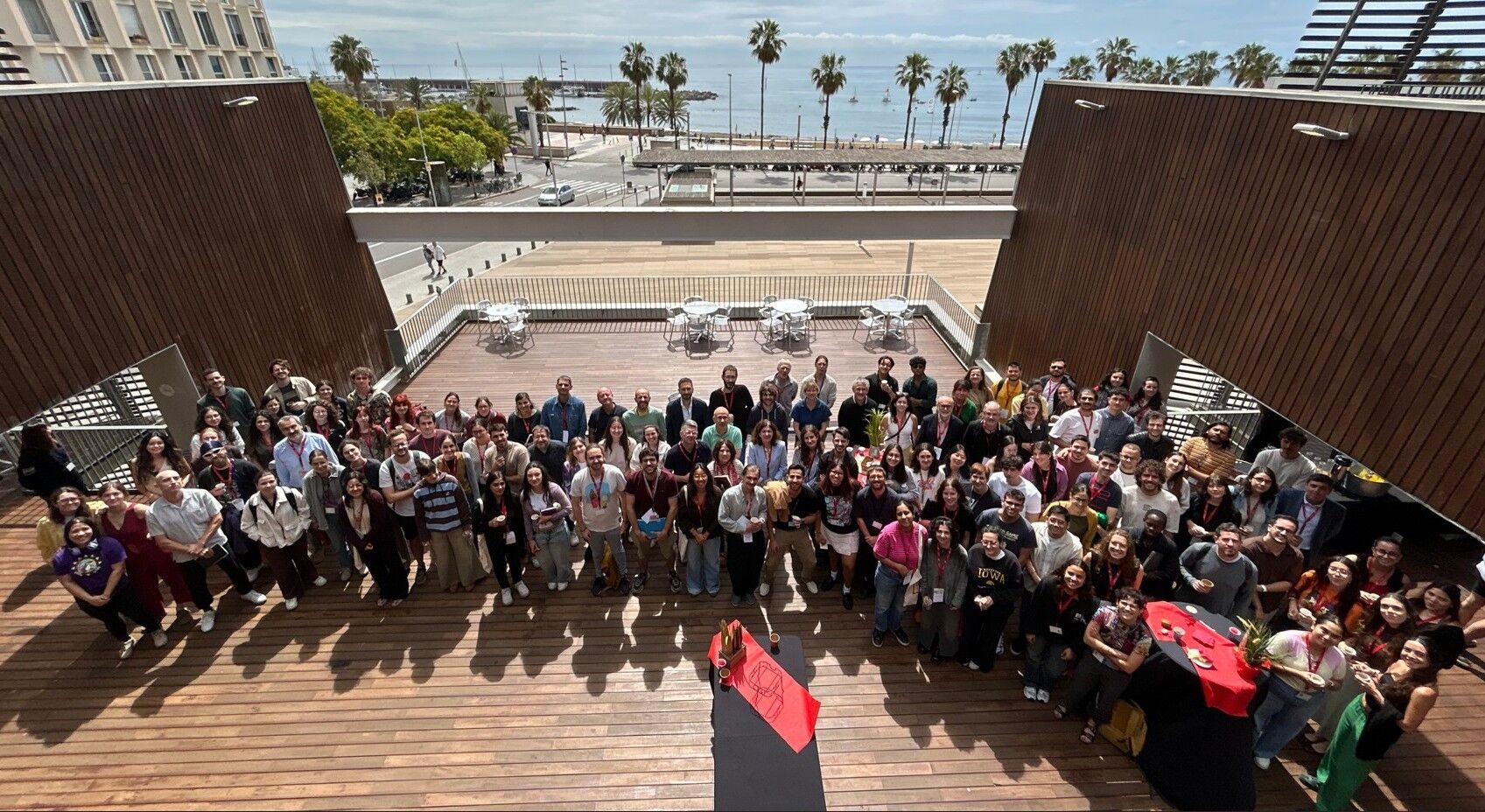
On June 4 and 5, the Auditorium of the Barcelona Biomedical Research Park hosted the 15th annual Biomedical Research Symposium of the Department of Medicine and Life Sciences (MELIS) at UPF. Over the two days, 170 people attended talks by 8 invited researchers, as well as poster sessions and ‘flash talks’ where younger researchers – those doing their PhD or postdoctoral work – presented their research.
This year, the symposium featured eight talks by international researchers working on topics as varied as the microbiome, protein design and characterization, and cancer and evolution. Two of the talks were given by researchers who have joined MELIS in the past year: Rosa Martínez-Corral, who leads the Theoretical Regulatory Biology Group, and Atanasios Litsios, who leads the Integrative Cell Biology Group.
“This symposium reflects the key characteristics of our department: internationalization, a broad diversity of scientific disciplines within the biomedical sciences field, and our commitment to training young researchers,” says Olga Valverde-Granados, director of MELIS. She adds, “We are very pleased with the high level of participation in the symposium, as well as the scientific caliber of the presentations and contributions from researchers in the early stages of their careers.”
Regarding the competitions, about twenty young researchers presented a ‘flash-talk,’ and the presentations by Kalliopi Anna Penteskoufi, from the Laboratory of Transcriptomics in Development and Evolution, in first place; Sasha Meek, from the Laboratory of Biophysics of Cell Biology, in second place, and Sol Ribó, from the Molecular Virology Group, and Mireia Ramos-Rodríguez, from the Laboratory of Endocrine Genomic Regulation, who won the third prize ex aequo.
For the posters, the award winners were: Kathakali Sarkar & Helena Carazo from the Laboratory of Synthetic Cell Programming, first place; Maria Llach Folcrà from the Research Group in Behavioral Neurobiology, second place; and Tatiana Gusinskaia from the Laboratory of Neuropharmacology, third place. They were the ones who presented the best work among the thirty participants in the activity.
The lineup of speakers has been completed by Rafael Argüello of the CNRS, Marseille; Roger Castells-Graells of Biomolecular Design & Structural Nanomedicine (CNIO); Michel Cayouette of McGill University, Montreal Clinical Research Institute (IRCM); John Cryan of University College Cork; Carlo Maley of Arizona State University; and Miriam Stoeber of the University of Geneva.
The department's symposium is an activity of the strategic research program of the MELIS María de Maeztu Excellence Unit (“Unidad de Excelencia María de Maeztu”). CEX2024-001431-M, funded by MICIU/AEI/10.13039/501100011033).