
Over fifty European judges, judicial institutes, lawyers and scholars meet at UPF to reflect on the use of AI and the protection of consumer rights
Over fifty European judges, judicial institutes, lawyers and scholars meet at UPF to reflect on the use of AI and the protection of consumer rights
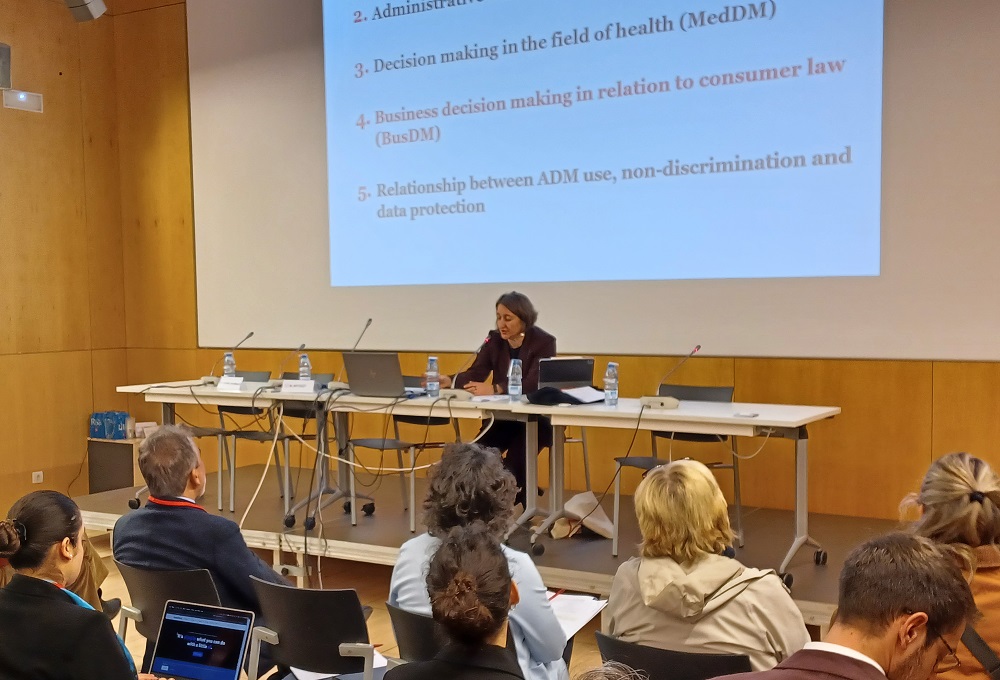
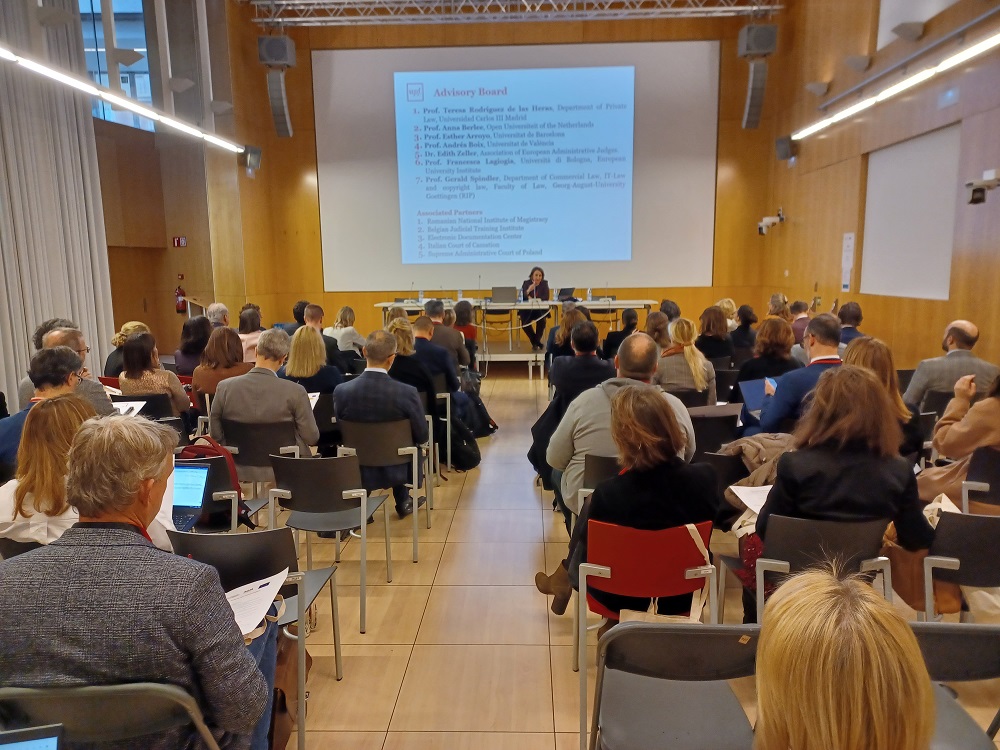
On 13 and 14 February 2025, Pompeu Fabra University’s Ciutadella campus hosts the 5th edition of the Transnational Training Event, held within the framework of the JuLIA (Justice, Fundamental Rights and Artificial Intelligence) research project. The event, entitled “Artificial intelligence, judicial dialogue and consumer protection in individual and mass litigation”, features around 50 judges from 22 EU Member States, as well as guests from the General Council of the Judiciary and members of the Government of Catalonia.
The conference, which will include two days of lectures, roundtable discussions and plenary sessions, opened on 13 February at 9 a.m. in the sala polivalent in the Mercè Rodoreda building on the Ciutadella campus. It began with words of welcome and an introduction to the UPF researchers actively engaged in the JuLIA project, the event organiser, headed by Mireia Artigot Golobardes, a Ramón y Cajal researcher from the Department of Law at UPF, the centre charged with coordinating the project.
The congress features around 50 judges from 22 EU Member States, as well as guests from the General Council of the Judiciary and members of the Government of Catalonia
The events organised over these two days will serve to study the impact of AI on markets, digital transactional environments and consumers, judicial dialogue between European courts and Member State courts and consumer protection in individual and mass litigation.
Some of the specific topics that will be addressed are the role of automated decision-making (ADM) in consumer decisions, contractual design and contractual personalisation in contracts with consumers and an assessment of how the eventual adoption of artificial intelligence systems may contribute to sorting, profiling and classifying cases or helping judicial systems respond to mass litigation.
Other areas of interest of the congress include the role of ADM in the effectiveness of fundamental rights and the creation of an analytical framework for judicial oversight and control in cases where empirical evidence may suggest that algorithm behaviour could result in discriminatory practices or even jeopardise the proper, smooth and fair functioning of the market.
Providing judges and lawyers insight into the impact of artificial intelligence systems on fundamental rights
The JuLIA project, which is funded by the Justice Programme of the European Union and began in February 2023, has a duration of three years and a budget of close to €1 million. UPF boasts a team of around a dozen researchers, working under the leadership of lecturer Mireia Artigot Golobardes, the project coordinator. The consortium is made up of eleven members from across Europe and includes representatives from universities, foundations, institutions and judicial institutes.
The main aim of JuLIA is to provide the analytical tools that judges and lawyers need to understand, with the help of information technology experts, the mechanisms involved in algorithm behaviour and assess its legal implications, helping judges remain independent and impartial, avoid discriminatory practices and ensure respect for fundamental rights.
To do so, the project analyses the use of AI in the decision-making of courts, government agencies and private stakeholders, such as companies and health professionals, as well as its impact on health and consumer protection rights.
The growing importance of automated decision-making in the judicial sphere
The 5th edition of the Transnational Training Event and the JuLIA project are framed within the current technological context, in which automated decision-making (ADM) has a growing importance in judicial proceedings, both in terms of the proceedings themselves and the adjudication of cases related to the legality of the use of ADM by public and private institutions.
This applies to both individual and collective disputes, as AI may be used in mass litigation and individual decisions. It should also be noted that the use of AI systems in judicial activities must comply with fundamental rights, particularly the rights to transparency, a fair trial, non-discrimination and data protection.