
Elena Larrauri, full professor of Criminal Law and Criminology at UPF: “If it weren’t for men, the prison system as we know it would not exist”
Elena Larrauri, full professor of Criminal Law and Criminology at UPF: “If it weren’t for men, the prison system as we know it would not exist”
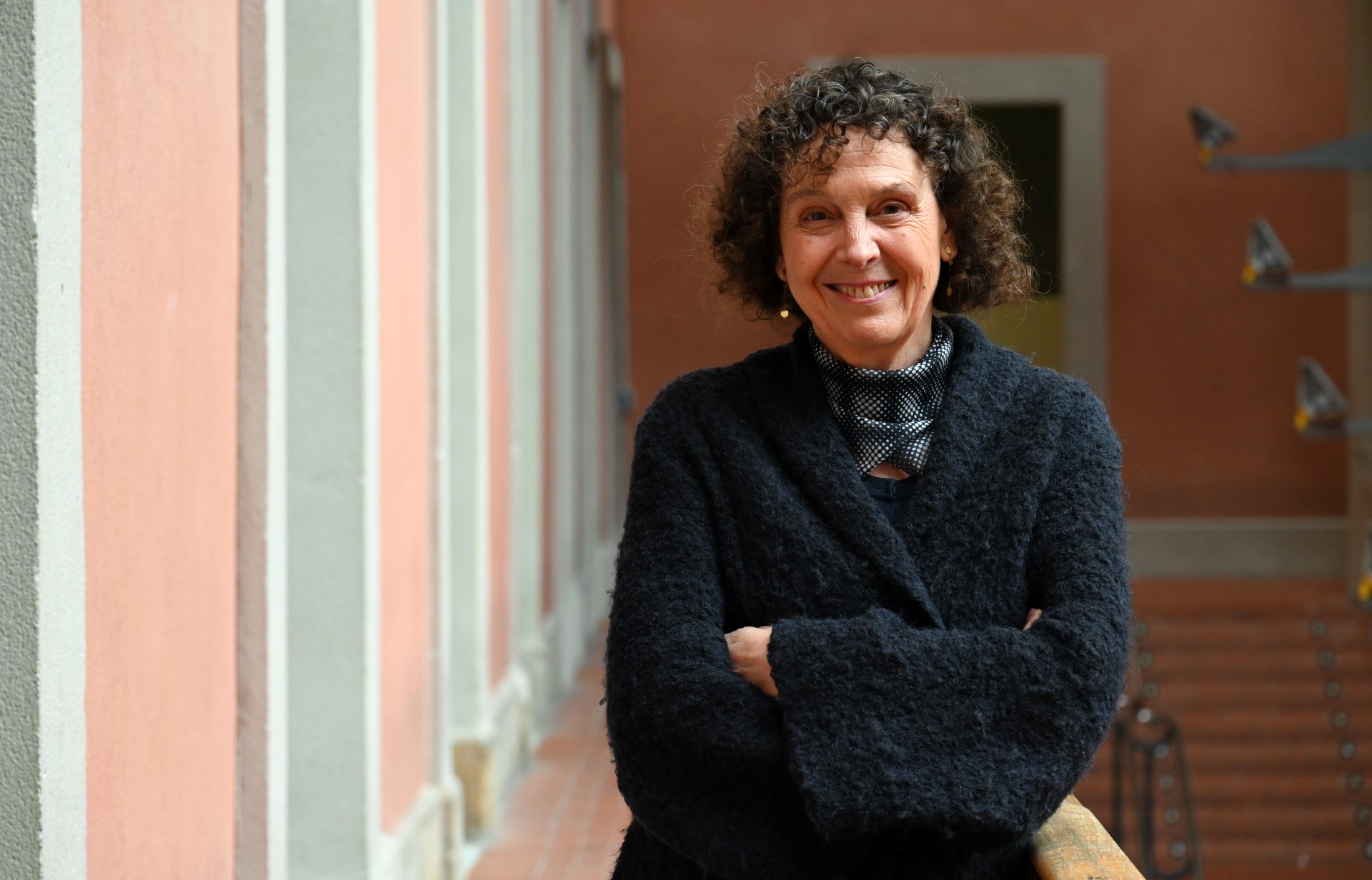
Elena Larrauri is a full professor of Criminal Law and Criminology at Pompeu Fabra University (UPF). She studied Law at the University of Barcelona (UB) and received her PhD from the Autonomous University of Barcelona (UAB). It was there that, shortly after obtaining her doctorate, she achieved the position of tenured lecturer until she joined UPF in 2007. She is currently lecturing on the bachelor’s degree in Criminology and Public Prevention Policies and directs the master’s degree in Criminology and Criminal Justice System.
In 2009 she founded the Criminology and Criminal Justice System Research Group at UPF. Between 2016 and 2019, she was director of the Department of Law and, from 2017 to 2019, she was principal investigator of the EmpiriC Network of Excellence.
During her career, she has been distinguished with the Fulbright-La Caixa scholarship as a Fulbright Scholar at the University of Santa Barbara (California) and an Alexander von Humboldt scholar at the University of Frankfurt. She has also been a visiting professor to Oxford University, All Souls College and chaired the European Society of Criminology from 2007 to 2010.
Her distinctions include her appointment as an honorary doctor by the University of the Basque Country in 2022, and the Medal of Honour for exceptional services to justice, awarded by the Government of Catalonia, in 2024. This year, she has received the Medal for the Promotion of Equality Values, awarded by the Spanish Ministry of Equality, in recognition of her dedication to the prevention and treatment of violence against women.
You have been awarded the Medal for the Promotion of Equality Values (2025). What has it meant for you and how do you appraise your career in this field?
The award commemorates twenty years of the Law on Comprehensive Protection Measures against Gender Violence, approved in 2004. The medal recognizes the contributions of many people who have worked on feminist issues, and to receive it has been especially meaningful to me.
Two decades ago, I was already involved in gender issues. At that time they were not as visible as they are today. Although I was not directly involved in drafting the law, I was invited to the Spanish Parliament as an expert to write a report on its implementation. That experience was highly enriching and, in a way, this medal is a reminder of the journey since then.
You founded the Criminology and Criminal Justice System Research Group at UPF. What are the group’s main objectives and what studies would you highlight?
The group was created in 2009, coinciding with the initiation of studies in Criminology at UPF. As we had a bachelor’s degree in this discipline, it was logical to take advantage of this new stage to promote research in criminology. Initially, we specialized in alternative penal measures to prison and, later, we approached the study of life in prisons.
In addition, we have always worked on issues related to gender. We have analysed, for example, the implementation of the comprehensive law on gender-based violence and its impact in the context of reforms to the Criminal Code, and we have recently broadened the focus to include sexual violence. Thus, the group has maintained two fundamental lines of research: the study of the prison system and alternative punishments, and the analysis of gender issues in the criminal justice system and criminology.
The Medal for the Promotion of Equality Values recognizes the contributions of many people who have worked on feminist issues, and to receive it has been especially meaningful to me
Between 2017 and 2019, you were the principal investigator of the EmpiriC Network of Excellence. What does this network consist of and what contributions does it make to criminology?
The goal of this network is to connect different criminology research groups from various Spanish universities to foster collaboration and promote studies in this field.
With our team of researchers, we applied for funding to join forces with other academic groups. Once the funds had been granted, and we gave rise to the initiative, we undertook the administration of the Network of Excellence during its first call.
Both as director of the Interuniversity master’s degree in Criminology and Criminal Justice System and as former director of the UPF Department of Law, how have you worked to incorporate the gender perspective into the training of future professionals?
Specific subjects have been introduced that address the analysis of the criminal justice system from a gender perspective. In the bachelor’s degree, this subject is taught during the third academic year, while in the master’s degree it is taken in the first term.
The creation of these exclusive subjects is due to the conviction that, although other subjects may include equality-related aspects, the gender perspective allows analysing the entire criminal justice system to discover possible inequalities and foster in-depth and enriching discussion in academic training.

Do you think that in recent years there have been significant advances in gender equality within the criminal justice system? What aspects still require improving?
In the last twenty years, significant progress has been made in the field of criminal justice. For example, courts specializing in gender-based violence have been established and protection orders have been implemented to ensure the safety of victims. These measures have allowed a more precise response from the judicial field, but there are still shortcomings in comprehensive protection.
It is clear that, beyond criminal punishment, there is a need to reinforce services like free legal advice, psychological and emotional support, the reparation of the harm suffered and the promotion of the personal autonomy of those affected. On the other hand, the simplest thing is the headline: ‘Sentenced to three years in prison the aggressor of...’. The headlines end up overshadowing everything else that’s far more important.
If you’re a victim, you don't just need your abuser to be convicted. You have a lot of other needs: a home, a job, to feel safe... There are times when you need someone to accompany you every step of the way. All this comprehensive support is what’s most difficult to implement, because it does not have the same media attention as the debate on penalties and its implementation is shared among several institutions.
It is clear that, beyond criminal punishment, there is a need to reinforce services like free legal advice, psychological and emotional support, the reparation of the harm suffered and the promotion of the personal autonomy of those affected
Could you give an example of a country that takes reparations for damages to victims into account?
I always mention the case of Sweden, where great importance is given to victims’ accompaniment, restitution and compensation. There, the focus is not restricted to punishing the aggressor, but a comprehensive response to the needs of those who have suffered the damage is ensured. Thus, in Sweden, there is private insurance that, for example, covers such serious situations as rape, complemented by state insurance, contributing to more comprehensive protection.
Why is it that so many women do not file charges?
The current criminal justice system is designed to punish, rather than solve social problems. This approach leads many women to be afraid to file charges, for fear of being re-victimized or not being believed. Moreover, regardless of whether the aggressor is sentenced to prison or not, the real conflicts that affect the situation of vulnerability are not solved.
And returning to the same idea: the judicial system focuses exclusively on punishing the aggressor, without addressing the needs surrounding the conflict. Increasing the number of judges, streamlining procedures or imposing harsher punishments does not solve the issue; the challenge lies in rethinking the mechanisms to give women autonomy, and target efforts towards protecting and caring for victims.
But isn’t the criminal justice system designed to reintegrate inmates back into society?
It is true that the system targets reintegration. Although it is said that the intention is to lean towards the victim, this orientation mainly translates into punishing the aggressor. What we want to stress is that in order to really address the social problem, there is a need to identify and solve the needs and difficulties that affect the victims, instead of continuing to rely only on punishments and punitive measures.
It is true that the system targets the reintegration of offenders, but, in practice, the focus is still on punishing the aggressor [...] the needs and difficulties that affect the victims require identifying and solving, instead of continuing to rely only on punishments and punitive measures
One of the pending challenges is the effective protection of victims. Do you think that restraining orders and other safety measures, such as the VioGén system, are enough, or should they be reinforced with more prevention mechanisms?
The VioGén system works as a predictive tool, as it assesses the risk of future aggressions. However, like any system of evaluation, there is a certain probability of error, especially in the most serious cases. Thus, while it can detect situations of low-intensity violence effectively, it is less useful in the context of murder, where there are few cases and statistical analyses have their limitations.
The key issue is that many women do not report the facts, which is why they do not enter the system’s database. Year after year, it is seen how approximately 70% of the victims who have died had not filed charges. Thus, to achieve comprehensive protection, current measures must be complemented with additional mechanisms that address the real needs of victims, beyond the punishment of the aggressor.
What is the relationship between poverty, gender-based violence and the imprisonment of women? Is vulnerability more criminalized when it comes to women?
Rather than speaking about specific criminalization, vulnerability in the case of women is more pronounced. Poverty affects women more because they often have more difficulty to enter the labour market. This is due, among other factors, to less training in some cases, and a greater family burden, which limits their economic options.
When they find themselves in a situation of extreme poverty and with few alternatives to make ends meet, some end up getting involved in crimes like drug trafficking or, to a lesser extent, people trafficking. These crimes have very high penalties and, therefore, the sentences are usually long. If we look at women’s prisons, most of the inmates are there for crimes related to drug trafficking, often because they have acted in contexts of total precariousness.
Fewer women are in prison than men, but their experience in prison has its own particularities. How does being a woman affect life in prison?
First of all, if it weren’t for men, the prison system as we know it would not exist. In most cases, if a woman commits a crime and an alternative criminal measure is applied —such as community work or probation— it’s unlikely to generate a forceful social response of rejection. This shows that the prison system has been designed to respond to security needs devised mainly for men, that are often not adjusted to the reality of imprisoned women.
The prison system has been designed to respond to security needs devised mainly for men, that are often not adjusted to the reality of imprisoned women
So, there is more discrimination against women in prisons.
This difference translates into several discriminations. For example, there are very few women-only prisons and they are often far from urban centres, making family visits difficult. Often, women have to serve time in small modules inside men’s prisons, with fewer resources and activities available. Unlike men, there are no internal classifications, so inmates are in spaces that are less differentiated according to their criminal profile or prison situation.
In addition, the system does not perceive women as a threat either inside or outside prison. This often puts them on the back burner: if there is a lack of resources, if there are no day activities, or if they make a complaint, their demands receive less attention. This invisibility aggravates their situation and reinforces the idea that the prison system, as it is conceived, has not been designed for them.