Focus UPF
UPF sets up its Global Advisory Board to improve its international strategy
Made up of experts in the field of higher education from all over the world, it aims to advise and steer the University in international development matters

The University has set up its Global Advisory Board (GLOAB), a consultative body, with the aim of providing UPF management and faculty with advice and guidance on key strategic activities and initiatives for international development.
The main functions of the GLOAB include providing strategic advice on UPF’s internationalization policy, evaluating the University’s international strategy, and overseeing the development and achievement of the objectives set.
For Toni Luna, UPF vice-rector for Internationalization, “Pompeu Fabra has always had a great international outlook while maintaining the values and peculiarities of a public, quality Catalan university”. And he added that “to be among the best universities you need to be in touch with the best practices from around the world and attract the best talent”.
“it is a privilege for the University to have on board experts in higher education belonging to the GLOAB, with protracted international track records. They will help us improve UPF’s position internationally, which is one of the strategic objectives that we set ourselves as a University”
The body, made up of a minimum of 8 and a maximum of 10 members, includes experts in the field of higher education from all over the world who will oversee and measure UPF’s progress in improving international competitiveness with respect to world-renowned teaching and research centres.
In the words of Oriol Amat, UPF rector, “it is a privilege for the University to have on board experts in higher education belonging to the GLOAB, with protracted international track records”. And he emphasizes that, “of course they will help us improve UPF’s position internationally, which is one of the strategic objectives that we set ourselves as a University”.
The first face-to-face meeting of GLOAB members will take place on Monday 16 May at 10 am on the Ciutadella campus, just before the start of the THE Europe Universities Summit.
GLOAB members
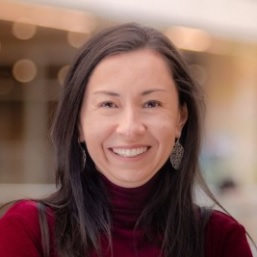 Raquel Bernal Salazar, rector of the University of the Andes. Bogotá (Colombia)
Bernal holds a master’s degree and a PhD in Economics from New York University (2003). She is an expert on impact assessment. Professor Bernal is among the 10 most cited economists in Colombia. She was a professor at the University of Northwestern (Evanston, Illinois) between 2002 and 2007 and director of the Los Andes Center for Studies on Economic Development (CEDE), between 2012 and 2017.
Hans de Wit, emeritus professor, distinguished member and former director of the Center for International Higher Education at Boston College (CIHE), United States
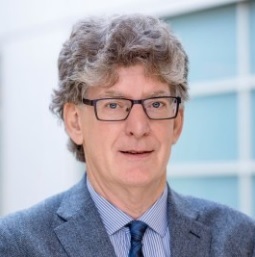
Before joining the CIHE, he was director of the Centre for Higher Education Internationalization at the Catholic University of the Sacred Heart in Milan and professor of Internationalization of Higher Education at the University of Applied Sciences in Amsterdam. He was vice-president for International Affairs at the University of Amsterdam from 1996 to 2003. He is a founding member and former president of the European Association for International Education (EAIE). He is the founding editor of the Journal of Studies in International Education (SAGE).
Funmi Olonisakin, vice-president for Global Engagement at King’s College London
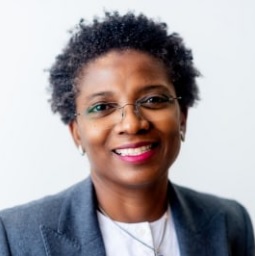
She is a founding member of the African Leadership Centre and was director of the Conflict, Security and Development Group (CSDG) at King’s College London, from 2003 to 2013. Previously, she worked in the United Nations Office of the Special Representative of the Secretary-General for Children and Armed Conflict. In 2015, she was appointed by the United Nations Secretary-General, Ban Ki Moon, as one of seven members of the UN Peacebuilding Advisory Group of Experts. Also, in 2016, she was appointed as a member of the Advisory Group of Experts for the United Nations Progress Study on Youth, Peace and Security.
Jan Palmowski, general Secretary of The Guild
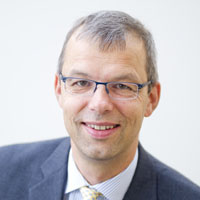
A contemporary historian, he began his career at the University of Oxford before moving to King's College, London, where he taught European politics and EU integration. He was head of the Faculty of Arts and Humanities at King’s College London (2008-12), and pro-vice-chancellor and academic vice-president at the University of Warwick from 2013 to 2018.
His work on international issues includes membership of the German Science Council’s Strategy Commission (2013-16), and the German Excellence Commission’s joint expert Group (2016-18). He also served on the Humanities panel of the Comparative Expert Assessment of Lithuanian Universities (2018), and currently chairs the International Advisory Board of the Université Paris Citée.
Francesc Pedró, director of the UNESCO International Institute for Higher Education in Latin America and the Caribbean (UNESCO IESALC)
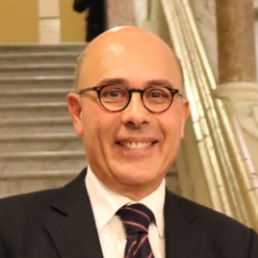
He previously led the education policy advisory service, including national policy reviews as well as international comparative studies, in the education sector at UNESCO in Paris. He also worked at the OECD Centre for Educational Research and Innovation (CERI) as a senior policy analyst.
He is a professor of Comparative Education Policy with the Department of Political and Social Sciences at Pompeu Fabra University.
Rocky S. Tuan, president of the Chinese University of Hong Kong
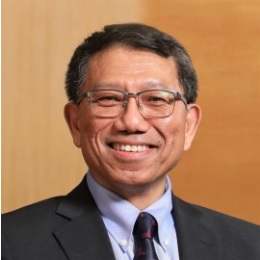
He assumed the position of President of the Chinese University of Hong Kong (CUHK) on 1 January 2018. He studied higher education in the United States and received his PhD in Life Sciences 1977 from the Rockefeller University in New York. Prior to joining the CUHK in 2016 as a distinguished visiting professor and founding director of the Institute of Tissue Engineering and Regenerative Medicine, he was a distinguished professor of Orthopaedic Surgery at the University of Pittsburgh School of Medicine, where he was the founding director of the Center for Cellular and Molecular Engineering.
Leila Triki, dean of the Mediterranean School of Business of Tunisia
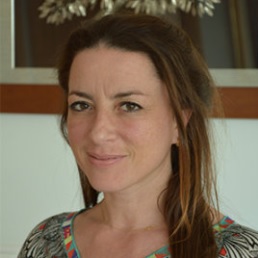
She has a degree in Applied Mathematics from the University of Paris XI, a master’s degree in Economic Modelling and a PhD in Economic Theory from the University of the Sorbonne. She also holds an Executive MBA from the Mediterranean School of Business. She worked as a consultant for the World Bank Group in Washington D.C. in 2006. In 2007 she was appointed as a researcher and postgraduate teaching assistant at the London School of Economics and Political Science. In 2008 she joined the Mediterranean School of Business as director of Accreditation and Development of Full-Time Programmes and in 2016 she assumed her current position. Her areas of interest include higher education, youth unemployment, competition and economic development.
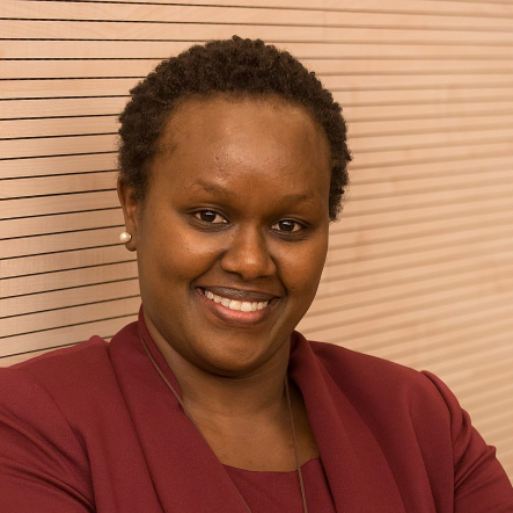 Dorcas Muthoni, kenyan engineer and entrepreneur. Honorary doctor by Pompeu Fabra University
She graduated in computer science specializing in wireless networks, radio communications and strategic technology planning. Muthoni is the founder and CEO of OpenWorld, a software consulting company operating in the East African region. She is also the founder of the organization AfChix, which offers mentorship in information and communication technologies (ICT) to women and girls through conferences, meetings and training.
Randall Martin, Executive Director at British Columbia Council for International Education Vancouver (Canada)

Since 2006, Randall has led BCCIE in advancing the Province of British Columbia’s agenda on international education. His experience spans more than 30 years in post-secondary education, development education, project management and implementation, and international education, having worked on projects in institutions, associations, and societies across BC. He regularly engages in external reviews and consultations for institutions and other jurisdictions. Randall is the author or co-author of numerous papers and is a sought-after speaker and regular presenter at national and international conferences and symposia.
Multimedia
SDG - Sustainable Development Goals:
Contact
Related Assets
Una estació experimental a la coberta de Mercè Rodoreda ajuda a entendre el règim hídric de les plantes en el passat
Una estació experimental a la coberta de Mercè Rodoreda ajuda a entendre el règim hídric de les plantes en el passat
Des del passat mes de maig, a la coberta de l’edifici Mercè Rodoreda del campus de la Ciutadella de la UPF hi ha instal·lada una petita estació experimental per al cultiu de plantes. L’estació consta d’unes grans jardineres i una seixantena de lisímetres, uns tubs cilíndrics adaptats per mesurar la transpiració de les plantes que contenen, i que s’utilitzen per cultivar cereals resistents a la sequera (bàsicament, diferents espècies de mill i sorgo) sota diferents règims hídrics.
Carla Lancelotti: "Analitzem diferents indicadors d’aquestes plantes, com ara els fitòlits i els isòtops, per poder-los comparar després amb les restes que trobem en els jaciments arqueològics”
Es tracta del projecte “Water p-ROOF”, que compta amb finançament dins de la iniciativa Benestar Planetari de la UPF, i que alhora s’emmarca en l’ajut ERC Starting Grant (convocatòria 2017) de la Unió Europea que la Universitat va obtenir per “RAINDROPS”: és un projecte centrat en la resiliència i l’adaptació humana a les terres de secà, que vol identificar pràctiques de gestió de l’aigua en el passat per a cultius resistents a la sequera.
Carla Lancelotti, professora d’investigació ICREA del Departament d’Humanitats i membre del Grup de Recerca Culture and Socio-Ecological Dynamics (CaSEs) és investigadora principal tant del projecte RAINDROPS com de Water p-ROOF, que es pot considerar una spin-off del primer.
Està acompanyada per Francesca D’Agostini, membre de CaSEs, investigadora principal de Water p-ROOF i col·laboradora de RAINDROPS en la seva part més experimental. Es troba al Departament d’Humanitats de la UPF fent el seu doctorat, que porta a terme de manera conjunta amb l'Escola de Doctorat GAIA en Biodiversitat, Agricultura, Alimentació, Medi Ambient, Terra i Aigua de la Universitat de Montpeller (França).
Segons Carla Lancelotti, “aquests experiments que estem fent a la UPF seran comparables als realitzats dins el projecte RANDROPS al Sudan, Etiòpia i Pakistan. Ens donaran una idea de les respostes fisiològiques de la planta a l’estrès hídric i a la producció diferencial de sílice biogènicaen relació amb la disponibilitat d’aigua”.
Els resultats s’utilitzaran per construir una metodologia per inferir règims d’aigua per a cultius de secà en el passat
Els resultats s’utilitzaran per construir una metodologia per inferir règims d’aigua per a cultius de secà en el passat, permetent d’aquesta manera una millor reconstrucció dels orígens i el desenvolupament de l’agricultura en zones de gran aridesa del món.
“A la coberta de Mercè Rodoreda estem experimentant amb diferents espècies de mill, que s’adapten molt bé en zones àrides, i que són part del projecte RAINDROPS. Analitzem diferents indicadors d’aquestes plantes, com ara els fitòlits i els isòtops, per poder-los comparar després amb les restes que trobem en els jaciments arqueològics”, explica Carla Lancelotti.
Quin tipus d’experiments es porten a terme a la coberta de Mercè Rodoreda?
D’una banda, plantes de mill i sorgo han estat plantades dins una seixantena de lisímetres, uns tubs de PVC disposats de manera que simulen aquests cultius en el seu estat natural. Aquests tubs, d'un metre de profunditat, contenen a la seva part inferior una plataforma que permet simular la percolació natural de l’aigua en el perfil del sòl, i al mateix temps, permeten regar i pesar cada planta per separat per mesurar la seva transpiració de manera individual. En els lisímetres, s’ha afegit una petita quantitat d’aigua a l’inici del cicle vegetal de les plantes (que ja no es reguen més) i les investigadores mesuren com la seva transpiració va decreixent setmana rere setmana.
Francesca D'Agostini: "L’objectiu de Water p-ROOF és investigar si els fitòlits i els isòtops de les plantes van canviant al variar la quantitat d’aigua de reg"
D’altra banda, al costat hi ha unes grans jardineres amb sorra, per simular el clima desèrtic, amb plantes que no se’ls proporciona gens d’aigua i no se les rega mai, sotmeses a un gran estrès hídric. En tercer lloc, hi ha un conjunt de plantes apartades de la resta, que s’utilitzen com a grup de control, i que les investigadores reguen periòdicament amb normalitat. Una estació meteorològica instal·lada a la coberta de l’edifici serveix per controlar les variables climàtiques.
D’aquesta manera, les investigadores pretenen veure les diferències de les plantes quan se’ls proporciona aigua i quan no i comparar diferents tipus de sòl i de regadiu, a través de la transpiració de les plantes i de la quantitat d’aigua. Tota aquesta comparativa es pot fer a través d’uns indicadors, que són els fitòlits i els isòtops de les plantes: “L’objectiu de Water p-ROOF és investigar si els fitòlits i els isòtops de les plantes van canviant al variar la quantitat d’aigua de reg. Així, en un futur, podrem comparar les dades que tenim de les plantes a través d’aquest cultiu experimental amb les obtingudes en els jaciments arqueològics reals, i hipotetitzar si en el passat, les plantes van ser cultivades, de quina manera, i amb quina quantitat d’aigua”, explica Francesca D’Agostini.
Un projecte amb finançament dins de la iniciativa Benestar Planetari
“Water p-ROOF”, que va néixer a causa de la covid-19 (la pandèmia va provocar que la part experimental del projecte RAINDROPS sobre el terreny s’hagués d’aturar), és el resultat de combinar dos projectes finançats en el marc de dues convocatòries d’accions de recerca (de les tres resoltes fins ara) dins de la Iniciativa de Benestar Planetari de la UPF.
Concretament, es tracta dels projectes “The Multifunctional Rooftop Garden of the Dipòsit de les Aigües Building” (convocatòria 2019), dotat amb 16.250 euros, i “Rain-fed cultivation - Innovative techniques to phenotype drought resistant crops for a sustainable agricultural management in drylands" (convocatòria 2020), dotat amb 2.000 euros, dels quals Carla Lancelotti i Francesca D’Agostini són les investigadores principals, respectivament.
