
Departament | Faculty of Economics and Business
Seven young researchers from Pompeu Fabra University receive grants from the “la Caixa” Foundation to conduct their research
Seven young researchers from Pompeu Fabra University receive grants from the “la Caixa” Foundation to conduct their research
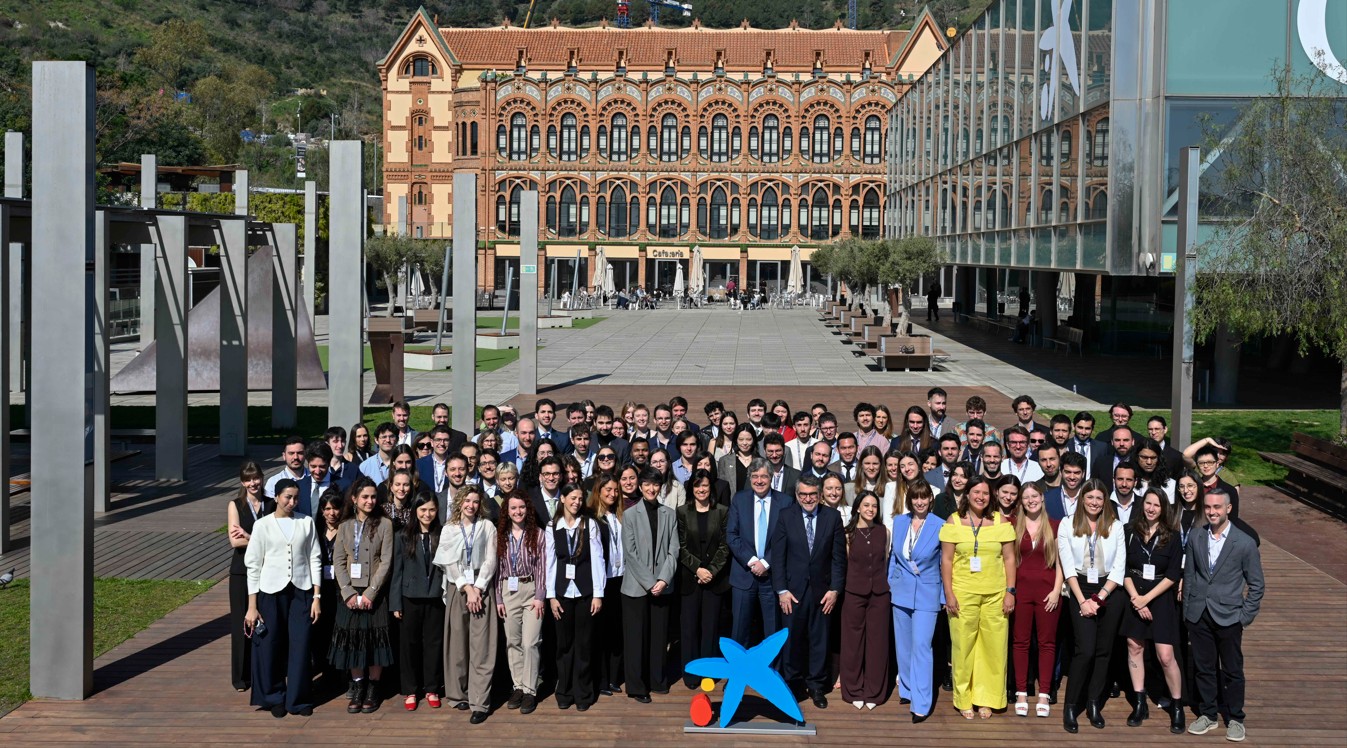
Seven young researchers from Pompeu Fabra University (UPF) are among the one hundred researchers awarded by the “la Caixa” Foundation. In recognition of their excellence, the foundation has awarded them grants to cover their doctoral and postdoctoral studies at universities and research centres in Spain and Portugal. With the INPhINIT doctoral and Junior Leader postdoctoral fellowships, the “la Caixa” Foundation seeks to retain and attract talent to promote research of excellence in these countries.
The awardees at UPF in the 2025 call for grants are Italo Güinno Lorandi Camacho, Stefanie Brüggemann and Riccardo Tancredi, who have received an INPhINIT fellowship to pursue their doctoral studies at the Department of Medicine and Life Sciences (MELIS); Nirai Tomass, to study his PhD with the Department of Economics and Business, and Sara Vidal Ramón, a PhD student with the Department of Communication. In addition, Magdalena Matyjek and Julià Camps Sereix, both of the Department of Engineering, have been awarded a Junior Leader postdoctoral fellowship.
When people click: the science of social connection
What is it that makes us really connect with another person, and why can this be so much harder between different neurotypes? Magdalena Matyjek is a cognitive neuropsychologist who is studying the social interaction between autistic and non-autistic adults, combining neural, physiological, and behavioural measures to better understand how interpersonal connection emerges. Her research goes beyond unique social cognition models and is oriented towards explanations that take individual differences and neurodiversity seriously.
Digital heart twins to better predict the risk of arrhythmia
How to predict arrhythmia risk more accurately to contribute to clinical decision making? Julià Camps will use so-called digital heart twins to investigate new ways for identifying patients at risk of serious arrhythmias following a myocardial infarction. Digital heart twins are customized computational models built using clinical data such as the electrocardiogram (ECG) and magnetic resonance imaging (MRI). These models allow studying how alterations in heart tissue affect the electrical activity of the heart, which will help improve predicting the risk of arrhythmia.
Stem cell ageing
How does inflammation cause the immune system to age? This is the question behind the research project that Italo Güinno Lorandi Camacho will carry out for his PhD. He will thus explore which inflammatory signals accelerate hematopoietic stem cell decline and trigger early changes affecting immune function throughout life.
Environmental stress also affects the plant kingdom
Like all living things, plants must also cope with environmental stress. For this reason, Stefanie Brüggemann will study RNA-based mechanisms that regulate gene activity within the cell nucleus. In other words, with her PhD, she will try to better understand how plants adjust gene activity to cope with environmental stress by studying genes that regulate plant DNA transcription and structure.
Understanding large-scale brain dynamics
By combining mathematical modelling and neuroimaging data, Riccardo Tancredi will seek to identify computational biomarkers that can help improve the prediction and understanding of neurological conditions such as stroke and Alzheimer’s disease. More broadly, his PhD project aims to help bridge the gap between theoretical neuroscience and clinical applications.
Credibility of monetary and fiscal institutions
Nirai Tomass, linked to the UPF PhD programme in Economics, Finance and Business, will analyse how various countries’ monetary and fiscal institutions interact in public debt markets, and how these interactions shape the institutions’ credibility in the eyes of their creditors. Nirai Tomass’s PhD thesis is being supervised by Alberto Martín, a senior researcher at the Centre for Research in International Economics (CREI) and a professor at the UPF Department of Economics and Business.
Biodiversity and biotechnologies in political, media and scientific discourse

The “la Caixa” fellowships offer competitive salaries for three years in the case of Junior Leaders and four in the case of PhDs. They also include a solid cross-disciplinary training programme. In the case of PhD fellowships, aspects such as scientific communication, researchers’ emotional well-being, leadership and funding opportunities are reinforced. Also, the postdoctoral fellowships are designed to foster an independent scientific career based on promoting innovation and leadership as fundamental pillars for professional development.