
Six postdoctoral researchers will bring their talent to UPF thanks Marie Curie 2024 grants
Six postdoctoral researchers will bring their talent to UPF thanks Marie Curie 2024 grants
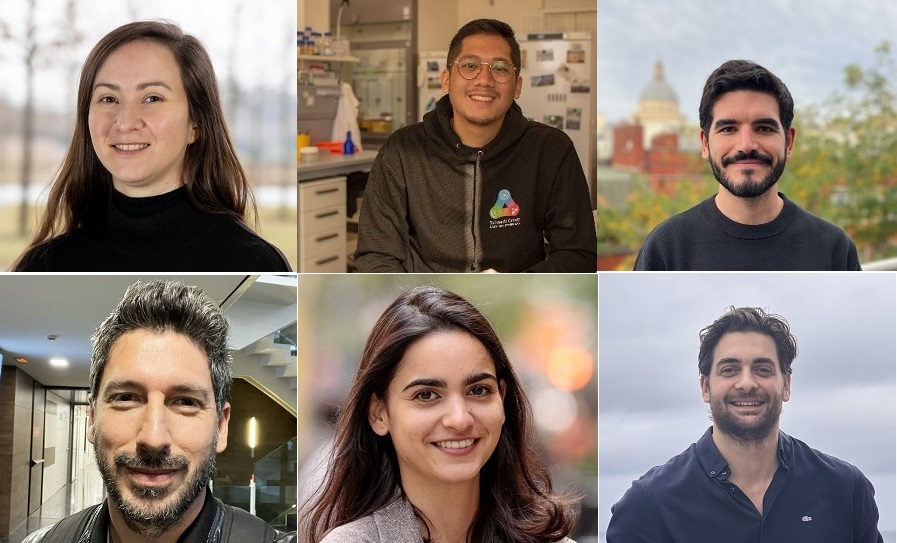
The projects of the six postdoctoral researchers, who come from various universities around the world, that can have a positive impact on society and the economy and are expected to be linked to various UPF departments, have been selected within the framework of the 2024 Marie Sklodowska-Curie Postdoctoral Fellowships (MSCA-PF) call for proposals.
The MSCA-PF fellowships awarded to these six young researchers under the EU Horizon Europe Research and Innovation programme are endowed with funding of between 194,075 and 209,914 euros over two years. They will all be supervised by senior researchers from the corresponding three departments of the University.
The six projects, pertaining to the departments of Political and Social Sciences, Engineering and Medicine and Life Sciences
The two researchers leading the projects linked to the Department of Political and Social Sciences are: Ona Valls, currently doing a postdoctoral stay at the University of Luxembourg, with the project “Exploring new paths: non-standard transitions to the labour market of low-qualified youth (EXPLOTRANS)”, supervised by Luis Ortiz, a member of the SocioDemography Research Group (DemoSoc); and Cecilia Gebruers, a researcher at the Institute of Political Research (UNSAM) of the CONICET (Argentina), with the project titled “Creative Activisms towards Material Intersectionality in Water Conflicts: Expanding the Visual Field (MATERIALITIES)”, under the supervision of Beatriz Rodríguez Labajos, a researcher at the JHU-UPF Public Policy Center.
The two researchers linked to the Department of Engineering are David Dalmazzo, from the TMH KTH Royal Institute of Technology (Sweden), with the project “Artificial Intelligence-based Interactive Microtonal Compositional Assistant (ANIMA)”, supervised by Sergi Jordà, a member of the Music Technology Group (MTG); and Giovanni Rabuffo, from the Institut de Neurosciences des Systèmes of Aix-Marseille University (France), with the project “Controllable stimulation and Advanced brain models for Enhancing Rehabilitation from Unconscious States (CAERUS)”, supervised by Gustavo Deco, director of the UPF Center for Brain and Cognition (CBC).
Finally, the two researchers who are to join the Department of Medicine and Life Sciences (MELIS) are Audam Chhun, currently doing a postdoctoral stay at the University of Lausanne (Switzerland), with the project “CUTibacterium acnes Engineered for Antimicrobial peptide Momentary Production (CuteAMP)”, supervised by Javier Santos Moreno, director of the Synthetic Cell Programming Laboratory at MELIS; and Xavier Sabaté, a postdoctoral researcher at MELIS, with the project ”COMpetence of neural progenitors In Time (COMIT)”, which will be supervised by Cristina Pujades, director of the Neurodevelopmental Dynamics Research Group.
Grants to increase the creative and innovative potential of researchers who are already PhDs
The Marie Sklodowska-Curie Postdoctoral Fellowships, convened by the European Commission and open to researchers of any nationality, are endowed in this 2024 call, with an overall budget of 417 million euros. In all, 1,700 postdoctoral research projects, from eight different fields of knowledge, have been selected from a total of 10,360 applications.
The purpose of these grants is to increase the creative and innovative potential of researchers who hold a PhD and wish to acquire new skills and competences and develop their professional career through international mobility, while bringing their talent to the host institutions. The proposals are coordinated by organizations from 40 EU countries and other countries associated with Horizon Europe.
The six research projects linked to UPF
EXPLOTRANS: a study of the school-work transition by low-skilled youths in Spain
Less-skilled young people are a vulnerable group that is highly exposed to risks and accumulated disadvantages. According to the EU, leaving school early together with low academic grades are linked to vital risk outcomes such as unemployment, social exclusion and poor health.
The project EXPLOTRANS, led by Ona Valls and supervised by Luis Ortiz, is expected to provide new knowledge on the school-work transition by low-qualified young people and will examine the impact that these non-standard transitions have on the labour market. It takes Spain as a case study because it is a country with one of the highest rates of early school leaving and youth unemployment in Europe, little research has been conducted in this area, and it has a weak system of vocational training and links with the labour market.
EXPLOTRANS, funded with 209,915 euros, will use a holistic approach and take non-standard transition patterns into account, based on the analysis of individual characteristics, such as gender, migration and socioeconomic background. In the words of Ona Valls, “my research will provide innovative evidence-based results for academic, political and social use, facilitate future comparisons with other EU countries, and contribute to developing community policies”.
MATERIALITIES: a new intersectional legal framework based on interventions in water conflicts
Legal interventions in socio-environmental conflicts linked to human rights face the challenge of how to “give visibility to” simultaneous elements of discrimination in the reality of what is happening. To bring out certain forms of oppression, there is a need for intersectional legibility in time and space, in the deployment of human rights. MATERIALITIES, funded with 209,915 euros, will consolidate a new theoretical and operational framework on intersectionality in interventions based on rights in water conflicts. It will do so through creative activism, innovative methods of qualitative research, experiential or clinical teaching, networking, leadership and scientific communication skills.
Cecilia Gebruers will lead the project, supervised by Beatriz Rodríguez Labajos and with the collaboration of Laia Forné Aguirre, linked to the Barcelona Urban Research Institute (IDRA). Through new materialistic frameworks, ethnographic approaches and audiovisual methods, the project includes four case studies conducted in Spain and Argentina.
According to Cecilia Gebruers, “we will combine the defence of human rights and creative activism to form an intersectional legal framework based on empirical approaches. Through MATERIALITIES, we seek to foster debates that promote a more substantial translation of intersectionality into the reform of public policies”.
ANIMA: music technology at the service of human creativity
The ANIMA research project, led by David Dalmazzo, supervised by Sergi Jordà, aims to counteract one of the biggest risks that technology and AI can pose to the world of music: the homogenization of styles and the growing westernisation of all music. With this in mind, it aims to take advantage of the opportunities provided by technology in this field to put computational and machine learning models at the service of the needs of creators.
ANIMA, funded with 194,075 euros, aims to contribute to promoting and preserving creation and cultural diversity in this field, especially of non-Western musical traditions. It also seeks to facilitate access by musicians to new microtonal harmonic structures: microtones are much smaller subdivisions of the spaces between tones than octaves and their use enhances music with subtle nuances and exceptional harmonic richness.
“My research project will create an open access platform that will facilitate experimentation with this microtonal structure, and open up new horizons in such diverse areas as music education, musicology and the digital humanities”, David Dalmazzo asserts.
CAERUS: the challenge of improving brain stimulation therapies for patients in coma or other disorders of consciousness
Every year, millions of people suffer from disorders of consciousness, such as coma or states of minimal consciousness, often as a result of serious brain injuries. Although brain stimulation has emerged as a promising tool for treating these disorders, its effects remain unpredictable, making it difficult for doctors to determine the best course of action for each patient.
The CAERUS project, led by Giovanni Rabuffo and supervised by Gustavo Deco, in collaboration with professor Marcello Massimini of the University of Milan (both leading experts in research into consciousness) funded with 194,075 euros, aims to develop a more precise and controllable stimulation protocol that can help detect and potentially restore consciousness in these patients.
“The latest statistics reveal that up to a quarter of comatose patients may retain some kind of consciousness, even if they show no outward signs of being conscious”, Rabuffo explains. “With CAERUS, we hope to develop better ways to detect hidden consciousness and improve diagnoses, which will allow us to make more informed and ethical decisions concerning patient care”, he adds. CAERUS will combine advanced brain models, computational simulations and experimental validation to create a new brain stimulation system.
Cute-AMP: genetically modifying a skin bacterium to treat skin infections
Our skin is colonized by a multitude of bacteria, fungi and viruses, known as “skin microbiota”. The most common bacterial skin pathogen in humans is Staphylococcus aureus. It is an invasive pathogen that can cause several diseases and usually develops resistance to antibiotics. Antimicrobial peptides (AMPs) have attracted interest from the scientific community because they are less likely to develop resistance.
Audam Chhun, the principal investigator of the Cute-AMP project, supervised by Javier Santos Moreno and endowed with 194,075 euros, aims to genetically manipulate Cutibacterium acnes, one of the most abundant and prevalent commensal microbes in human skin, to produce antimicrobial peptides (AMPs) for the treatment of skin infections associated with Staphylococcus aureus. He will do so by developing a new expression platform based on a synthetic linear plasmid.
“Linear plasmid with programmed degradation will be a fundamental tool for the future engineering of commensal bacteria as living medicines. It will also represent a paradigm shift in the biocontainment of genetically modified organisms, which we hope will bring the use of modified skin bacteria for microbiome-based therapies a little closer to becoming a reality”, Audam Chhun states.
Comit: studying the process of neuronal generation to treat disorders of the nervous system
During brain development, neural progenitor cells generate an huge diversity of neural subtypes in a given number and proportions. Although the transition from progenitor cells to mature neurons has been widely studied, there is little information dealing with the plasticity of this process between different progenitor populations, or about how it develops over time.
The COMIT project, led by Xavier Sabaté and supervised by Cristina Pujades, with a grant of 194,075 euros, aims to investigate the temporal dynamics of this process and the mechanisms that control the generation of neural diversity. “Using the posterior embryonic brain as a model system, and innovative technology to identify the generation of cell lineages over time, we will study the life history of each stem cell and which type of neurons they give rise to. We will also explore their plasticity to change their cellular destiny”, Xavier Sabaté comments.
The researcher will combine live imaging techniques with computational tools, as well as genome editing, genetic and functional studies. The results of this research could pave the way for creating new cell therapy strategies for the treatment of neurodegenerative diseases and neurodevelopmental disorders.