
What impact will AI have in the legal field?: young researchers from all over Europe analyse the issue at The Guild seminar, hosted by UPF
What impact will AI have in the legal field?: young researchers from all over Europe analyse the issue at The Guild seminar, hosted by UPF
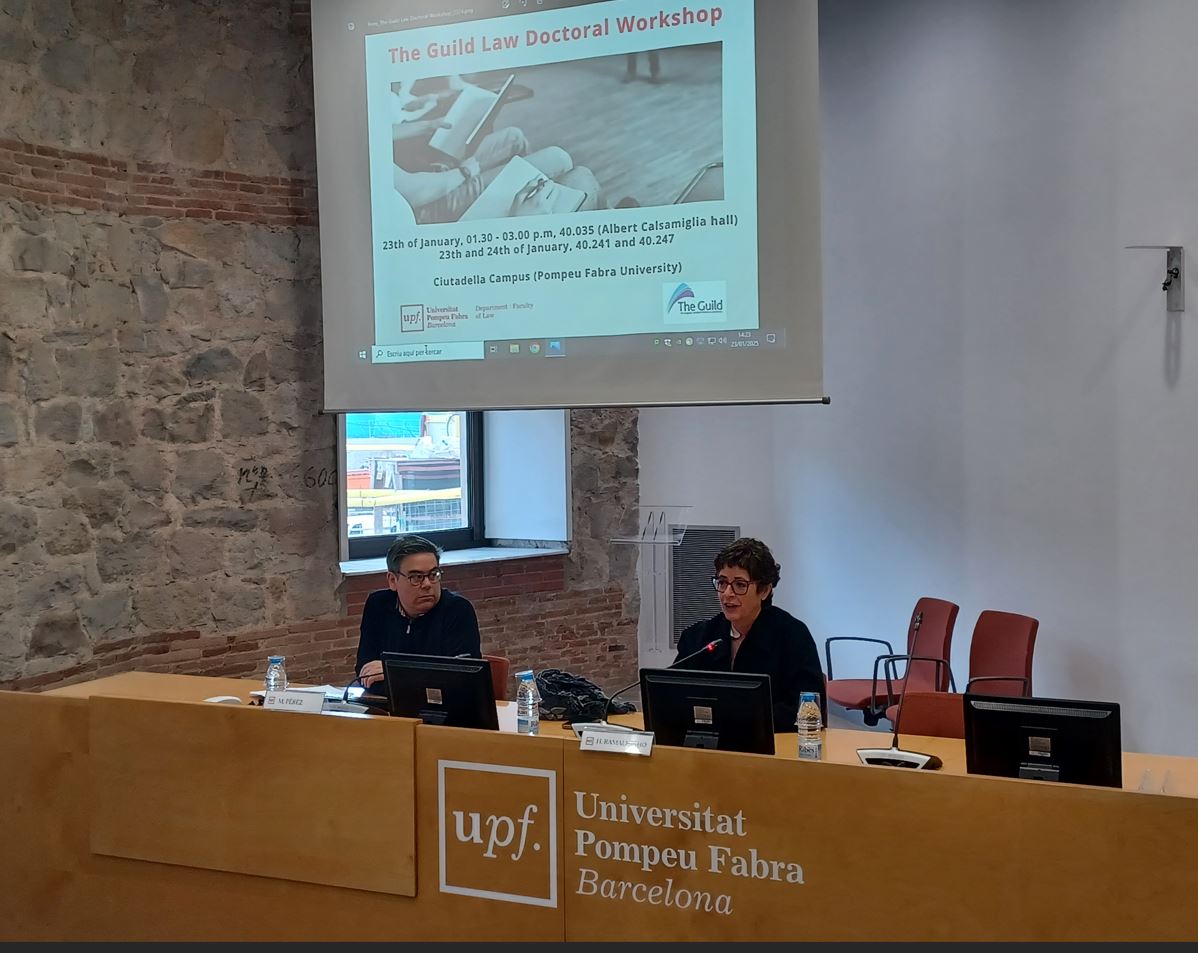
What challenges and opportunities do artificial intelligence (AI) and other digital technologies pose in the legal field? The Guild Law Doctoral Workshop. Legal research in the Digital Age, held on Thursday and Friday, 23 and 24 January, at Pompeu Fabra University (UPF), reflected on this question. The Ciutadella campus hosted the seminar organized by The Guild, the association of research-intensive universities of which UPF is a member. More than twenty young doctoral students from some of the most prestigious law schools in Europe took part.
The UPF vice-rector for Internationalization, Helena Ramalhinho, opened the proceedings in the Calsamiglia classroom on the Ciutadella campus, together with the vice-dean of the UPF Faculty of Law and coordinator of the doctoral workshop, Maurici Pérez, also a professor of Law and director of the University’s Legal Clinic. Before a forum of students from around the world, Ramalhinho highlighted UPF’s commitment to internationalization and teaching quality and explained that, as a research-intensive university, it also has several lines of research on the possible applications of AI in the field of justice.
Maurici Pérez, vice-dean of the UPF Faculty of Law: “for two days, the UPF Department of Law has become the centre of young legal research in Europe”
For Maurici Pérez, “for two days, the UPF Department of Law has become the centre of young legal research in Europe” at this seminar. This is how he summarized the importance of the topics covered: “Artificial intelligence tools can help meet some of the most important challenges of justice in our times. It will be essential to streamline the functioning of the administration of justice, to simplify the formal review of legal texts and to facilitate the search for legislation and jurisprudence. In the fight against crime and fraud, it will provide extraordinarily effective tools. But, on the other hand, artificial intelligence also requires creating a shield that protects citizens from the effects of invasions of their privacy”.
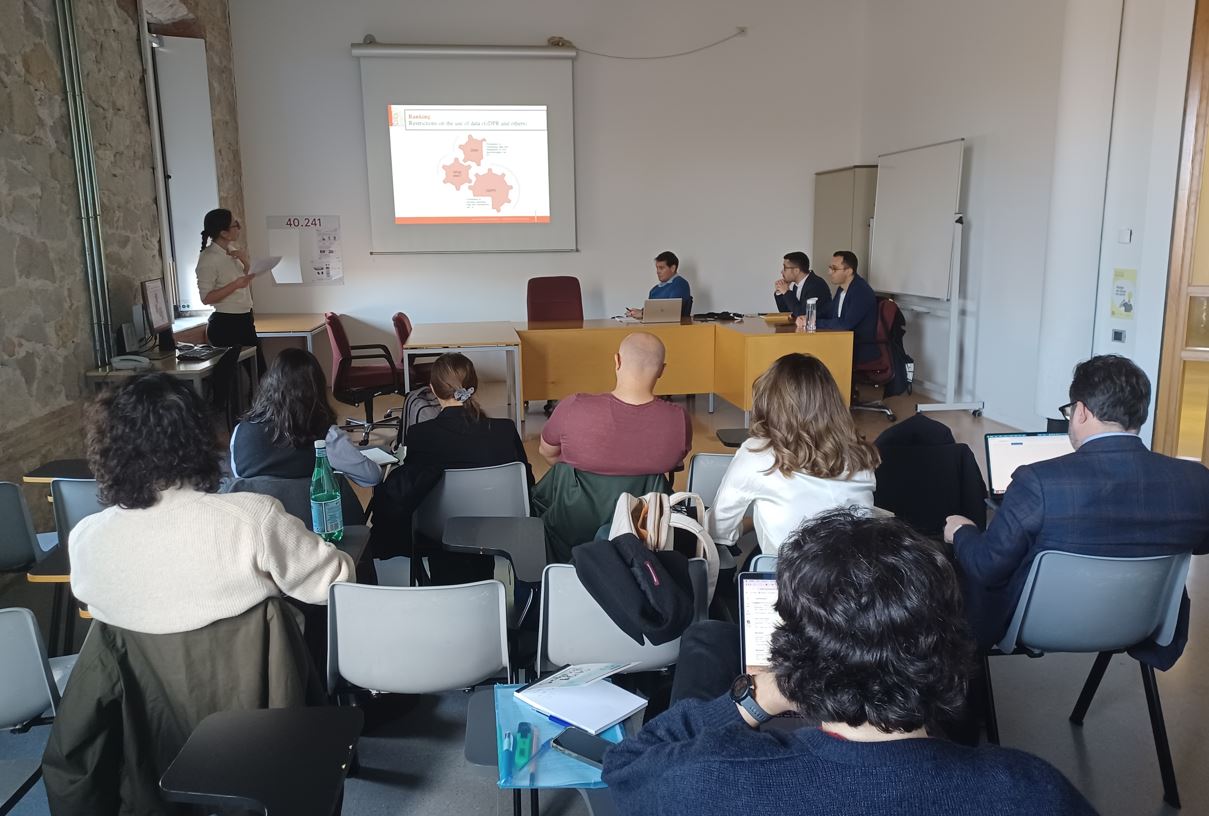
More than twenty young researchers from 10 European universities participating
During the workshop, 21 young researchers shared their research on the challenges and opportunities of AI and other digital technologies in the legal world, under the guidance of a panel of six top-level professors, through different presentations held in the Roger de Llúria Building on the Ciutadella campus. The researchers are from the universities of Bologna, Ghent, Groningen, Uppsala, Vienna, Leuven (UCLouvain) and London (King’s College London), as well as from the Jagiellonian (Kraków, Poland), and the Babeș-Bolyai (Cluj-Napoca, Romania), in addition to UPF. All of them belong to The Guild, whose member universities, all research-intensive, collaborate especially actively in law.
According to the criteria defined by the organization, a maximum of two researchers per university participated in this doctoral workshop. On behalf of UPF, participation by two doctoral students with a sound academic background and with different profiles was envisaged: Laura Herrerías Castro (who was unable to participate due to health reasons) and Zelal Pelin Doğan. Laura Herrerías is taking her doctorate in civil law and is a UPF-trained student. In fact, she won the Graduation Special Award in the 2017-2018 academic year for being the student with the best grades in her cohort of the bachelor’s degree in Law. For her part, Zelal Pelin Doğan is a researcher of Turkish origin who has chosen to pursue her doctorate in public law at UPF, whose doctoral degree programme is well-known and highly competitive on a European scale.
How to regulate emerging technologies or combat fake news?
Regarding the topics of the presentations by the participating researchers, some highlighted the opportunities that AI and digital technologies provide to the world of law, for example to facilitate automatic decision-making in administrative processes or the search for legislation and jurisprudence. But many other interventions addressed the challenges posed to the legal field in the face of the irruption of AI and the growing digitization of society. For example, there was much reflection on the difficulty of regulating emerging technologies -whose impact is difficult to predict before their use spreads socially- or of combating fake news brought about by AI-based algorithms founded on the principles of the right to information.
There was also debate on how European law should address the growing power of digital platforms to influence public opinion and how to make the need to counteract illegal online content compatible with the right to freedom of expression. Moreover, some presentations dealt with the legal challenge of deepfakes or with the standards of digital platforms in libel cases.
How to ensure cybersecurity and prevent the illicit use of cryptocurrencies?
Other presentations addressed how to ensure cybersecurity and combat illicit conduct in relation to cryptocurrencies, based on European laws regulating finance and data protection. The role of international humanitarian law in the face of possible cyberattacks that may give rise to global political and diplomatic conflicts was also discussed. Other issues dealt with concern the regulation of possible discrimination arising from the use of AI tools, based on logarithms with biases of race, gender, origin, religion, etc.
During the seminar, there were also spaces to encourage debate and enhance relations between the participating doctoral students. In addition, it served to showcase UPF’s research in the field of law and its resources for research in this field. Young researchers from all over Europe found out about the bibliography and databases related to the field of law available at the Ciutadella campus Library/CRAI.
In addition to the doctoral workshop programme, many of the participants paid a visit to the Parliament of Catalonia, taking advantage of their stay in Barcelona.