
The European far-right, increasingly divided in its support for Russia in the conflict with Ukraine
The European far-right, increasingly divided in its support for Russia in the conflict with Ukraine
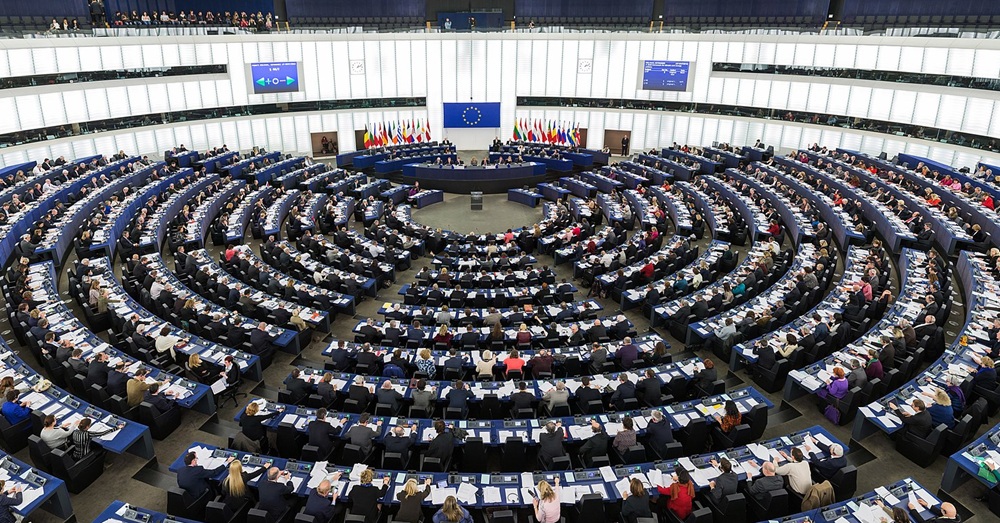
On the fourth anniversary of the war in Ukraine, since Russia’s invasion began on 24 February 2022, a study conducted within the framework of the European Parliament shows that the European far-right is becoming increasingly fragmented, while mainstream parties have mostly maintained a critical stance towards Russia.
The research was led by Adam Holesch, senior researcher at the Barcelona Institute of International Studies (IBEI) and lecturer in the Department of Political and Social Sciences at UPF, along with Piotr Zagórski (Institute of Philosophy and Sociology, Polish Academy of Sciences, Warsaw) and Aron Buzogány (Universität für Bodenkultur [BOKU], Vienna, Austria), who, together, developed the Assertiveness Toward Russia Index (ATRI).
The index is based on 65 roll-call votes in the European Parliament on key resolutions related to Russia and Ukraine between 2019 and 2025. These votes correspond to the 9th European Parliament before the full-scale invasion, the 9th European Parliament after the full-scale invasion and the first year of the 10th European Parliament.
“We have observed a ‘strategic recalibration’ among European far-right parties"
Mainstream parties vs. the far-right
The results show that mainstream parties have largely sustained their critical stance towards Russia: the European People’s Party (EPP), Renew Europe and, with some exceptions, the Progressive Alliance of Socialists and Democrats (S&D) have maintained consistently high levels of assertiveness towards Russia, with no signs of war fatigue in their voting behaviour. Among the parties most critical of Russia are the People’s Party and the PSOE, whose positions have changed little since 2019.
Conversely, the European far-right has become increasingly divided since 2022. Of particular note for their pro-Russia stance are Hungary’s Fidesz and Germany’s AfD. A drastic shift has also been observed in VOX’s voting pattern: after changing its political group in the European Parliament in 2024 (from European Conservatives and Reformists to Patriots for Europe), the party began adopting more Putin-friendly voting positions.
“We have observed a ‘strategic recalibration’ among European far-right parties. While the invasion initially prompted temporary shifts away from Russia-friendly positions in most cases, several parties from this bloc have since reverted to their pre-invasion stances, with some adopting even more explicitly pro-Russian positions,” affirms Adam Holesch.
The sustained assertiveness of the main traditional parties towards Russia helps maintain the continued pro-Ukraine consensus within the European Parliament and European Union institutions, limiting the prospects for successfully politicizing the conflict within this bloc. By contrast, the politicization of the Ukraine war has become a key strategic tool for Russia-friendly far-right actors seeking to exploit growing war fatigue to challenge the support provided by national and European institutions.
“Our study shows that far-right actors do not uniformly converge on Russia-friendly positions, helping to explain why broader attempts to politicize support for Ukraine remain constrained and corroborating existing research on the heterogeneity of far-right groups in the European Parliament,” conclude the authors.
War fatigue and the re-politicization of the conflict between Russian and Ukraine
The above study is featured in a special issue entitled “War Fatigue: The Re-Politicization of the Ukraine War”, published by Holesch alongside Benjamin Martill (University of Edinburgh) in the Journal of European Integration, in which 14 scholars analyse the differentiated impact of rising war costs on the degree of politicization.
In the introductory article, Holesch and Martill examine the dynamics of consensus-building in multinational military coalitions, the potential effects of war fatigue and the factors that determine whether or not politicization occurs. “In this article, we show how these dynamics have played out empirically, charting the politics of support for Ukraine from initial consensus on securitizing Russia towards a more complex picture characterized by increasing concerns about the costs of the war and the effectiveness of the European support, as well as in the context of the second Trump administration,” explains Holesch.
Cited papers
Holesch, A., Zagórski, P., Guzogány, A. (2026), Assertiveness and war fatigue: European party dynamics during Russia’s war in Ukraine, Journal of European Integration, 48(2), 269–288.
https://doi.org/10.1080/07036337.2026.2616344
Holesch, A., Martill, B. (2026), War fatigue? The politicisation of the Ukraine war, Journal of European Integration. 48(2), 167–190.
https://doi.org/10.1080/07036337.2026.2615100