
Research Groups
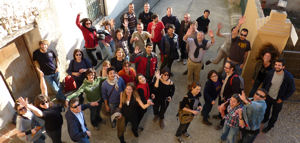
The Center for Brain and Cognition is the result of synergies between different research groups, and was recognized as a Specific Research Center in November 2012 by the Board of Governors of Pompeu Fabra University with the support of the Department | School of Engineering and the Department | Facultat de Medicina i Ciències de la Vida [MELIS].
Currently led by Salvador Soto, the research groups that comprise the Center for Brain and Cognition include eight different Research groups.
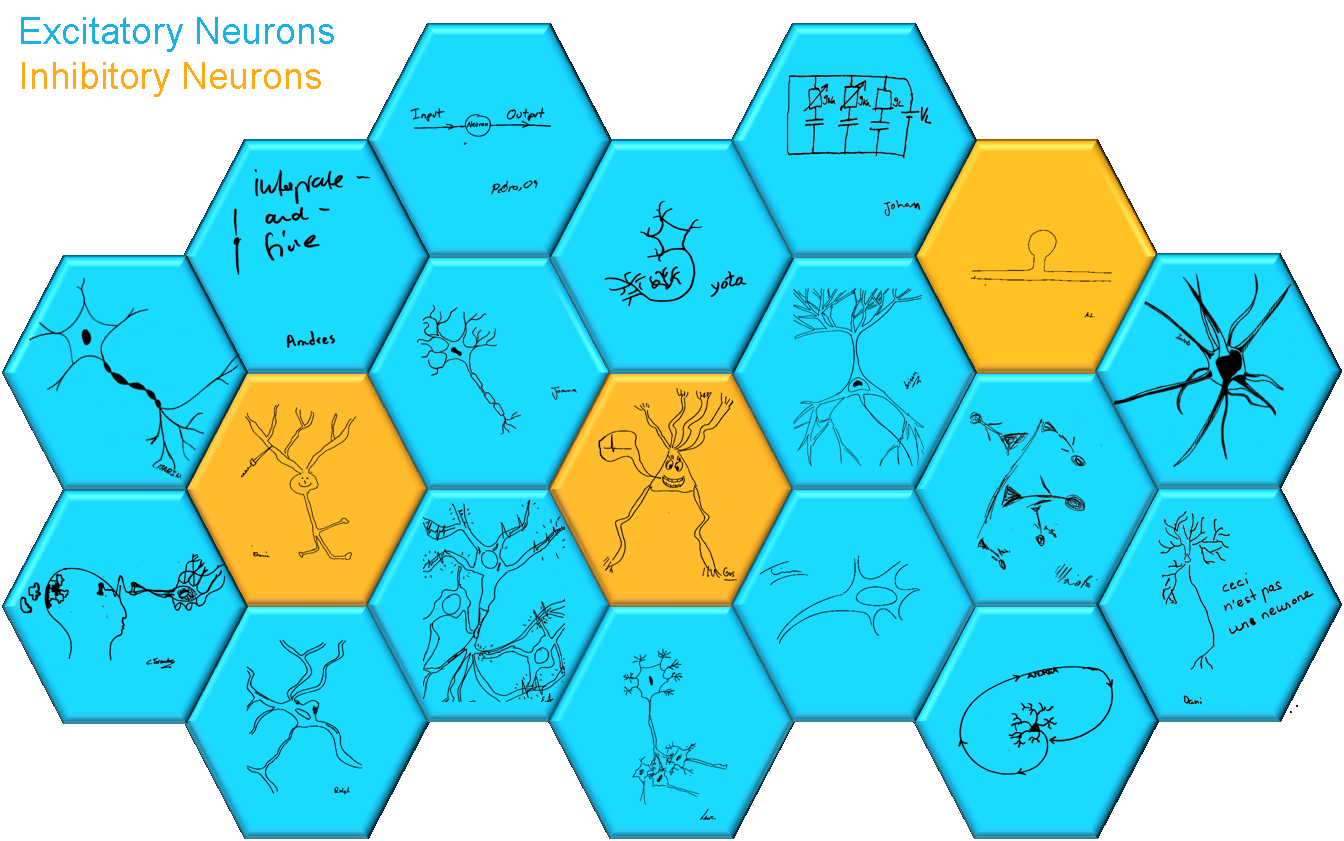
Computational Neuroscience (CNS) Group
Director: Gustavo Deco
The CNS group investigates neuronal and cortical mechanisms of perception and cognition. By developing explicit mathematical neurodynamic models of brain function at the level of neuronal spiking and synaptic activity, the group developed a theoretical framework to deepen our understanding of a wide variety of mechanisms and computations underlying higher brain functions. Analyzing networks of integrate-and-fire neurons (including nonlinearities) enables the study of many aspects of brain function from the spiking activity of single neurons to the effects of pharmacological agents on synaptic currents. Through the integration of functional magnetic resonance imaging (fMRI) and neuropsychological findings, many aspects of cognitive function can now be modeled and better understood.
Language and Comparative Cognition (LCC) Group
Director: Juan Manuel Toro
The LCC group is interested in the mechanisms that may be responsible for linguistic capacity emerging only in humans. Thus, the group studies whether humans share fundamental processes with other animals, processes that are involved in the extraction of structure from language input. The group also studies linguistic and perceptual constraints that shape such processes in humans at different developmental stages.
Multisensory Research Group (MRG)
Director: Salvador Soto
Researchers of the MRG aim to understand the neural and cognitive basis of human perception and attention processes in multisensory environments. They study multisensory interactions in a wide range of perceptual domains (from speech perception to body representation), using a variety of scientific approaches (from psychophysics to neuroimaging). Questions addressed by the group focus on theoretical as well as applied problems.

Reasoning and Infant Cognition (RICO) Group
Director: Luca Bonatti
The main interest of the RICO group is to reveal bits and pieces of the representations underlying our abilities to come to conclusions, to form expectations, and to find out what happens next, when dealing with both the physical world around us and the psychological world inside us.

Speech Acquisition and Perception (SAP) Group
Director: Núria Sebastian
The research of the SAP group focuses on the study of language learning, its perception, and issues related to language processing in general (with special emphasis on bilingual populations). Research participants in our laboratory range from infants to adults (and even animals for comparative approaches) with methodologies based on behavioral, physiological, and brain imaging responses.
Theoretical and Cognitive Neuroscience (TCN) Group
Director: Rubén Moreno
In our lab we combine computational and cognitive neuroscience to theorize above and study the neuronal mechanisms that underlie cognitive functions. Physics, machine learning, psychology and neuroscience are used to understand the computational principles of the brain.

Director: Damian Blasi
I am a scientist researching the diversity and evolution of languages. I want to understand where the ~7,500 languages extant today come from (with a special emphasis in the last 12,000 years, the Holocene), how they will change in the advent of the human-machine era, and what is that languages have done to our species, our cognitions, behaviors, and cultures. I fully embrace a transdisciplinary and question-guided approach, drawing from data science, human biology, cognitive sciences, comparative linguistics, evolutionary anthropology, computational social sciences, natural language processing, and cultural evolution. A substantial proportion of my work involves inferences with small, sparse, incomplete, imbalanced, noisy and non-independent observational data (or s2i2n2 for short).
My published research covers topics ranging from the emergence of new languages, pervasive form-meaning associations, the adaptability of speech sound systems, patterns of information packing , and the prehistory of worldwide linguistic diversity. All my articles are available in my Google Scholar profile (see below).
In addition to my strictly scientific interests, I apply insights from language diversity to concrete issues involving AI, medicine, education, technology, access to information, and other facets of human wellbeing.

Christopher Summerfield research group
Director: Christopher Summerfield
I am Professor of Cognitive Neuroscience at the University of Oxford, and a Research Director at the UK AI Security Institute. My work focuses understanding the cognitive and neural mechanisms that underlie human learning and decision-making, and on studying the impacts of AI on society.
My research bridges the fields of cognitive science, neuroscience, and artificial intelligence. I am particularly interested in how insights from human cognition can inform the development of more advanced and safer AI systems.