
Professor Joan Benach appears before the Health Committee of the Congress of Deputies, in the subcommittee on Mental Health.
Professor Joan Benach appears before the Health Committee of the Congress of Deputies, in the subcommittee on Mental Health.
Professor Joan Benach appears before the Health Committee of the Congress of Deputies, in the subcommittee on Mental Health.
Professor Joan Benach,
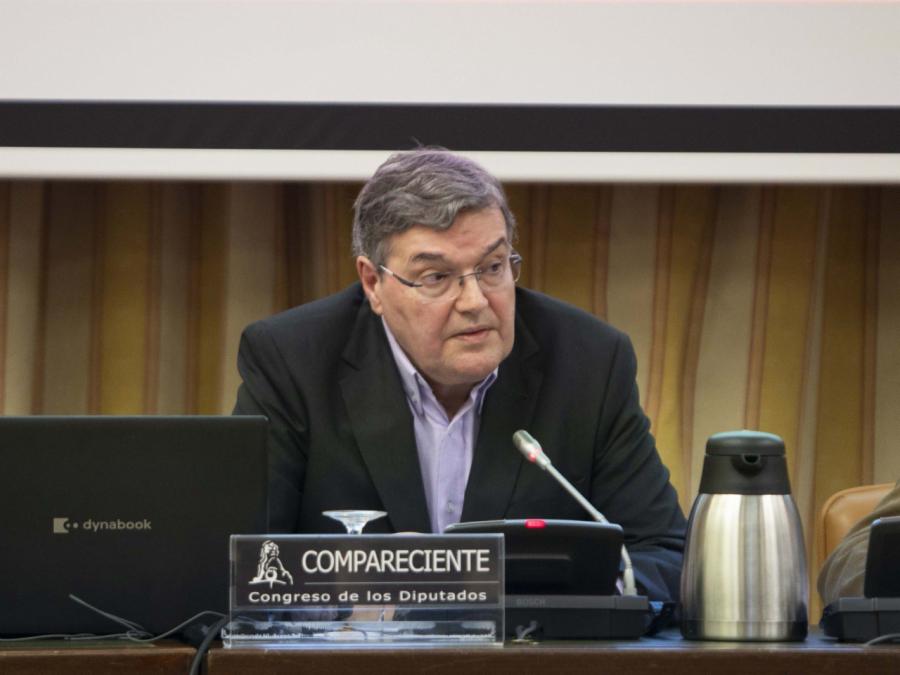
In his presentation to the Congress's Subcommittee on Mental Health, Professor Benach highlighted the severe impact of precarious employment on mental health, describing it as an "emerging and unequal social epidemic" that disproportionately affects vulnerable social groups, including women, young people, and migrants. Prominent figures participating in the session included Jordi Alonso Caballero, Deputy Scientific Director of the Carlos III Health Institute; Dr. Gemma Parramón Puig, psychiatrist and member of Catalonia's Euthanasia Commission; and Dr. Montserrat Graell Berna, head of Child and Adolescent Psychiatry at the Niño Jesús University Children's Hospital.
Benach's analysis, based on the work of an expert commission tasked by the Spanish government with preparing the PRESME Report, attributes many of the rising mental health issues to a complex combination of social and economic conditions, with job precarity identified as a leading cause. “Spain has a high proportion of people working under precarious conditions, with insufficient time between shifts, directly impacting their quality of life,” he noted, adding that poor working conditions have a ripple effect on both individual well-being and national economic productivity.
Professor Benach criticized the excessively biomedical approach that is dominant in mental health research and practice, which he argues “tends to medicalize individual problems rather than addressing their underlying social and environmental causes.” As an alternative, he advocated for a biopsychosocial model that takes into account people's life contexts and integrates preventive measures at the structural level. “Without cross-sector policies that coordinate efforts across society, our approach will be limited,” he emphasized.
Benach outlined several key recommendations to address these challenges, including participatory policies that improve working conditions, ensure access to adequate housing and strengthen public health systems. He also advocated for the establishment of robust monitoring and evaluation systems to assess the effects of job precarity on mental health, suggesting that Spain should look to the experiences of countries like Sweden and Finland when designing public policies to tackle complex health issues. “A national mental health plan requires political consensus, resource commitment and long-term planning to be effective,” he concluded.
He also warned about the increase in the consumption of anxiolytics and antidepressants in Spain, which he described as a response to the country's increasingly deteriorating social conditions. Reversing this trend, he argued, requires comprehensive policy solutions that go beyond clinical interventions and address the root causes of psychological distress.
At the end of the session, representatives from various political parties, including the Socialist Party (PSOE), the Plurinational Sumar Party, the VOX Parliamentary Party, and the Popular Parliamentary Party, offered reflections and posed questions to Professor Joan Benach.
The summary of the PRESME Report can be accessed here: "Precarious work and mental health: knowledge and policies."