
Presentation of the GIG-OSH Project Findings on the Risks of Digital Labour and Its Impact on Occupational Health
Presentation of the GIG-OSH Project Findings on the Risks of Digital Labour and Its Impact on Occupational Health
Presentation of the GIG-OSH Project Findings on the Risks of Digital Labour and Its Impact on Occupational Health
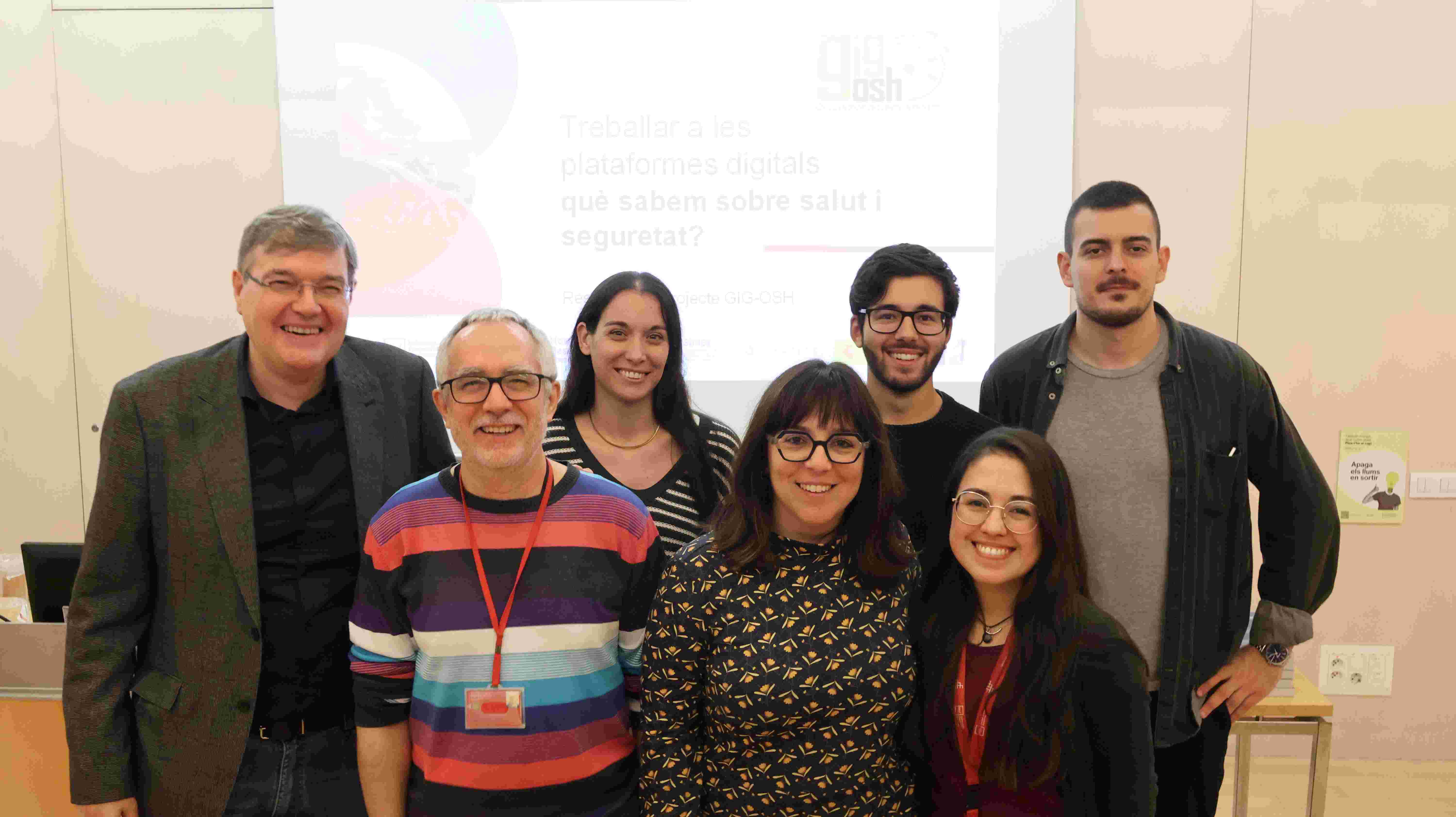
Barcelona, 28 October 2025. Last Wednesday, in the Auditori Mercè Rodoreda of Pompeu Fabra University’s Ciutadella Campus, the results of the European project GIG-OSH – “Working on Digital Platforms: What Do We Know About Health and Safety?” were presented. The research focused on examining the health and safety conditions of individuals working through digital platforms.
The study was conducted by researchers from the Hospital del Mar Research Institute (HMRI) and the GREDS-EMCONET group of the JHU-UPF Public Policy Center (PPC) at Pompeu Fabra University (UPF). The team reflected on the social, labour and health challenges posed by the digitalisation of work.
The three-hour session was opened by Joan Benach, Co-Director of the PPC. The presentation of the findings was led by Mireia Julià Pérez, Principal Investigator at HMRI; Eva Padrosa Sayeras, researcher at HMRI; and Ferran Muntané Isart, researcher at PPC.
Among the main conclusions of the report, it was emphasised that platform work does not represent a neutral technological innovation, but rather a structural transformation of the contemporary labour model. According to the researchers, this type of employment combines the promise of autonomy with new forms of subordination, where algorithms act as mechanisms of control determining tasks, earnings and reputations.
The report highlights that so-called labour flexibility is, in many cases, a response to economic necessity rather than a voluntary choice, and that most platform workers experience contractual insecurity, income variability and stress associated with algorithmic management.
Constant exposure to these dynamics has both physical and psychosocial consequences, such as: chronic stress, anxiety, emotional exhaustion, difficulty disconnecting and the blurring of boundaries between work and personal life. In this context, “health becomes a mirror of the inequalities of digital labour,” the report concludes.
Despite this landscape of precariousness, the project also identified strategies of resistance and cooperation among workers, such as mutual support networks, grassroots collectives and trade unions that promote forms of representation adapted to digital environments. Examples such as the agreement reached between Just Eat and trade union organisations demonstrate that collective bargaining remains a viable path for balancing power with platforms.
Regarding the institutional framework, progress has been made through initiatives such as the 2021 Rider Law and the Spanish Occupational Health and Safety Strategy 2023–2027, although the study warns that their impact remains limited and that “regulation still lags behind innovation.”
Following the report presentation, a round table moderated by Mireia Julià brought together representatives from institutional, trade union and platform sectors: Enrique Casanova, Labour and Social Security Inspector (ITSS); Fernando García, delegate of the General Union of Workers (UGT); and Franz Morales, former rider and delegate of the Workers’ Commissions (CCOO). The discussion addressed regulatory challenges, working conditions and opportunities for improving occupational health protection in the digital economy.
Ultimately, the GIG-OSH Project invites us to imagine fairer and more sustainable futures for digital work—where technology serves human dignity and equity, rather than mere efficiency and profitability.
Authors of “Working on Digital Platforms: What Do We Know About Health and Safety?”:
- Mireia Julià Pérez (Principal Investigator, HMRI)
- Eva Padrosa Sayeras
- Sandra Verdaguer Johé
- Edgar Vicente Castellví
- Joan Benach De Rovira (Principal Investigator, UPF)
- Francesc Xavier Belvis Costes
- Mariana Gutiérrez-Zamora Navarro
- Ferran Muntané Isart
With the collaboration of Astrid Escrig Piñol, Naiana Pastrana Batalla and Humberto Jiménez.