WORKSHOP - Impact of AI on political communication
WORKSHOP - Impact of AI on political communication
The Chair organizes a day dedicated to reflection on the effects of AI on political communication
On June 13, the conference “The Impact of AI on Political Communication” was held at the Poblenou campus of Pompeu Fabra University. The event brought together various researchers and experts in the field of political communication to present their research and discuss the changes that AI has brought about in political communication.
The event began with a welcome address by Carles Pont, Director of the Chair, who thanked all attendees for their presence and introduced Professor Shyam Sundar.
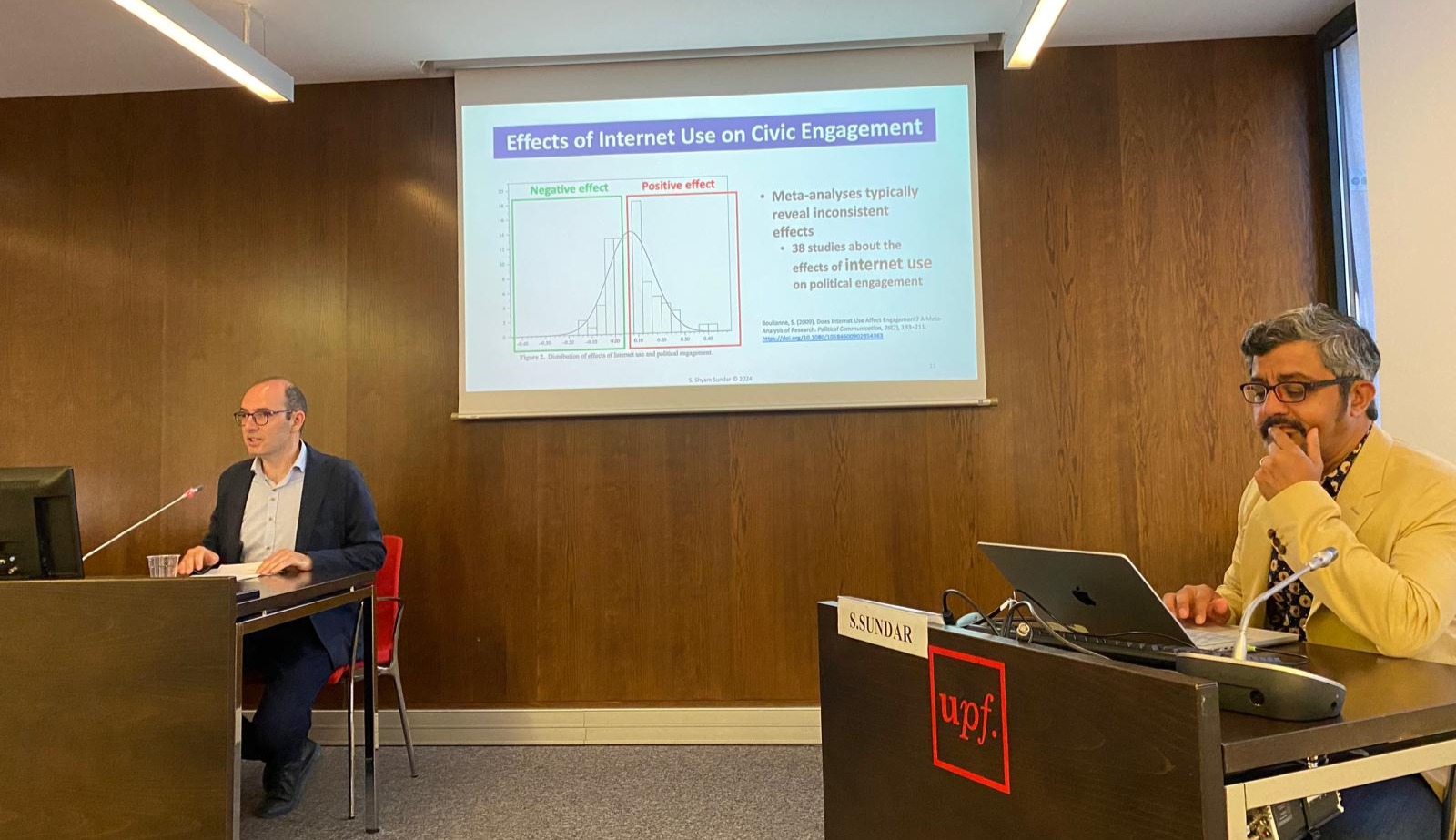
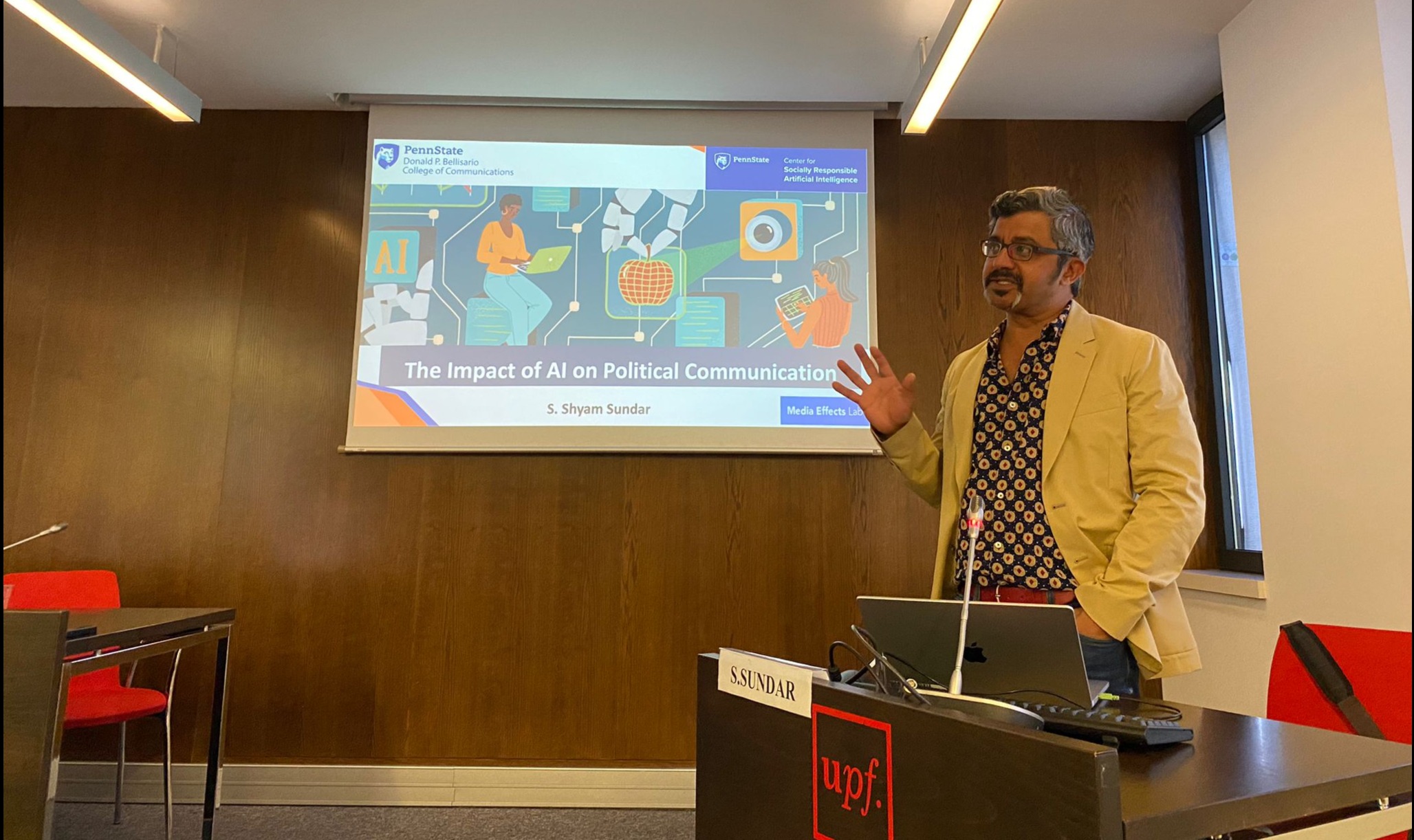
Shyam Sundar, founder of the Media Effects Research Laboratory at the Penn State University’s College of Communications and director of the Center for Socially Responsible Artificial Intelligence, presented the main findings of his research focused on media and information credibility. Professor Sundar examines the various factors that shape how people evaluate the authenticity of information, drawing on multiple experimental studies.
One of the key conclusions of this body of research is that the greater the level of interactivity within online content, the higher the perceived credibility it generates. Interactivity is understood here as the possibility of posting comments or expressing one’s impression of the content through an emotive emoji. According to Professor Sundar, when there is debate or user commentary, audiences perceive the content as a deliberative space.
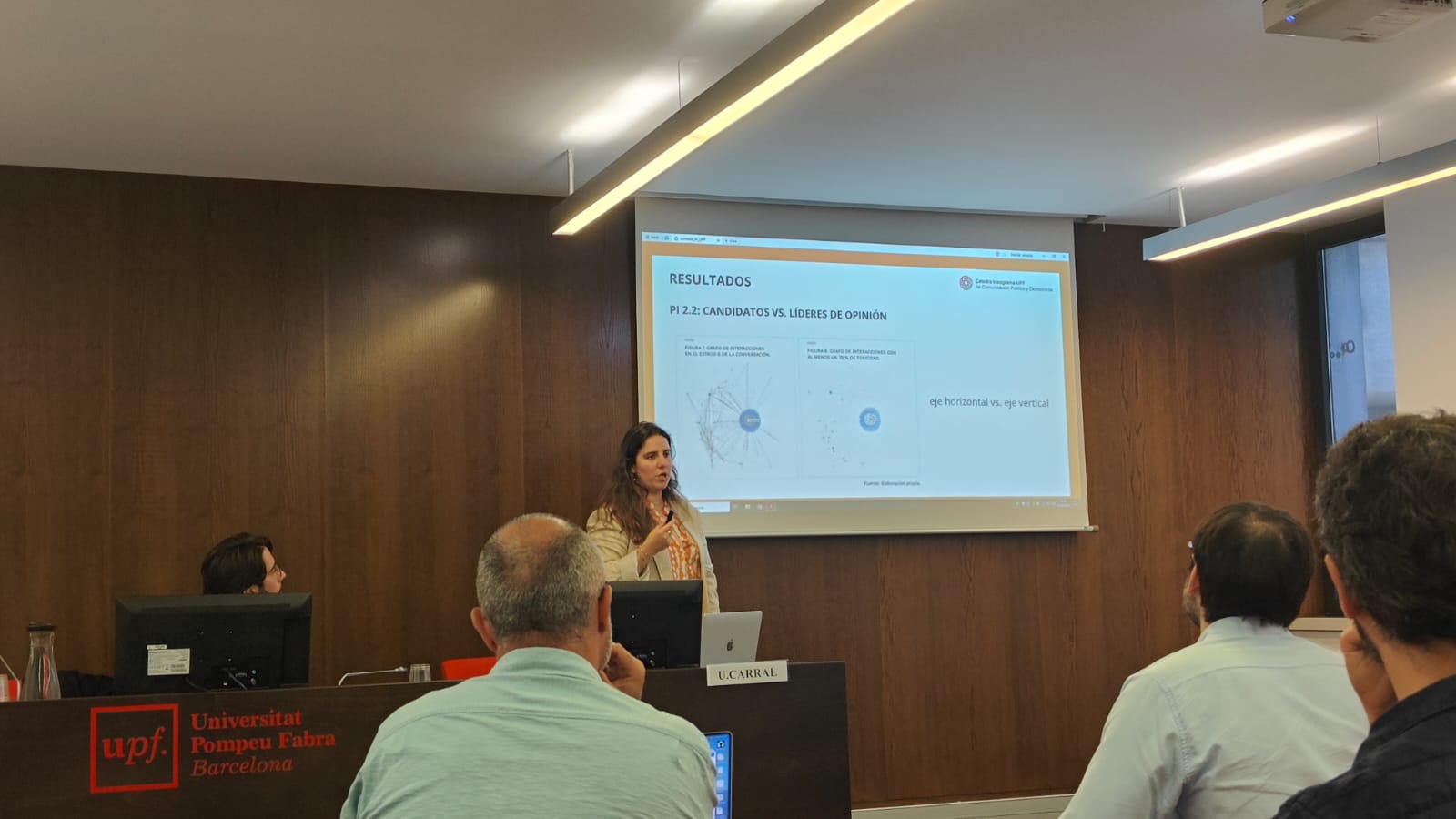
Next, Uxía Carral, researcher at Carlos III University of Madrid and winner of the 3rd Ideograma–UPF Chair Award, presented the results of the study “Political Toxicity on Social Media: The Case of the #28M Elections.” This report is the result of a year-long collaboration with the Chair.
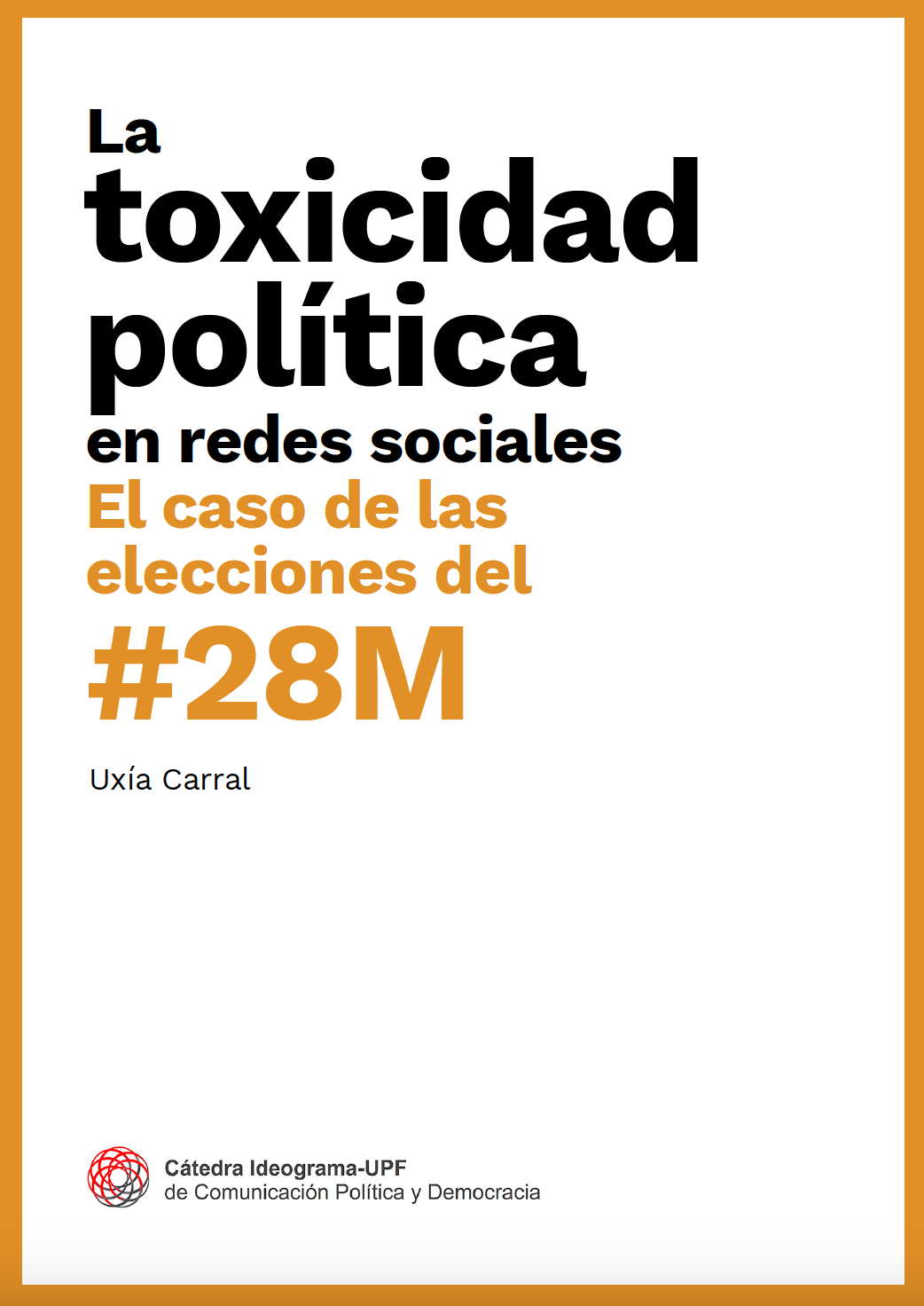
Researcher Carral analyzes levels of toxicity in political conversation on the social network X during the 2023 elections in the Community of Madrid. Based on the selection of the seven main political candidates, the study examines user conversations in response to the tweets published by the candidates during the electoral period.
The main innovation of this research lies in the use of AI-based tools to analyze the data, specifically Communalytic and Perspective API.
Finally, a roundtable discussion was held with AI experts such as Frederic Guerrero-Solé, Professor in the Department of Communication at UPF; Simona Levi, expert in disinformation and AI; and Carlos Guadián, consultant in political and digital communication. The session was moderated by Reinald Besalú, Deputy Director of the Chair.
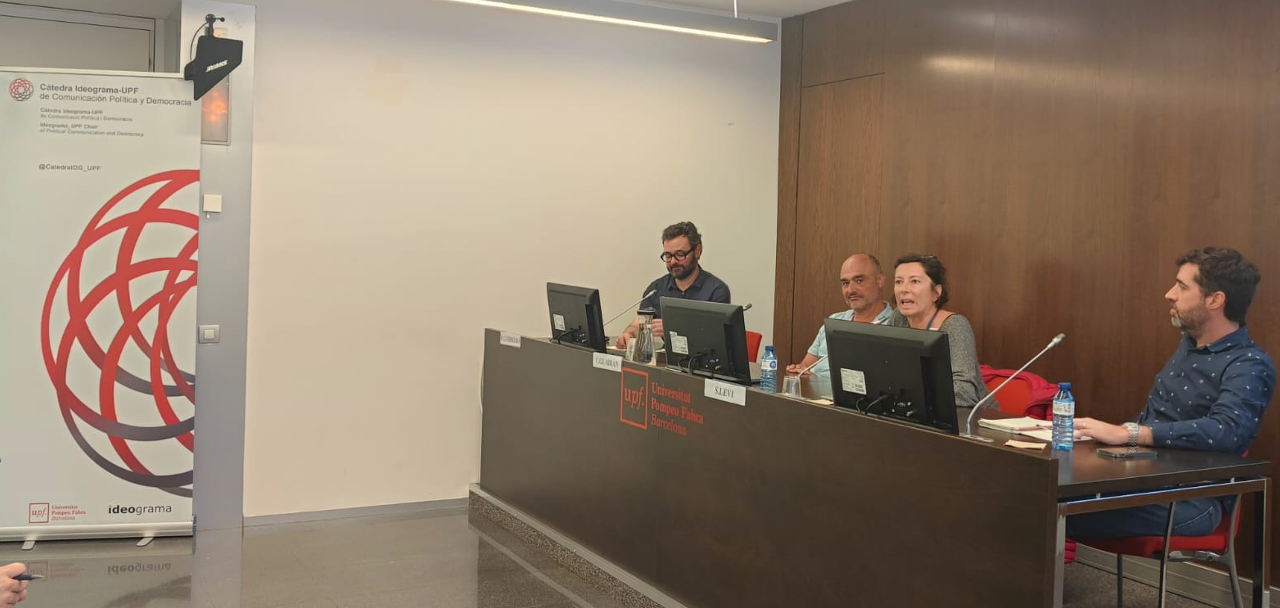
The debate highlighted key ideas regarding AI regulation and the algorithmic structure of OpenAI platforms. In addition, participants discussed the potential of AI and social media as tools for democratizing public debate.