
SynBio Lab tests a bacterial biofilm in the Mediterranean to combat marine biofouling
SynBio Lab tests a bacterial biofilm in the Mediterranean to combat marine biofouling
An international team involving UPF’s SynBio Lab is studying whether an organic coating made with bacterial communities could be used to prevent marine biofouling, that is, prevent marine organisms -such as algae, mussels and small invertebrates- from becoming encrusted on ships and underwater vehicles increasing water friction and maintenance costs. To do so, in the laboratory they have designed and validated a stable bacterial community that could replace anti-fouling paints that are high in biocides such as copper. For the first time, they have tested the biofilm in situ to check whether the community is stable in the marine environment.
In order to prevent the burden of marine biofouling, the UPF Synbio lab aims to develop a natural coating in the laboratory to cover vessels. “We want the coating to be natural so as not to alter the marine microbial flora, and in addition we want it to be regenerative so that if it breaks, it can cover the damaged area itself, and hydrophobic, to reduce friction with water and optimize vessel fuel consumption”, explains Maria Pol, who is doing her doctoral thesis with this project.
To design the bacterial biofilm, they validated the natural adherence and hydrophobicity of marine bacteria in the laboratory. With the help of the University of Copenhagen, they have produced the new community and subjected it to various tests to confirm that “it is a robust biofilm and that neither friction nor some invasive marine bacteria alter its composition”, says Lorena Toloza, a postdoctoral researcher participating in the project.
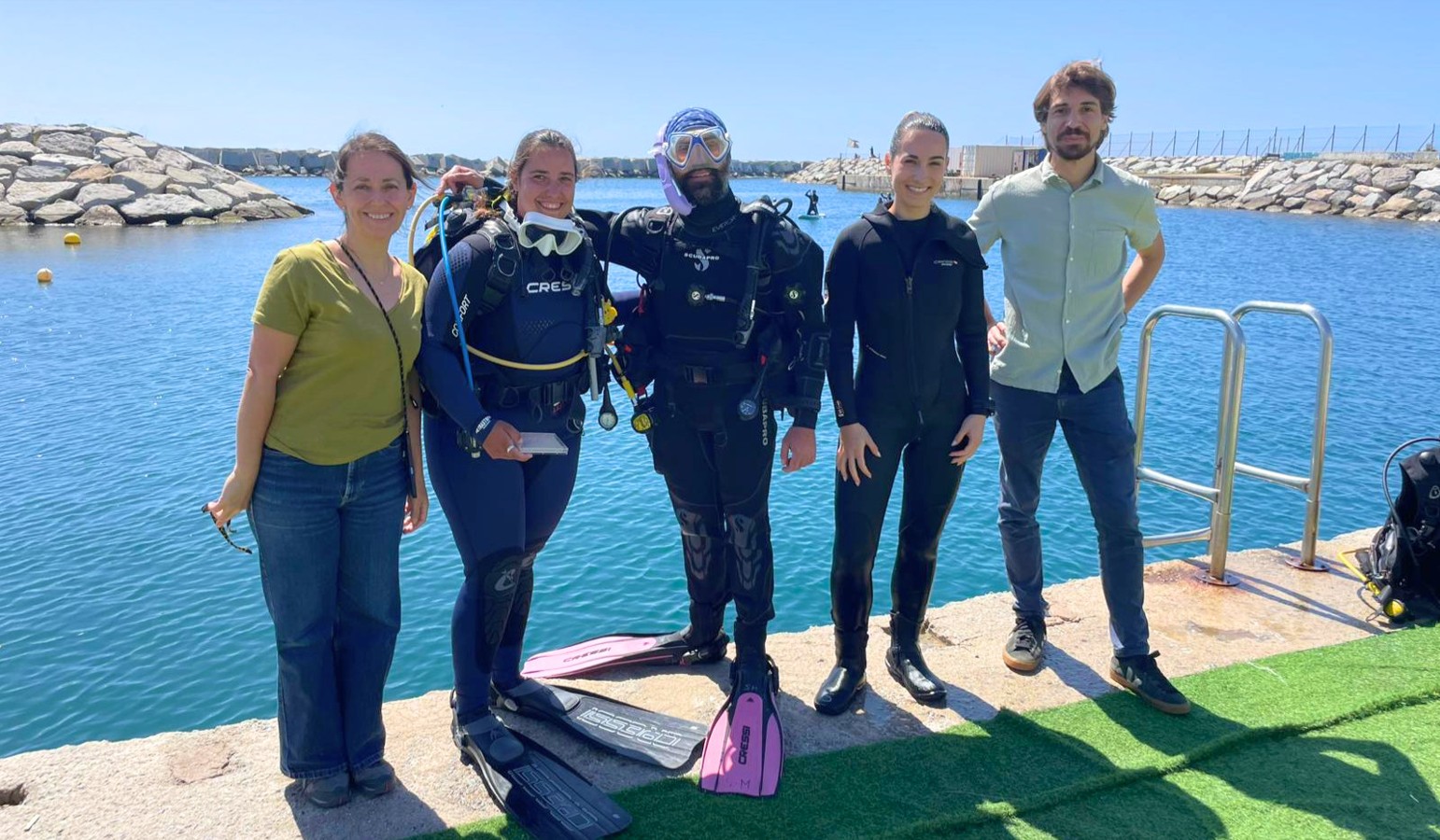
Now, they have taken the tests on this biofilm one step further by submerging samples of the community to different depths in the facilities of the iDiveBarcelona centre, in the sea off Barcelona. “Since these bacteria already grow naturally in the Mediterranean, we expect our biofilm to remain stable during the hours of immersion”, Maria Pol explains.
In the coming months, they will analyse the results in the laboratory to confirm whether the community remains stable once exposed to microorganisms and marine currents. This will validate whether, in the coming years, the biofilm could be used in the nautical industry to replace paints to combat marine biofouling.
This project, coordinated by Clemson University, involves researchers from the SynBioLab at the Pompeu Fabra University, which is a group TENCIO by Acció, the University of Copenhagen, Duke University, and the University of Essex.