
CAS researchers present new studies at the Health Communication Division Conference of ECREA
CAS researchers present new studies at the Health Communication Division Conference of ECREA
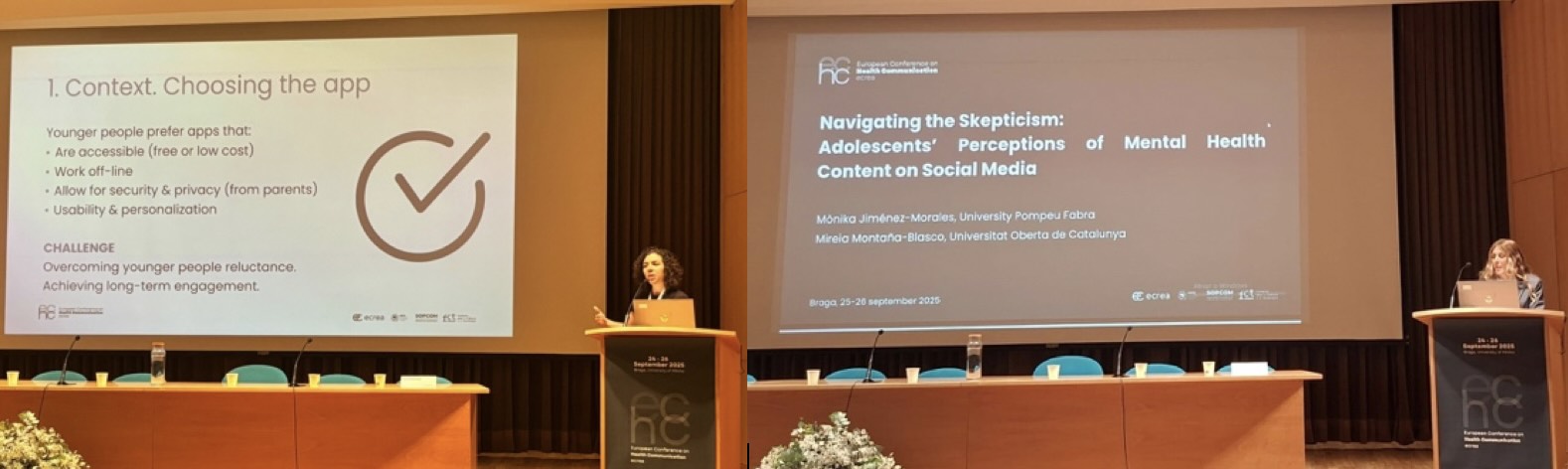
Two researchers from the group participated in the European Conference on Health Communication (ECHC 2025), organized by the University of Minho under the Health Communication Division of ECREA (European Communication Research and Education Association). The conference gathered international experts to discuss current challenges in digital health, literacy, and communication ethics.
Mònika Jiménez-Morales presented the paper “Navigating the Skepticism: Adolescents’ Perceptions of Mental Health Content on Social Media,” co-authored with Clara Virós-Martín (UPF) and Mireia Montaña-Blasco (UOC). The presentation forms part of the broader project SMARS – Salud mental, adolescentes y redes sociales. The findings highlight adolescents’ generally neutral perceptions of mental health content on social media, with low levels of trust and reluctance to follow advice from influencers and peers. This suggests that while adolescents might value personal narratives shared online, they do not necessarily consider them reliable sources of guidance. This underlying skepticism could be, a consequence of widespread disinformation on social media.
Lara Martín Vicario, in collaboration with Lorena Gómez-Puertas (UPF), presented “Depression diagnostic applications for young people: A critical approach.” Her presentation analyzed how digital tools designed for mental health self-assessment align with young users’ expectations. The study emphasized that such apps often present themselves as valuable resources to assist in the “journey” of self-improvement, positioning their role as both helpers and implicit heroes. This narrative underscores the persuasive nature of wellness technologies and invites reflection on how digital platforms shape young people’s understanding of emotional well-being and responsibility.
Both contributions reflect the group’s active research on mental health communication, youth, and digital media, and their commitment to promoting critical and responsible health communication in online contexts.