
Camara Rey, Oscar
CAMARA REY, OSCAR
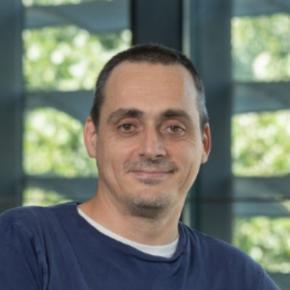

Oscar Camara obtained his Degree in Telecommunications Engineering at Universitat Politècnica de Catalunya, in Barcelona, in 1999. He completed his Master and PhD in Image Processing in the École Nationale Supérieure des Télécommunications in Paris, in 2000 and 2003, respectively. From 2004 to 2007, he was a postdoctoral researcher, first at King’s College London and then at University College London. In July 2007, he joined the Universitat Pompeu Fabra (UPF) as Ramón y Cajal postdoctoral researcher. In October 2011, he founded a new research group at UPF, Physense, currently composed of 26 members. From 2012 he was associate professor at UPF, becoming full professor in 2020. He was a visiting scholar at the University of Auckland (New Zealand) during the 2018-19 academic year. He is one of the co-founder groups of the research unit BCN-MedTech, recognized as a consolidated group by the Generalitat de Catalunya. His research work has led to 100 publications in journals (70% in Q1), 5 book chapters, the co-edition of 12 LNCS proceedings volumes, 3 patents and around 250 contributions to national and international conferences in both methodological and clinical fields (Google Scholar, May’25: number of citations = 8975; h-factor = 44). During his career, he has officially co-supervised 15 PhDs, and currently co-supervises 15 PhD (6 finishing in 2025). He has obtained recognition of research and teaching achievements over three 6-year periods (2001-2018) and three 5-year periods (2008-2022), respectively, from the AQU Catalunya.
At a national level, he has recently obtained the fourth consecutive national project as PI from the Spanish administration (GENERALITAAT, Retos Investigación, 2023-2026), after successful previous ones (two other Retos Investigación projects; and an initial CICYT project). The research performed in these projects have led to several innovation activities, leading to the foundation of the VirTest spin-off, supported by a Prueba de Concepto project (ATRAPAALO, 2023-2024), and several regional entrepreneurship programmes. He is also a co-founder of the “Red Española de Investigación en Modelización Computacional Cardiaca”. He has also obtained significant funding from technology transfer projects on microwave technologies, including a Marie Curie Individual Fellowship. This research line led to the creation of the spin-off Miwendo Solutions, co-financed within the Mind the Gap programme of Fundación Botín. At the European level, he is co-PI of two H2020 EU projects, SimCardioTest (2021-2024) and GEMINI (2023-2026). He also participates in the ERA-NET Neuron network for fetal abnormality assessment (2022-2024). Previously, he was co-PI of a European project under the FP7 program (VP2HF, 2013-2017), leading the Clinical Workflow work-package, the same role he had in the previous EU project (euHeart, 2009-2012). We were also awarded a European Industrial Doctorate grant (ITN) with Philips Medysis, France (CardioFunXion; 2015-2019). He has been actively contributing to the development of Open-Source tools in computational imaging and modeling such as the Rocket platform (e.g., a project with the Bill & Melinda Gates foundation, 2018), medInria, GIMIAS and OpenCMISS. He is promoting science for children and women in engineering (e.g., Youth Mobile Festival, Girls’n’Lab). He was the coordinator of the Biomedical Engineering (BME) degree at UPF from its start in 2011 to 2017 and creator of the Computational BME MsC in 2016. On average per year, he coordinates more than 10 BsC/MsC theses (> 120 thesis supervised so far), is responsible for 4 different BME subjects (accumulating around 1200 teaching hours in his career). Since December 2021, he is director of the Engineering School at Universitat Pompeu Fabra.