
Paternity leave in Spain is not enough to ensure gender equality in the home during the first months of a newborn’s life
Paternity leave in Spain is not enough to ensure gender equality in the home during the first months of a newborn’s life
Paternity leave in Spain is not enough to ensure gender equality in the home during the first months of a newborn’s life
Such is the conclusion of a study led by Libertad González, full professor in the Department of Economics and Business at UPF and affiliated professor at BSE. An analysis of paternity and maternity leave spells around the time of the 2022 FIFA World Cup in Qatar revealed that flexibility in paternity leave use often serves leisure purposes.
A recent working paper by Libertad González, full professor in the Department of Economics and Business at Pompeu Fabra University and affiliated professor at the Barcelona School of Economics (BSE), Luis Guirola (Bank of Spain) and Laura Hospido (Bank of Spain, CEMFI and IZA), published in the BSE Working Papers Series, corroborates differences in the use of paternity and maternity leave between men and women in Spain.
Paternity leave has been introduced and extended in numerous countries in recent decades and is viewed as a policy with the potential to close the gender gap in both the workplace and the home. In Spain, both maternity and paternity leave are non-transferable and offer each parent sixteen weeks of paid absence, six of which must be used immediately following the birth, with the option to use the remaining weeks within the first year of the child’s life.
Libertad González: “The different patterns in the use of parental leave between men and women suggest that, despite equal conditions, strong gender patterns in the distribution of care during the first year of the child’s life continue to exist”
Libertad González and her co-authors were given access to National Insurance data on the start and end dates of all maternity and paternity leave spells in Spain in 2021, 2022 and 2023. An analysis of these data led to the conclusion that a high number of fathers take leave and that almost all use all sixteen weeks to which they are entitled (the same as mothers). However, the vast majority of mothers use the sixteen weeks on a full-time basis, without dividing it up into multiple periods, and immediately following the birth.
In terms of leave distribution, 50% of fathers split their leave into at least two non-consecutive periods (compared to only 6% of mothers). In addition, 10% of fathers (and less than 2% of mothers) use their leave on a part-time basis. Lastly, the researchers observed an accumulation of paternity leave spells during the summer, a phenomenon not seen with maternity leave.
“These patterns appear to indicate that fathers use their leave spells in a more ‘flexible’ manner than mothers. Many families use the optional portion of the leave consecutively, while fathers divide theirs into multiple periods”, explains Libertad González. Furthermore, “the spike during the summer is a possible indication that fathers use their leave to extend the family holidays, or that many fathers are in charge of covering the period in which nursery schools are closed during the summer period”, she adds.
Connection between paternity leave use and leisure through the 2022 Qatar World Cup
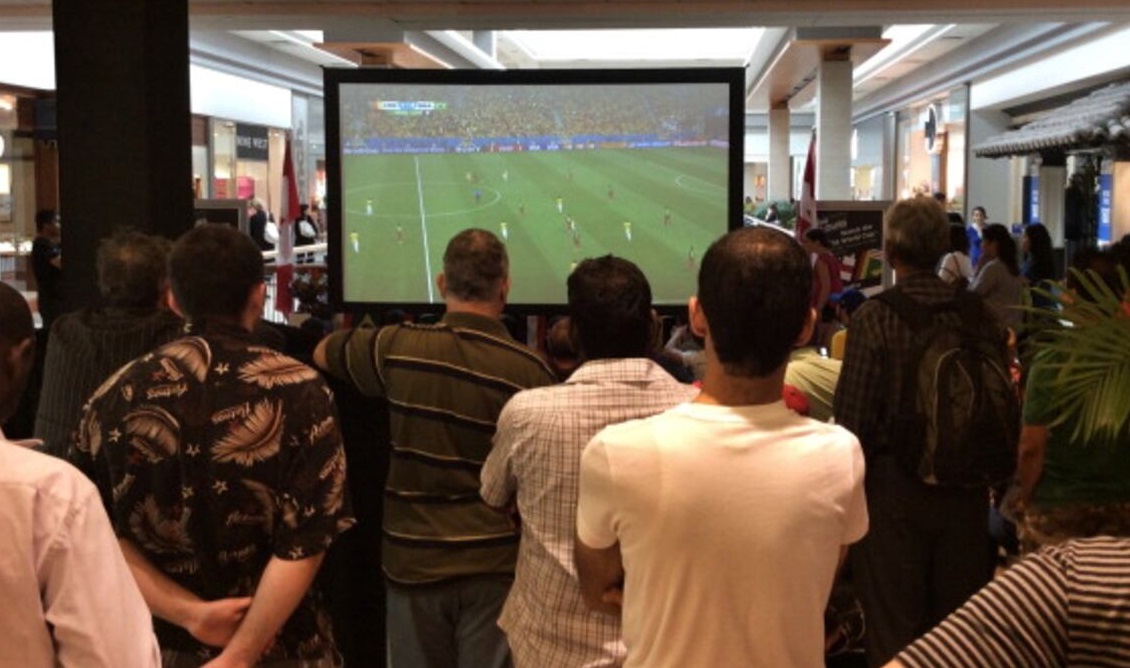
To understand whether this flexibility in the use of paternity leave is partly for leisure reasons (and not only work-life balance needs), the team of researchers carried out an exercise that involved studying the number of men (and women) who took leave during a sporting event with a strong following: the 2022 FIFA World Cup.
To do so, they analyzed the exact dates of the World Cup (20 November to 18 December 2022) and compared the number of fathers on leave with the figures from the surrounding dates. “We saw that, in 2022, there was an abnormal number of men on leave during this exact period (an ‘excess’ of roughly 1,000 men, or just over 1%), an excess not present in the same dates in 2021 or 2023 (or in the number of women on maternity leave). The study shows that one of the reasons leave spells are divided into multiple periods is indeed for leisure.
“The different patterns in the use of parental leave between men and women suggest that, despite equal conditions, strong gender patterns in the distribution of care during the first year of the child’s life continue to exist”, concludes Libertad González.
The researchers indicate that this type of benefit is only partially effective in closing the gender gap in unpaid care work and suggest that additional policies may be needed to heighten the contribution of fathers to childcare, such as policies that specifically target gender norms or the promotion of more flexible working arrangements.
Cited paper: González, L., Guirola, L. and Hospido, L. (October 2024) “Fathers’ Time-Use while on Paternity Leave: Childcare or Leisure?”. BSE Working Papers