
The experience of three UPF students at the EUTOPIA Ideas Club on Climate Change in Venice
The experience of three UPF students at the EUTOPIA Ideas Club on Climate Change in Venice
Laura Rivera Bergós (4th year student of the degree in Philosophy, Politics and Economics), Sofia Roig (4th year student of the degree in Law) and Eudald Sanz (1styear student of the degree in Journalism), have participated in the EUTOPIA Ideas Club on Climate Change in Venice. In the following Blog they will explain to us the experience they have lived and their reflections.
In Venice, the effects of sea level rise are already being noticed, with extreme flooding and affectations throughout the city. In Catalonia this year we suffered one of the most severe droughts in recent years, causing the declaration of a state of emergency. In Greece, forest fires are becoming more and more frequent, causing almost 30 deaths only last summer. With these examples we see how climate change and its consequences do not understand political borders, and will be palpable, directly or indirectly, in all regions of Europe and the world.
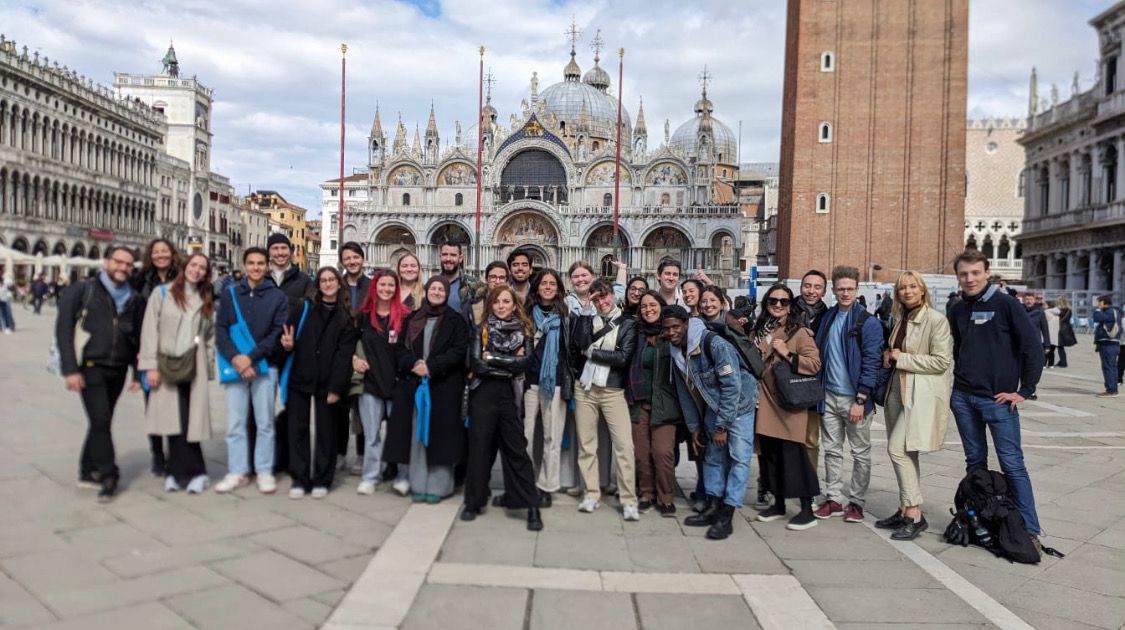
It is around this crisis that three students from Pompeu Fabra University met last April in Venice, to participate in the EUTOPIA Ideas Club: On Climate Change.
EUTOPIA is an alliance of ten European universities that aims to interconnect their campuses by the year 2030. The Alliance seeks to bring university communities closer by promoting the mobility of students and teachers and the dissemination of knowledge among the ten member institutions. Although the project is in an early phase of development, some joint activities have already been carried out, such as the EUTOPIA Ideas Club.
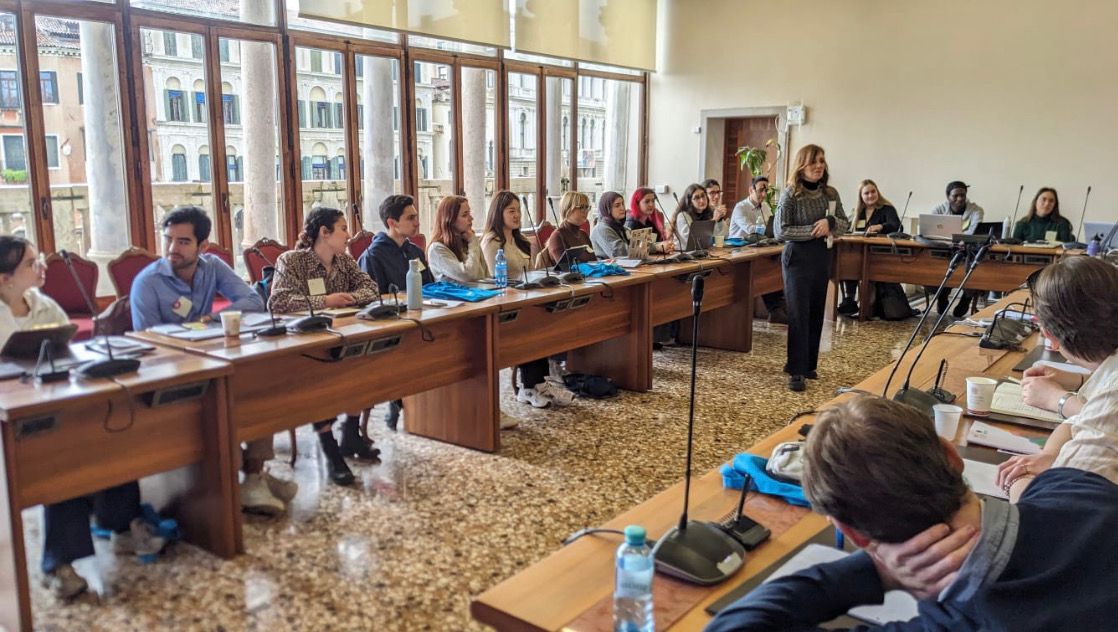
The EUTOPIA Ideas Club is an initiative that promotes discussion between students from all the universities of the alliance (specifically, three students from each university) in order to contribute ideas to solve a problem. It can be a very fruitful debate, as students from different countries and with diverse backgrounds participate. So far, only two sessions of this project have been held. The first, held at the University of Paris-Cergy (France) in October 2022, discussed diversity and multiculturalism, one of the pillars of the Alliance. The second was held at the University of Ca'Foscari in Venice (Italy), in which challenges and ideas to deal with climate change were debated. Below we have developed some of the most recurring themes during the conference, which encapsulate the global vision of the participants of this second edition of the EUTOPIA Ideas Club in the city of canals.
Duty to the most vulnerable societies
During the debate sessions, we discussed the main issues related to climate change that we young people feel particularly concerned about. There was a great consensus around the special gravity that global warming has on the most vulnerable areas, mostly concentrated in the Global South. Likewise, the responsibility that the countries of the Global North have towards this inequality in vulnerability, generated by the post-colonial geopolitical structure and for being the causes of most of the global emissions of Greenhouse Gases (GHG), was recognized, as Ashley Dawson called it, a climate apartheid. Therefore, it was concluded that it is essential to increase the resilience of these regions, so that they can effectively alleviate these consequences. As proposals to reduce vulnerability, the improvement of goods’ accessibility to increase prevention and adaptation was put on the table, with examples such as the improvement of safe and sustainable transport networks, or access to technologies . Finally, the need to recognize their epistemic role in the fight against climate change was claimed. Specifically, the need to promote the socialization of indigenous peoples' knowledge was expressed, given their special link with the territory.
Systemic treatment and system transformation
Another of the points discussed was the systemic nature of the climate crisis. It is essential to recognize that the current economic system requires a transformation towards circularity in all areas of consumption. One of the examples that was discussed the most was the textile sector, and the need to change from fast fashion patterns to slow fashion systems, focused on durable and reusable consumption. However, this transformation cannot only happen in the productive sector, but must also affect others, such as the service sector. Since this year's edition of the Ideas Club took place in Venice, the example of the Italian city was given as an example of climatic and social saturation resulting from mass tourism. On the one hand, Venice suffers first-hand from the rise in sea level, since with the phenomenon of high water, the lowest points of the city can be submerged up to 110 cm. On the other hand, the Venetians, due to the uncontrolled increase in visitors, are being forced to leave their homes for both economic and quality of life reasons.
Prevention, mitigation and adaptation
Determining the causes of climate and environmental change is fundamental from a mitigation perspective in order to identify which are the essential and most effective measures when it comes to acting and proposing solutions that reduce GHG emissions. Thus, a very important part of the debate at the Ideas Club was around the sectors with the greatest environmental impact (in particular, food, fashion and transport) and how it is appropriate to bet on a systemic transformation, which not only affects consumption patterns but, above all, in the structure of the economic model and which seeks to consolidate solutions for degrowth.
However, and this is evidenced by the extreme climatic events of recent years, from this year's drought in Catalonia to the increasingly frequent floods suffered by Venice, climate change is not a phenomenon whose effects will begin to experience in the long term. An important part of the effects of climate change is already inevitable, even if we are not observing it yet. Climate phenomena are subject to feedback patterns and, although mitigation strategies can be effective in preventing much more devastating climate scenarios, it is also essential to channel efforts into adaptation strategies, which make it possible to strengthen the resilience of ecosystems and communities around the world against the effects of climate change.
From the MOSE system (MOdulo Sperimentale Elettromeccanico) in Venice, a system of 78 electromagnetic gates that protect the lagoon and the city from the high tides of the Adriatic; to soft-engineering strategies (for example, the restoration of vegetation on beaches and coastal areas to renew their capacity to protect inland areas against flooding; or the Great Green Wall of the Sahara and the Sahel, a forested wall designed by slow and reverse desertification and land degradation, while recovering natural habitats and the functions of these ecosystems), the discussion at the Ideas Club emphasized the need to develop solutions that anticipate and minimize the damage caused by adverse effects of climate change. These solutions must be inclusive of the communities of both the Global North and the Global South, recognizing both the diverse impacts of climate change and the different adaptation capacities and differentiated responsibilities (in the historical and present scope), and facing the risk of further exacerbating economic, social and climate inequalities.
What did we take away from the Ideas Club?
The Ideas Club sessions concluded with a sharing and systematization of proposals in four short videos. Given the complexity and richness of the debate, in which a wide variety of topics were discussed and from numerous disciplines and cultural perspectives, one of the main conclusions that became clear was the importance of making visible the perspectives of young people and giving platforms that facilitate the participation and activism of young people and future generations as well as the most vulnerable sectors of society. So, it was made clear that the climate crisis is a first-order concern in the European university student context, and that the strategy to combat it must essentially go through a systemic, integrative transformation that recognizes the rights and duties of all generations and societies, existing and future.