
US Government Designates English as Sole Official Language
US Government Designates English as Sole Official Language
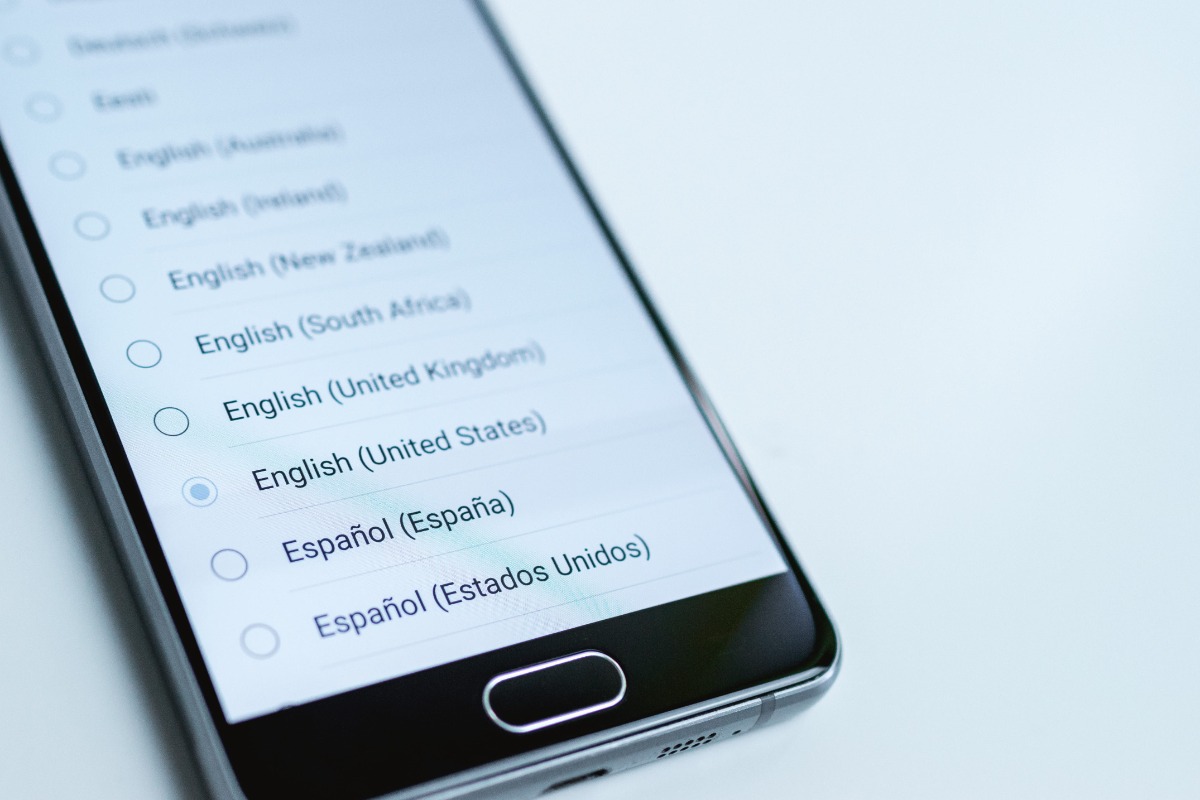
The Executive Order puts an End to Multilingual Services, Limiting Access for Non-English Speakers
It is in America’s best interest […] to designate one — and only one — official language. These were the words used by US President Donald Trump when signing the executive order that designated English as the only official language in the US. This marks the first time in the nation’s nearly 250-year history that an official language has been established at the federal level.
Some 30 states have English as official language while other states also officially recognize other languages. This is the case of Alaska, which recognises 21 official languages, 20 autochthonous languages plus English, Hawaii, which also recognizes Hawaiian as official since 1978 along with English; Puerto Rico (a US territory; formally not a state), which also recognises Spanish; or South Dakota, which passed a bill in 2019 recognising the language of the Sioux language as official, albeit symbolically, as the bill states continues to refer to English as official and that “The common language of the state is English. The common language is designated as the language of any official public document or record and any official public meeting”.
Trump’s new executive order clearly states that English – and no other language – will be the only US official language. In practical terms, this means that no other language will be used in any of the service provided by the Federal US Government. This order revokes the executive order signed in 2000 by former US President Bill Clinton’s administration (Executive Order 13166), which required federal agencies and recipients of federal funding to provide language assistance to non-English speakers. Under the new Trump’s directive, agencies are no longer obliged to offer services in multiple languages. And he did what he preaches, only days after Trump took office in January 2025, the Spanish-language version of the official White House website was removed.
The removal of Spanish from federal government platforms is not just a symbolic slight; it has real-world consequences. According to the U.S. Census Bureau, more than 41 million people in the United States speak Spanish at home—that’s nearly 13.5% of the population. Many of these individuals, including millions of U.S. citizens, rely on government websites for essential information about healthcare, taxes, immigration processes, and emergency updates. Stripping away their access to critical resources in their preferred language does not make America stronger; it makes it less inclusive and, frankly, less functional.
Along with Spanish, other language communities include Chinese, spoken by approximately 1% of the population (around 3.4 million people); Tagalog, spoken by 1.7million people; Vietnamese, by some 1.5 million people; or Arabic, by some 1.4 million people, among many others.
Enforcing monolingualism by law is an artificial constraint that does not represent the US linguistic diversity. It will create divisions and reinforce systemic inequalities. Research has repeatedly shown that multilingual individuals tend to have greater cognitive flexibility, problem-solving abilities, and even economic advantages. In a globalized world, linguistic diversity strengthens diplomacy, trade, and international collaboration. Making English the only official language of the United States is not just impractical—it actively erases the voices and cultures that have helped shape the nation’s history and will continue to define its future.