
Only one in four young people uses Catalan during sports activities
Only one in four young people uses Catalan during sports activities
On March 4, 2026, in the Sala Pere i Joan Coromines of the cloister of the Institut d’Estudis Catalans, the new project "Promoting the use of Catalan in education, leisure, and extracurricular activities in the city of Barcelona" was presented, a project on which the institution is working together with the Commissioner for the Social Use of Catalan of the Barcelona City Council.
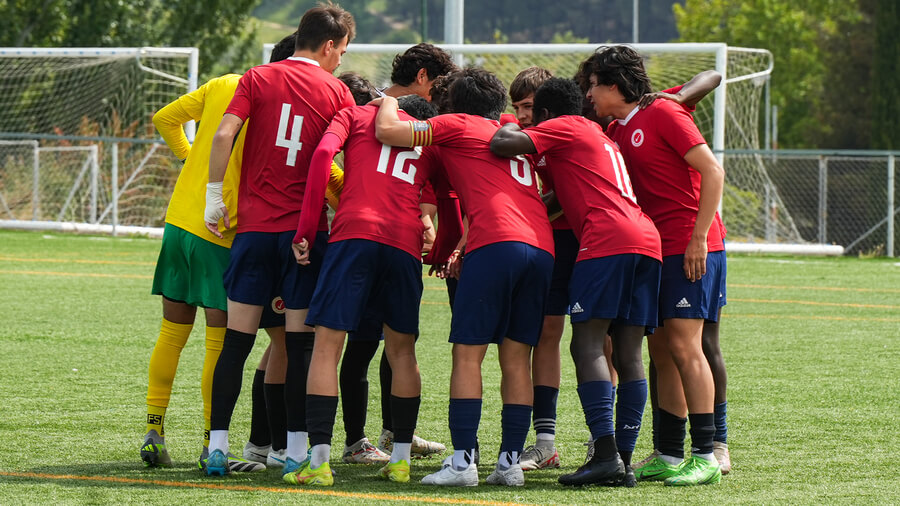
The initial data, which involved 720 young people and 113 coaches from seven sports clubs and four youth centers in the district of Sants-Montjuïc, depict a complex scenario. Catalan maintains a presence as an institutional language, for example in norms and regulations, but loses space in social interaction. According to the data provided by Natxo Sorolla, a member of the Filology Section of the IEC, a decrease in interactions between instructors and participants is observed. While instructors maintain Catalan in explanations or in internal communication among themselves, the usage among participants is dominated by Spanish (75% of the total). No ideological rejection is detected, but rather a "fear" or discomfort that prompts a systematic language switch at any doubt of comprehension.
One of the key points of the conference was the figure of the coach as a prescriber and not as an enforcer of the language. Observations show that, once a linguistic dynamic is established at the beginning of the season, it is very difficult to break. Therefore, intervention from the first day is recommended. Instructors are encouraged to maintain Catalan even with newly arrived young people to favor integration, and to use it in moments such as warm-ups or team meetings.
To carry out the project, the IEC 360° Method is used. It consists of an initial diagnostic phase, that is, empirical observation and data collection. Next, an intervention phase, where linguistic awareness is fostered among sports prescribers to influence their linguistic ideologies. Subsequently, monitoring is carried out of the actions to which the sports centers have committed. Finally, the results of the interventions are evaluated and an analysis of the causes is conducted whether they succeed or fail. Therefore, the objective is to create a collective change involving everyone from club management to workshop leaders, offering them concrete tools and glossaries of specific terminology to normalize Catalan as a real and modern socialization tool among the youth of Barcelona.
During the conference, the authorities in attendance included the president of the IEC, Maria Teresa Cabré, and the Hble. Sr. Francesc Xavier Vila, minister of Language Policy of the Government of Catalonia. Likewise, the session featured the intervention of the collaborating entities of the project: Associació Catalana d’Empreses del Lleure, Educació i Cultura (ACELLEC), Consorci per a la Normalització Lingüística, Òmnium Cultural, Plataforma per la Llengua, el TERMCAT, Ministry of Language Policy of the Government of Catalonia , Escola de Segones Oportunitats, Secretariat d’Entitats de Sants, Hostafrancs i la Bordeta and Unió de Federacions Esportives de Catalunya (UFEC).
On March 4th, 2026, in the Sala Pere i Joan Coromines of the cloister of the Institut d’Estudis Catalans, the new project "Promoting the use of Catalan in education, leisure, and extracurricular activities in the city of Barcelona" was presented, a project on which the institution is working together with the Commissioner for the Social Use of Catalan of the Barcelona City Council.
The initial data, which involved 720 young people and 113 coaches from seven sports clubs and four youth centers in the district of Sants-Montjuïc, depict a complex scenario. Catalan maintains a presence as an institutional language, for example in norms and regulations, but loses space in social interaction. According to the data provided by Natxo Sorolla, a member of the Filology Section of the IEC, a decrease in interactions between instructors and participants is observed. While instructors maintain Catalan in explanations or in internal communication among themselves, the usage among participants is dominated by Spanish (75% of the total). No ideological rejection is detected, but rather a "fear" or discomfort that prompts a systematic language switch at any doubt of comprehension.
One of the key points of the conference was the figure of the coach as a prescriber and not as an enforcer of the language. Observations show that, once a linguistic dynamic is established at the beginning of the season, it is very difficult to break. Therefore, intervention from the first day is recommended. Instructors are encouraged to maintain Catalan even with newly arrived young people to favor integration, and to use it in moments such as warm-ups or team meetings.
To carry out the project, the IEC 360° Method is used. It consists of an initial diagnostic phase, that is, empirical observation and data collection. Next, an intervention phase, where linguistic awareness is fostered among sports prescribers to influence their linguistic ideologies. Subsequently, monitoring is carried out of the actions to which the sports centers have committed. Finally, the results of the interventions are evaluated and an analysis of the causes is conducted whether they succeed or fail. Therefore, the objective is to create a collective change involving everyone from club management to workshop leaders, offering them concrete tools and glossaries of specific terminology to normalize Catalan as a real and modern socialization tool among the youth of Barcelona.
During the conference, the authorities in attendance included the president of the IEC, Maria Teresa Cabré, and the Hble. Sr. Francesc Xavier Vila, minister of Language Policy of the Government of Catalonia. Likewise, the session featured the intervention of the collaborating entities of the project: Associació Catalana d’Empreses del Lleure, Educació i Cultura (ACELLEC), Consorci per a la Normalització Lingüística, Òmnium Cultural, Plataforma per la Llengua, el TERMCAT, Ministry of Language Policy of the Government of Catalonia , Escola de Segones Oportunitats, Secretariat d’Entitats de Sants, Hostafrancs i la Bordeta and Unió de Federacions Esportives de Catalunya (UFEC).
Click here for more information about the project.