
Fèlix Campelo: “We want to understand the physical and molecular principles of how the cell reorganizes its internal membranes to adapt to its environment”
Fèlix Campelo: “We want to understand the physical and molecular principles of how the cell reorganizes its internal membranes to adapt to its environment”
Fèlix Campelo: “We want to understand the physical and molecular principles of how the cell reorganizes its internal membranes to adapt to its environment”
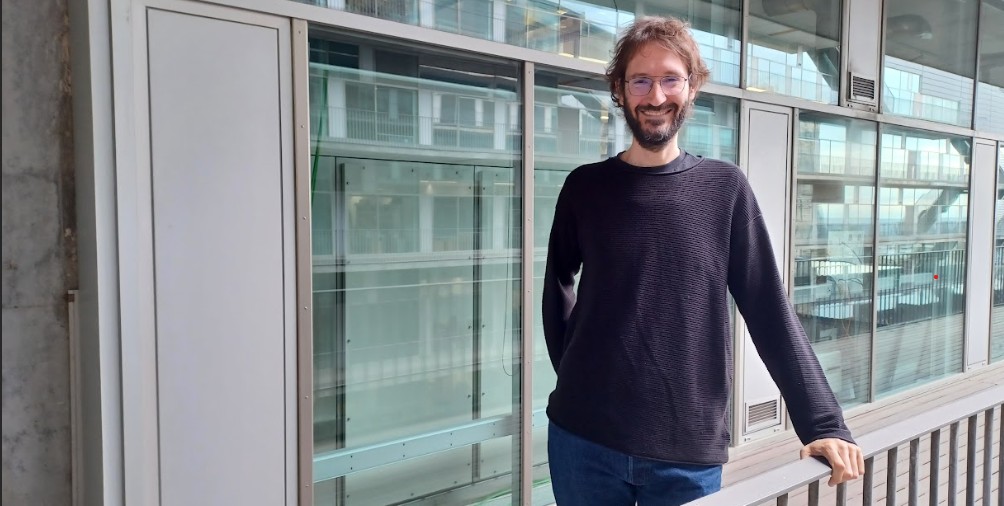
Fèlix Campelo Aubarell (Vilafranca del Penedès, 1981) joined the Department of Medicine and Life Sciences (MELIS) at UPF as a tenure-track professor in July 2025, where he directs the MAPCell laboratory: Molecular and Physical Principles of Cellular Organization.
Campelo studied physics at the University of Barcelona. Initially interested in astrophysics, during his undergraduate studies he became passionate about biophysics, mechanics, and statistical physics. He completed his PhD in theoretical biophysics at the same university, on a project about mathematical and physical models of membrane deformation. Following his interest, during his PhD, he did stays with Martine Ben Amar (École Normale Supérieure, Paris) and Michael Kozlov (Tel Aviv University), where he was able to combine the theoretical perspective of modeling with the knowledge of expert biologists in membrane trafficking.
During his postdoc in Vivek Malhotra's group (Quantitative Cell Biology, CRG), he transitioned to experimental cell biology and overcame “the great challenge of learning experimental techniques from scratch at a fairly advanced stage in one’s career.” During his six years at the CRG, he sought to understand how lipids and proteins collaborate to maintain the shape and functionality of the organelles within the cell.
In 2015, he joined María García Parajo group’s (Single Molecule Biophotonics, ICFO) as an independent postdoc, where he began to manage his own research lines, thanks to a “Jóvenes Investigadores” grant, and later a Ramón y Cajal researcher position.
The MAPCell Laboratory: Molecular and Physical Principles of Cellular Organization
The MAPCell lab is focused on studying the concept of biological form, which is closely related to cell function. “We can think of the stacked pancakes shape of the Golgi apparatus as a way to facilitate entrance and exit of proteins,” explains the young researcher. Considering shape, they seek to understand why organelles like the endoplasmic reticulum spread throughout the cell or why there are exit points for proteins from the endoplasmic reticulum so far from the Golgi apparatus, the next organelle in their cellular route.
The group, which already includes a PhD student and a postdoc, also wants to study the trans-Golgi Network (TGN): “The airport from which proteins can take many destinations within the cell.” Despite being a well-documented process, its underlying mechanisms remain elusive.
Another line of the group is the study of mechanobiology – understanding how the mechanical properties of the environment can affect the cell – to explain how, for example, the stiffness and elasticity of a tissue can change its development and the functioning of its organelles. “Many studies with cells are done in Petri dishes, a context that has little to do with their natural state, where they are immersed in a much softer and more dynamic matrix,” explains Campelo. For this reason, they hope to better understand the mechanobiology of the secretory pathway, that is, how cells have “senses” to perceive the mechanics of their external environment and respond by adapting internally accordingly.
By combining form and environment, the goal of the MAPCell lab is “to understand the physical and molecular principles of how the cell reorganizes its internal membranes to adapt to its environment.” And that's because, according to the physicist, there are a thousand examples that show that “a cell is not a machine. It's very plastic and resilient, and it adapts to countless changes without altering its function.”
Research and teaching environment
Fèlix Campelo enjoys teaching. “I teach the Cell Biology II course, where I can explain intracellular traffic or the cytoskeleton from my perspective.” To make it more interesting for students, and different from the content they've already learned in previous courses, he encourages them to reflect on the why behind things. For example, he explains that “the fact that the cytoskeleton is made of filaments means that with the smallest number of units, it can go the farthest.”
This enjoyment of research and teaching is combined with his role as an editor at the eLife journal, from where he advocates for “open, accessible, rigorous, and high-quality science over the tyranny of the journal impact factor.”