
JOVIS.com
Freeparties com a estat d’excepció festiu: la tesi doctoral de Pablo Soria Arancón a JOVIS
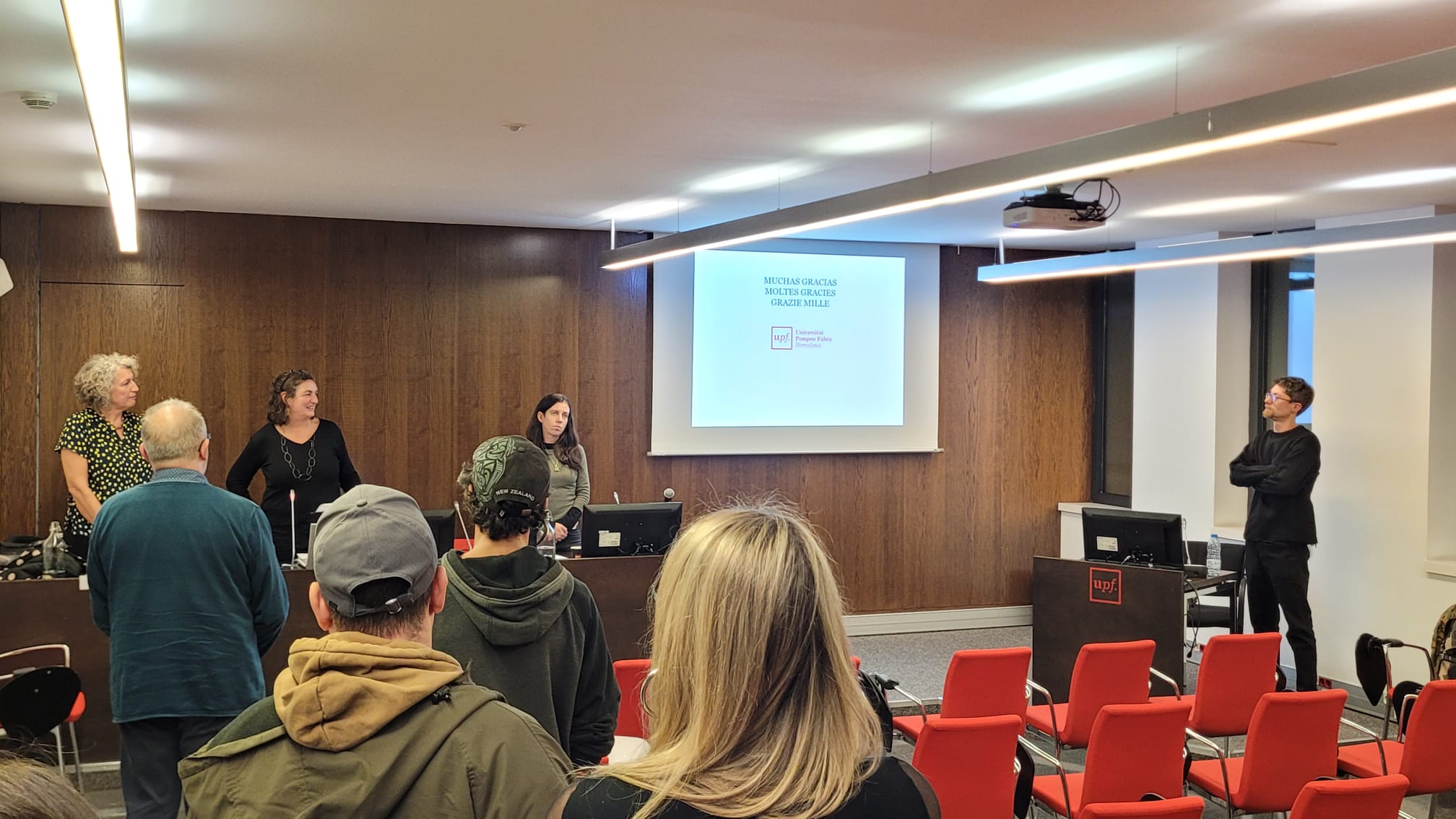
On Wednesday, 10 December 2025, Pablo Soria Arancón successfully defended his doctoral thesis in Room 55.309 at the Poblenou Campus of Universitat Pompeu Fabra, in a hybrid event that brought together both in-person attendees and an online audience. Supervised by Dr Carles Feixa i Pàmpols, the thesis entitled “El estado de excepción festivo: raves y freeparties en el estado español (1990-2025)” offers an original reading of the freeparty phenomenon —illegal raves— as one of the last manifestations of Western anomic festivities.
Drawing on Giorgio Agamben’s critique of democratic totalitarian states and his theory of the state of exception, Soria Arancón argues that these youth celebrations constitute a liminal space of legal exceptionalism constructed by young people themselves. Just as carnival or charivari historically challenged established social norms, freeparties create irresolvable tensions with the liberal legal order, configuring a device that operates as a mechanism of inclusion and exclusion in relation to the adult world. The thesis reads youth “bare life” —that subject in transition between animal zoé and full political citizenship— as the axis of this process of political re-signification.
The research is structured through a collaborative, intersubjective and dialogic ethnography that positions the author as a native researcher embedded in the rave scene. This innovative methodological approach involves key consultants in all phases of the process —from data collection to the final revision of the text— ensuring a deeply engaged perspective. The thesis offers an exhaustive historical overview of rave and club cultures in Spain and other international contexts, and culminates in a detailed analysis of freeparty culture and its defining element: the illegal rave as a ritual and political device.
Among its main contributions, the work documents the genealogy of these subcultures from the 1990s to the present, identifying recurring patterns of liminal rituality, alternative temporalities and transgressive spatialities that challenge conventional legal-political rationality. Soria Arancón shows how these youth practices are not merely playful expressions, but deliberate constructions of exceptionality that reconfigure generational relations and question the limits of state sovereignty over time, space and festive bodies.
The examination committee, chaired by Dr Mònica Figueras Maz (Universitat Pompeu Fabra), with Dr Amparo Lasén Díaz (Universidad Complutense de Madrid) as secretary and Dr Macarena García-González (Universitat Pompeu Fabra) as member, awarded Dr Pablo Soria Arancón the highest grade of excellence. In their comments, they highlighted the heterodox and courageous nature of the writing, praising the creative freedom with which the author has built his research. They particularly emphasized the epistemic value of ethnography applied to practices in which the researcher is personally involved, as well as the relevance of a topic that remains underexplored in academic literature yet is highly visible in current media debates.
The evaluators also underlined the potential of these findings to inform public policies on nightlife health and youth leisure management, recognising the thesis as a contribution committed to social and epistemic justice. This work once again positions JOVIS at the forefront of research on youth cultures, consolidating its leadership in the critical study of contemporary festive-political practices and their constitutive tension with the established normative order.