
UPF students are taking part in EUTOPIA Languages Week, sharing their research on interculturalism and multilingualism
UPF students are taking part in EUTOPIA Languages Week, sharing their research on interculturalism and multilingualism
UPF students are taking part in EUTOPIA Languages Week, sharing their research on interculturalism and multilingualism
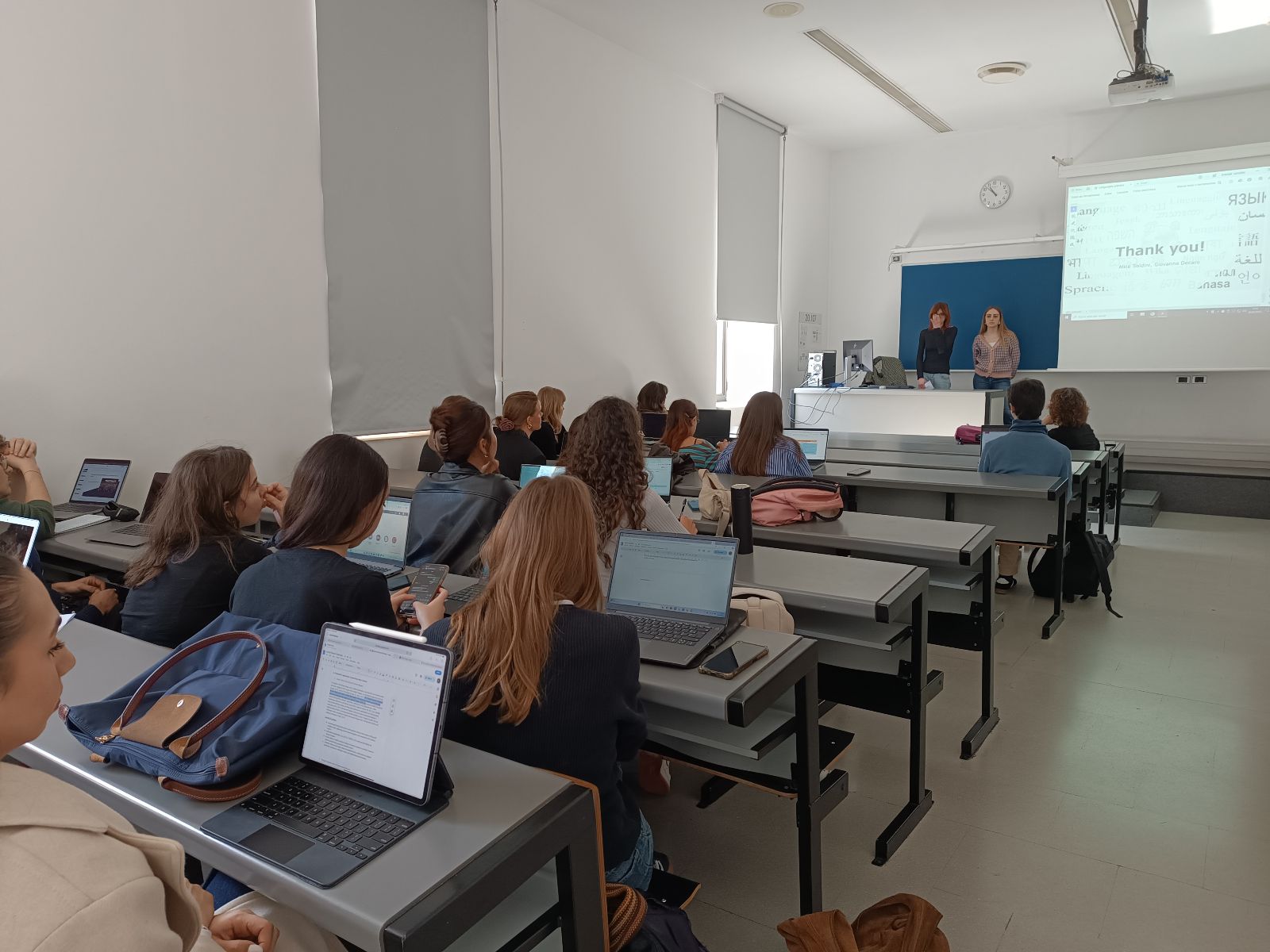
Pompeu Fabra University (UPF) has once again joined in Languages Week, the week devoted to cultural and linguistic diversity promoted by the EUTOPIA alliance of European universities between 3 and 7 March. As a member of the alliance, UPF has contributed to Languages Week with conferences that are organized every year as a part of the subject “Intercultural Spaces, Languages and Identities”, where students present their research on intercultural and multilingual socialization spaces. This year, the presentations were divided into two sessions, held on the Ciutadella campus on Monday 3 and Wednesday 5 March in the morning.
The activity was organized by students taking the subject and its teacher, Mireia Trenchs. The subject is from the UPF bachelor’s degree in Global Studies, although it is open to students from other studies.
In pairs, the students of the subject work on original research of a topic of their choice, based on the observation of a linguistic phenomenon. The research involves collecting data from interviews and questionnaires that explore uses, linguistic biographies and identity positions, photographs of the linguistic landscape, recordings of multilingual interactions, or the extraction of texts from social networks or multilingual websites. The research is conducted from a multidisciplinary theoretical perspective, straddling sociolinguistics, critical discourse analysis and linguistic anthropology.
Mireia Trenchs, subject teacher: “the aim is to give each piece of research a social application”
The teacher of the subject, Mireia Trenchs, adds that the students also consider how the results of their research could be transferred to society: “The students propose recommendations targeting a professional field of their interest, be it the public administration, teaching, social mediation, an advertising company, cultural institutions or a company, among others; the objective is to give each research project a social application”.
Trenchs, also a professor and director of the UPF Department of Humanities, explains that this subject serves to work on a wide range of skills. For example, it allows the students to “develop their curiosity, sensitivity and positive attitudes towards different cultures and linguistic practices from their own”. It also makes it easier for them to acquire the ability to critically analyse intercultural phenomena, discourses and events; or to have greater knowledge to detect the meaning, prejudices and ideological and socio-cultural information that is implicit in oral and written discourse. Moreover, the subject promotes critical reflection on globalization and its challenges, taking ethical, cultural, environmental, human rights, gender and social justice considerations into account.
Mel Palos and Marta Porcar, students: “We have reflected on how the language we speak or choose to speak is never neutral, but is influenced by identity, history and personal experiences”
Mel Palos and Marta Porcar, who carried out their research work together, explain what they learned when doing it: “The subject has opened our eyes to some things that often go unnoticed, such as how languages are valued differently depending on the social context, the hierarchies between languages and the prejudices we have towards certain languages or accents. We have reflected on how the language we speak or choose to speak is never neutral, but is influenced by identity, history and personal experiences”.
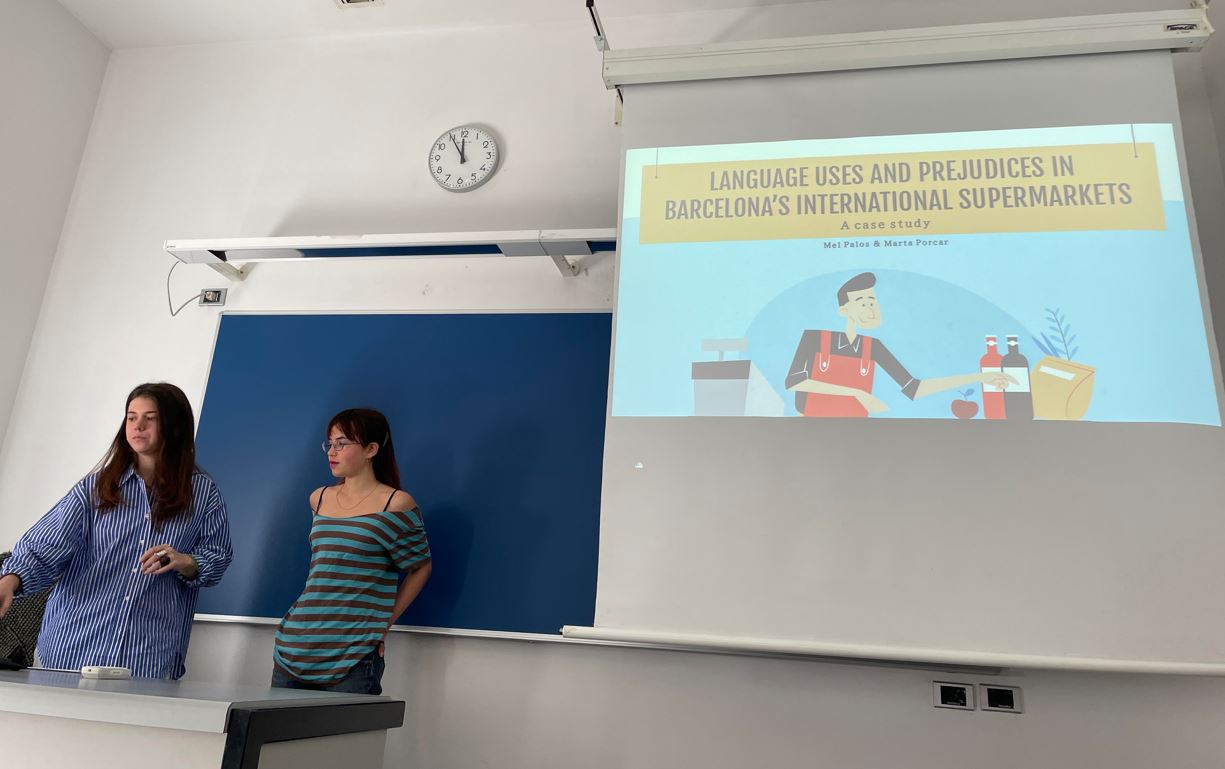
Mel and Marta, who are doing their third year of Humanities and Global Studies, respectively, have focused their joint work on investigating the uses of language in supermarkets where international products are sold. They investigated the relationship between the language uses of the customers of these supermarkets and the prejudices towards certain languages, such as Catalan, which the speakers of the language themselves often drop in favour of Spanish before people of foreign origin assuming that it is the language with which they prefer to converse when this is not necessarily the case. For the students, the results of their research “can prove useful both to associations such as Òmnium Cultural, due to the relationship of these prejudices with the change from Catalan to Spanish and the impact that this can have for maintaining Catalan as a minority language” and to raise awareness in society in general.
Both appreciate the opportunity to have been able to share the initial results of their research during Languages Week and are interested in many other activities of this year’s programme, many of which can be participated in online. For example, they mention activities on the use of art and creative writing to promote multilingualism or to develop a multilingual mindset, and the “Language Café” sessions to promote language exchanges between students from different countries in a relaxed atmosphere.
EUTOPIA Languages Week 2025
The third edition of EUTOPIA Languages Week features a rich and diverse programme of activities, both virtual and face-to-face, on the campuses of several of the alliance’s member universities or Global Partners. Along with UPF, face-to-face sessions were also organized at Vrije Universiteit Brussel, CY Cergy Paris University, the University of Warwick and the University of Stellenbosch. The programme of Languages Week includes film screenings, language tasting sessions, round tables, workshops and a host of other activities that revolve around languages, multilingualism, translation and culture.