The eighth EUTOPIA Week confirms the growth of the Alliance

Contra el genocidi i contra la violació dels drets humans, a Gaza i arreu del món

Peace comes when you talk to the person you most hate. And that’s where the courage of a leader comes.
Desmond Tutu (1931-2021), first recipient of an honorary doctorate from UPF
These words, spoken by Desmond Tutu, the first person ever to be awarded an honorary doctorate by UPF, are more applicable today than ever. The UPF condemns, and will always condemn, the use of violence to settle disputes. At UPF, we advocate approaching political or territorial conflicts based on dialogue and respect for all peoples and minorities.
As a university, we also want to show our support to the academic community in countries at war. Universities and scientific institutions are more necessary than ever in these regions. Access to education and the promotion of critical thinking, in the context of strong independent institutions, are the way to ensure the informed debate and reflection that can open the door to new avenues for finding solutions.
At UPF, we are aware of the university community’s concern for the human rights violations we are seeing in the conflicts around us. That is why on this website you will find information about campaigns and actions related to current conflicts, as well as opinion pieces and institutional statements. We also offer a dedicated e-mail address – [email protected] – to contact the university and let us know about your interests and concerns.
The eighth EUTOPIA Week confirms the growth of the Alliance
Throughout this week, debates and meetings have taken place around the functioning of the Alliance, along with conferences and training sessions for various projects
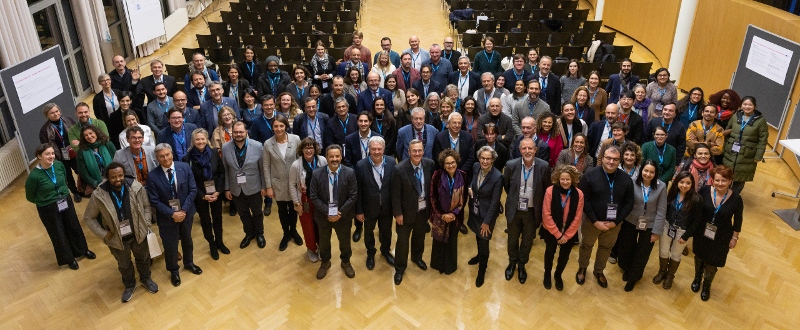
The frosty German city of Dresden has hosted the eighth EUTOPIA Week. The Technical University of Dresden (TUD) has been the venue from this Monday the 3rd until this Wednesday for the semi-annual meeting of the ten universities of the Alliance and their global partners, with the participation of Pompeu Fabra University.
The theme of this edition, "Innovation Ecosystems," captured the spirit of the meeting, where different debate sessions on the Alliance's main priorities, meetings of the various Working Groups and Alliance projects, and training sessions have been held.
Tiziana Lippiello: "Becoming a legal entity is more than a mere formallity"
EUTOPIA President Tiziana Lippiello, the Rector of Ca’Foscari University of Venice (UNIVE), inaugurated EUTOPIA Week on Monday. In her opening speech, she highlighted some of the Alliance's key institutional achievements in recent months. She began by noting the formal establishment of EUTOPIA as a legal entity in a ceremony held at the European Parliament in September, considering it "more than a mere formality." She also emphasized the launch of new Connected Communities, the attraction of new projects like EUTOPIA Health, the inclusion of the fifth global partner, the University of Arizona, and other partners joining the Alliance in the coming year.
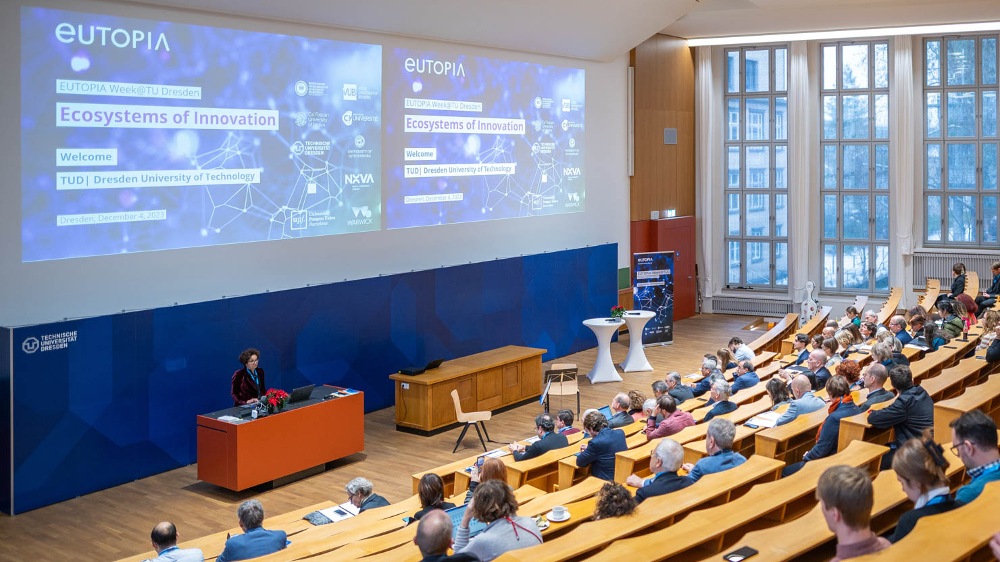

Ursula M. Staudinger, TUD Rector, highlighted the role of the German university as a hub for initiatives in innovation, research, and knowledge transfer excellence, emphasizing the value of belonging to a European university alliance. During the inauguration, student representatives presented some of the shared initiatives of the Alliance, such as the Catalan MOOC offered by UPF, and representatives from the Young Leaders Academy and Connected Communities explained the depth of the projects they are involved in.
Also on this first day, an open session on the state of the Alliance took place, where project and Working Group leaders presented the main strengths and challenges they face. Representing UPF, as the coordinator of the Alliance's largest project, EUTOPIA MORE, Vice-Rector for Internationalization Helena Ramalhinho, along with EUTOPIA Secretary-General Mattia Bellotti, intervened. They shared with partners the coordination and governance tasks of the project and the Alliance carried out by UPF, along with the General Secretary.
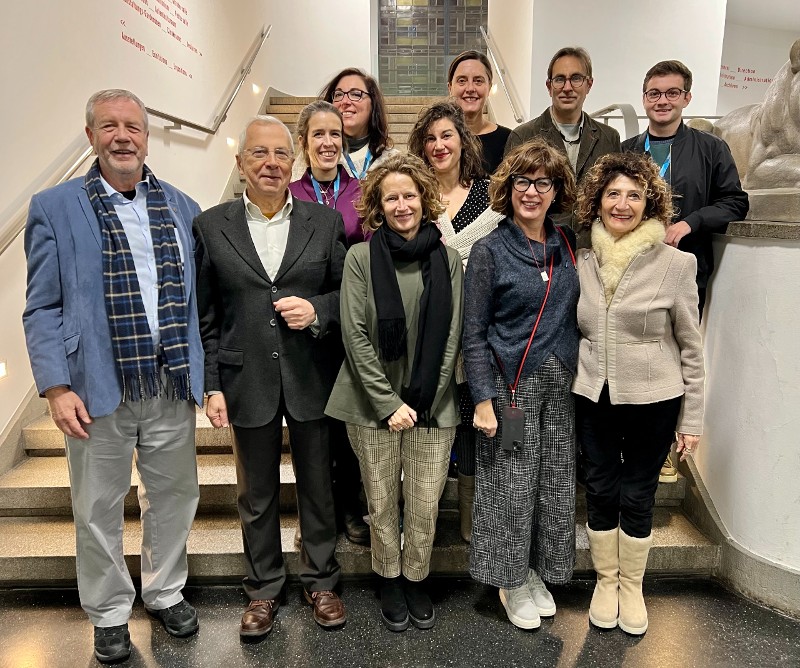
After Monday's inauguration, during the second and third days of the meeting, meetings of the governing bodies and working groups of the Alliance took place, such as the Advisory Council, the Student Council, the Academic Council, the meeting of Institutional Coordinators, and the communication team.
Everyone's voice to gather proposals and new challenges
One of the most prominent sessions of the week took place on Tuesday, with an open debate and deliberation format on various topics of interest to European university alliances, and to EUTOPIA in particular. Throughout the morning, parallel debates were held on the role of students, multilingualism, artificial intelligence, or responsible internationalization, among others.

These and other topics discussed by all participants in the EUTOPIA Week will be addressed by the Alliance's management bodies in the coming months, with the aim of responding to the concerns raised in the session.
Beyond these discussions, Wednesday afternoon served to reap the fruits of the EUTOPIA TRAIN project, concluding in 2023. Its coordinators organized two conferences on the challenges and experiences of the project that have helped define the Alliance's strategy regarding its Research and Innovation policy, with the participation of prominent members of the Dresden scientific community.
The role of the Young Leaders Academy
While a significant part of the sessions has focused on the challenges and achievements in building the Alliance itself, the Young Leaders Academy (YLA) has also played a prominent role. It is a community of high-level young researchers from the Alliance universities and their global partners —two from each university and call— who receive training, resources, and tools to work together with other EUTOPIA researchers.
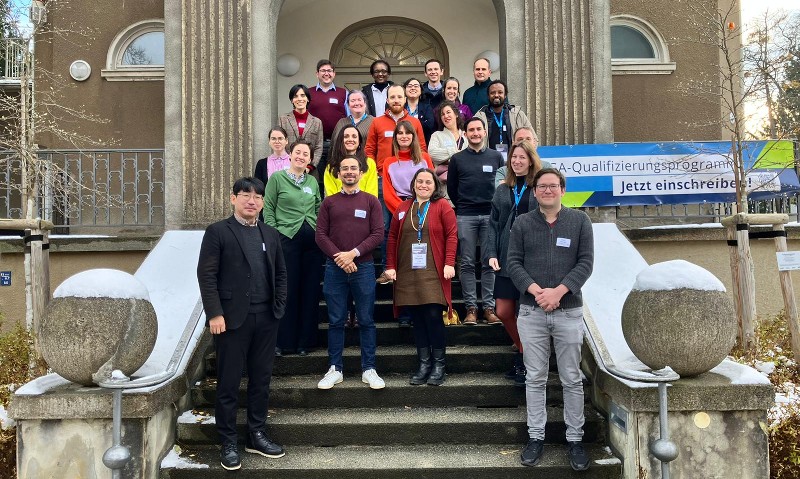
In this EUTOPIA Week, the researchers selected in 2023 presented their main projects and received various specific training sessions. From UPF, Nausikaä El-Mecky, a professor in the Department of Humanities, and Marta Barniol-Xicota, a professor in the Department of Medicine and Life Sciences, participated and will be part of the program until 2025."
Related Assets

Catalan government
Catalan development cooperation aims to help prevent and respond to emergency situations. This page explains how you can collaborate on the provision of foreign aid both in general and to specific regions.
European Commission
Through cooperation and assistance programmes, the European Commission offers humanitarian aid and coordinates efforts with other international actors to promote peace and stability in war-torn regions.
Oxfam Intermón
Oxfam Intermón works in 90 countries. They have launched a fundraising campaign, which is more necessary than ever, given the magnitude of today’s wars. The NGO is also sponsoring a campaign to collect signatures to call for a ceasefire in Gaza.

Doctors Without Borders (MSF) is a medical-humanitarian action organization that provides assistance in 70 countries to people threatened by armed conflicts, violence, epidemics or neglected diseases, natural disasters and exclusion from medical care. They have also promoted a campaign to collect signatures to ask for a ceasefire in Gaza.
Red Cross
The Red Cross also provides emergency humanitarian aid in regions in crisis.

Legal Clinic
The UPF Legal Clinic regularly holds talks and roundtables on the protection of human rights in crisis regions.
Libraries Without Borders
The Libraries Without Borders programme, sponsored by the Catalan Development Cooperation Agency (ACCD), offers Catalan public library patrons knowledge and insight into situations of human rights violations and provides resources to take action.
Council for At-Risk Academics
The Council for At-Risk Academics, in partnership with universities and higher education institutions, provides urgently-needed help to academics in immediate danger, those forced into exile, and many who choose to work on in their home countries despite serious risks.