
Department | School of Engineering
UPF doctoral student Mykola Trokhymovych, one of nine students with a Google fellowship at European universities
UPF doctoral student Mykola Trokhymovych, one of nine students with a Google fellowship at European universities
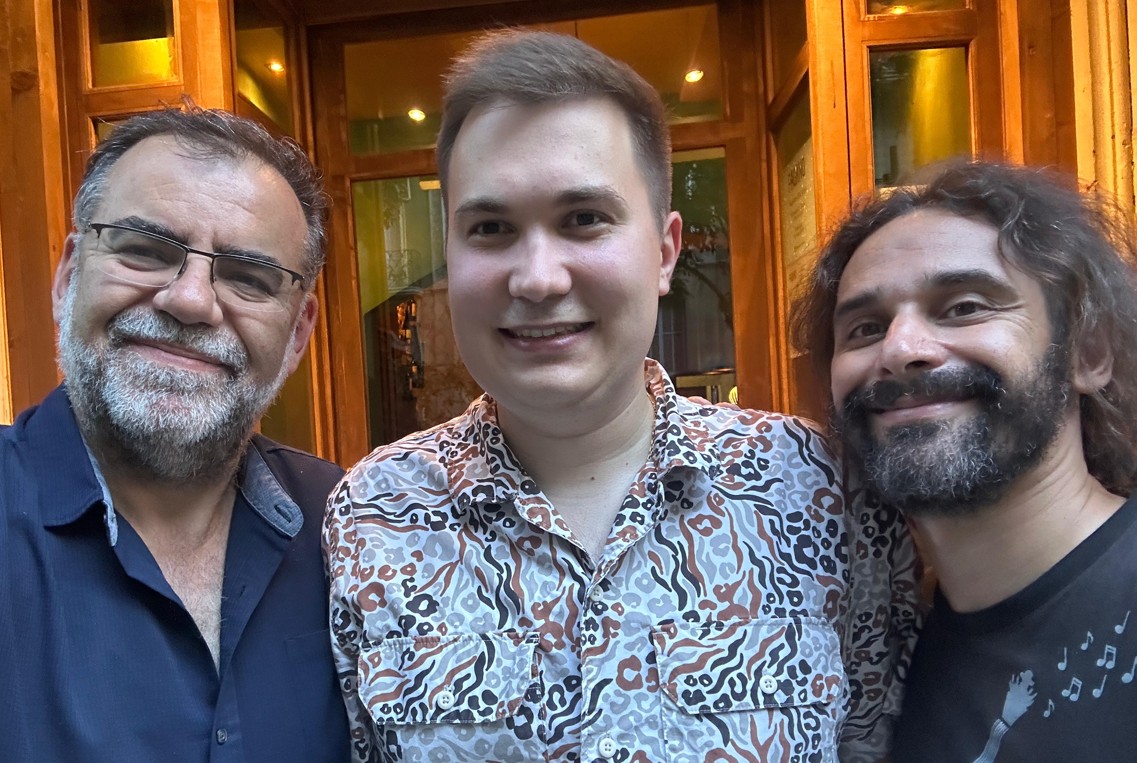
Last October, Google.org announced the names of the winners of the 2025 doctoral fellowships, which it has been awarding for 16 years to support young researchers, especially in the field of technology and computer science. Only nine European institutions will host doctoral students with this highly competitive fellowship, and one of them will be Pompeu Fabra University (UPF).
The UPF Department of Engineering is hosting doctoral student Mykola Trokhymovych, who has received a Google PhD Fellowship 2025 to continue developing his thesis on content verification on Wikipedia and other collaborative content creation platforms, that he began at UPF in November 2022. Mykola is writing his thesis in the Social and Responsible Computing (ReComputing) research group of the Department of Engineering. His thesis is part of the project on responsible AI of ReComputing, which is included in the department's María de Maeztu strategic research programme.
Originally from Ukraine, the 27-year-old studied for a degree in systems analysis at the Kyiv Polytechnic Institute and subsequently completed a master's degree in data science at the Ukrainian Catholic University. He also has more than seven years of experience in the technology industry, conducting data science and machine learning projects. Recently, in early 2025, he did a short research stay at the Observatory on Social Media (OSoMe) at Indiana University Bloomington (USA).
M. Trokhymovych: “This recognition is a great challenge, but it also endorses my research, which means that it is important to a wider community”
Having received the Google funding he is very excited: “This recognition is a great challenge, but it also endorses my research, which means that it is important to a wider community”. This funding, which will cover the costs associated with his PhD for two years and allow him to interact with other Google researchers, may offer new opportunities. “It will greatly influence my future research and open the door to new collaborations”, he says.
He is also pleased to be able to write his thesis at UPF, where he will continue to work closely with researcher Diego Sáez-Trumpez, who supervised his master's degree thesis, “Natural Language Inference for Fact-checking on Wikipedia”, and to begin collaborating with professor Ricardo Baeza-Yates. Both are his thesis co-supervisors at the UPF Department of Engineering. Diego Sáez-Trumper is also a senior research scientist at Wikimedia Foundation.
In relation to his Google PhD Fellowship, Mykola Trokhymovych’s thesis codirector, Ricardo Baeza-Yates, assures: “For me, this has three possible meanings: it shows the relevance and quality of Mykola's research, the quality of the supervisors, and that research at UPF is at the level of the top European universities. In the end, it’s a combination of all of these”.
Creating AI tools to help people verify the large volume of content on platforms like Wikipedia
Mykola Trokhymovych's thesis aims to put technology at the service of the ‘integrity, quality and reliability’ of information on collaborative platforms such as Wikipedia and Wikidata. Mykola justifies the need for this line of research as follows: “Wikipedia is constantly evolving and all content must be checked and validated by people, but this is challenging due to the large volume of content on the platform”. He is developing technological tools to support humans in this verification task and help them prioritize the changes on the platform that need to be implemented.
Ricardo Baeza-Yates adds that Mykola’s research “has resulted in production-ready tools for detecting vandalism in Wikipedia and Wikidata, in a study of how original Wikipedia content has been forked and adapted to meet national regulations, and the creation a multilingual readability system that enabled the first systematic view of Wikipedia accessibility beyond English”.
In fact, Mykola received his Google PhD Fellowship in the Human-Machine Interaction category, precisely because he wants to promote this collaborative model of AI with people to verify content on the platform. These scholarships consist of 12 categories and have been awarded to a total of 255 PhD students from 35 countries, most of them from institutions outside Europe.
“The idea is to build systems that can help people prioritize their work so that they can more efficiently detect poor-quality content on the platform”
“The idea is to build systems that can help people prioritize their work so that they can more efficiently detect poor-quality content on the platform”, he summarizes. He adds that another of his lines of research is “evaluating the quality and reliability of knowledge” on the platform, as well as its accessibility by the public.
As a result of his research, Mykola has so far published four publications at top venues such as KDD, ACL, and ICWSM. He has also contributed with open datasets and methodologies that support ongoing research on knowledge manipulation, knowledge integrity, and accessibility.
On the other hand, Diego Sáez-Trumpez, codirector of Mykola’s thesis, assures: “In addition to the academic impact Mykola's work has had on multiple international venues, his research is currently being used in Wikimedia Foundation products, helping to improve the quality and credibility of Wikipedia content. His work follows all of the Wikimedia Foundation's policies on Ethical and Human-Centered AI, showing that it is possible to create efficient AI models to fight vandalism in Wikipedia that are simultaneously open-source and respectful of user privacy.
From now on, “Google’s support can help Mykola by providing more resources, greater freedom, and access to broader research networks, particularly in applied research. This combination should enable him to tackle more ambitious problems, experiment with innovative approaches, and broaden the impact of his work”, professor Ricardo Baeza-Yates adds.
“I hope that the tools I develop, and my studies, can be used by many people to make these open knowledge platforms more accessible, more reliable and of higher quality”, Mykola concludes.