Master’s degree programme in Research and Innovation in Communication
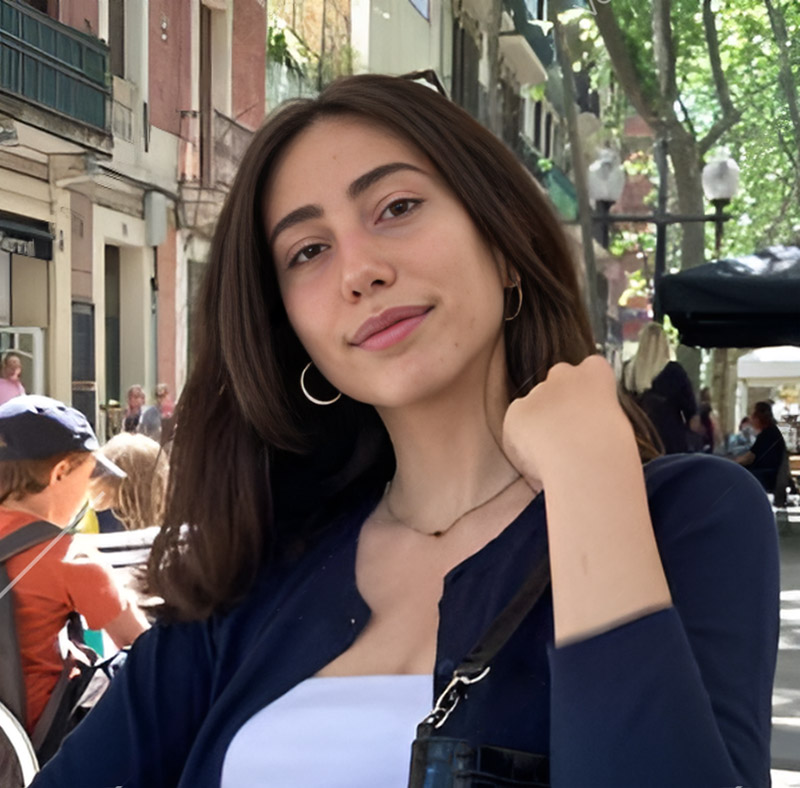
Roger Cuartielles Saura
Master's student for the 2021-2022 academic year. Research staff at the Department of Communication of the UPF

Marina Romero Bermejo
Master's student for the 2020-2021 academic year. Research staff at the Department of Communication of the UPF
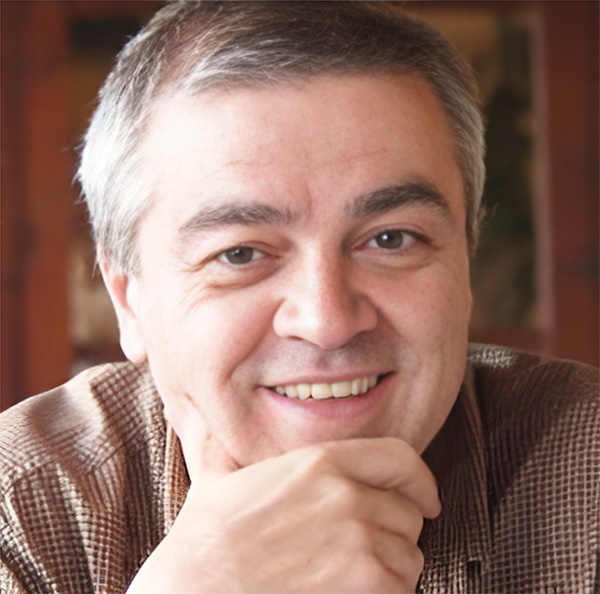
Antoni Esteve
President of Lavinia Group and member of the UPF Futures of Communication Chair
Why choose this program?
The transformation of the communicative ecosystem is a reality. For this reason, it is increasingly necessary to study new trends in communication and innovation. A growing number of institutions and companies seek to incorporate analysts capable of understanding, analyzing, and anticipating changes in the sector, as well as entrepreneurs who can contribute new audiovisual products and innovative communication strategies.
This official and publicly funded master’s program offers advanced training in communication research, characterized by a strong social commitment, a transformative vocation, and a distinctly innovative approach. The program, which has a multidisciplinary character, includes a wide range of subjects designed to adapt to the diverse interests and needs of each participant—whether they are pursuing a professional career or an academic one.
The master’s programme lasts one year and is taught on campus. However, depending on the electives chosen, it is possible to complete only one term in person (from late September to early December) and complete the remainder of the programme remotely. In addition, it allows students to specialize in two key areas of today’s communication system: Artificial Intelligence and Cultural Studies applied to communication.
The master’s program is taught in Spanish in Barcelona, a leading European hub for digital technology, specifically at Pompeu Fabra University, a leader in communication research. It includes mandatory curricular internships within national and international research projects developed by the university’s nine Communication Department research groups, ranked 42nd worldwide and first in Spain according to the latest Shanghai Ranking.
Furthermore, the program is supported by the University-Industry Chair “Futures of Communication”, which brings together around a dozen public and private organisations where students can develop applied research and innovation projects.
Finally, the Hacklab, Arsenal and En Residència also provide an innovation space where the master’s participants can collaboratively put their ideas into practice.
Who is it for?
The master's degree programme targets graduates interested in innovation and research in communication. It is also designed for those who are seeking forward-looking perspectives on communication coming from other disciplines such as humanities, sociology, psychology, anthropology, and communication technologies studies, among others.
It is intended for participants with a vocation for research, critical thinking skills, and the motivation to develop their careers in academia, the business sector, or public and third-sector institutions.
PhD in Communication (Previous admission)
Universitat Pompeu Fabra - Communication Department
Structure and Syllabus
The syllabus is obtained by passing a minimum of 60 ECTS distributed as follows:
- 30 ECTS of compulsory subjects
- 20 ECTS of elective subjects
- 10 ECTS of Master's Thesis
This Master’s programme offers the possibility of completing the first term on campus and continuing the rest of the academic year online by choosing the second-term virtual electives.
This master's program offers two optional tracks that lead to a specialization.
To obtain the specialization in Artificial Intelligence in Communication, the student must:
● complete one of the two specific elective courses: “Artificial Intelligence, Culture, and Society” (5 ECTS) or “Networks, Media, and New Theoretical Challenges”; and
● develop their master's thesis on a topic related to the specialization (10 ECTS).
To obtain the specialization in Cultural Studies in Communication, the student must:
● complete one of the three specific elective courses: “Cultural Studies and Popular Culture,” “Contemporary Perspectives on Communication, Gender, and Sexuality,” or “Youth and Communication: Cultures, Subcultures, Countercultures, Cybercultures”; and
● develop their master's thesis on a topic related to the specialization (10 ECTS).
In both cases, the master's program coordinator will assign a supervisor who is a specialist in the relevant field and will ensure that the master's thesis focuses specifically on the specialization.
Staff

Career prospects
This master's degree programme prepares participants to work in the expanding field of communication and its latest trends, both in research, teaching, and knowledge transfer within the academic sphere, and in professional roles in private or public enterprise and the development of their own innovative projects. Some potential career paths include:
-
Analyst with the ability to design projects in audiovisual creation and broadcasting, advertising and public relations, as well as in journalism companies.
-
Researcher in research centres, public organizations, or foundations.
-
Specialist in media analysis, digital content, and social media.
-
Consultant in communication agencies, media outlets, and sector companies that develop evidence-based strategies.
-
Expert in new trends, innovation, and foresight in the communication sector across different types of companies.
-
University professor with a research profile in the fields of social sciences, communication, and emerging media.
-
Preparation for admission to a doctoral programme, whether at the UPF Department of Communication or at other national or international universities in related fields.
-
Communication analyst and consultant in multicultural contexts, agencies specializing in health or in the role of young people as trend indicators.
-
Participation in think tanks to inform public opinion and decision-makers.

See also
Where will you study?
Edifici Roc Boronat (campus del Poblenou)
Roc Boronat, 138
08018 Barcelona
How to get here:
Departament de Comunicació:
- Student's assistance
- Master coordinator: Mònica Figueras