The 2020 Barcelona International Summer School gets under way

Contra el genocidi i contra la violació dels drets humans, a Gaza i arreu del món

Peace comes when you talk to the person you most hate. And that’s where the courage of a leader comes.
Desmond Tutu (1931-2021), first recipient of an honorary doctorate from UPF
These words, spoken by Desmond Tutu, the first person ever to be awarded an honorary doctorate by UPF, are more applicable today than ever. The UPF condemns, and will always condemn, the use of violence to settle disputes. At UPF, we advocate approaching political or territorial conflicts based on dialogue and respect for all peoples and minorities.
As a university, we also want to show our support to the academic community in countries at war. Universities and scientific institutions are more necessary than ever in these regions. Access to education and the promotion of critical thinking, in the context of strong independent institutions, are the way to ensure the informed debate and reflection that can open the door to new avenues for finding solutions.
At UPF, we are aware of the university community’s concern for the human rights violations we are seeing in the conflicts around us. That is why on this website you will find information about campaigns and actions related to current conflicts, as well as opinion pieces and institutional statements. We also offer a dedicated e-mail address – [email protected] – to contact the university and let us know about your interests and concerns.
The 2020 Barcelona International Summer School gets under way
The BISS, this year offered online, has become established as the summer offer for UPF undergraduate students and also for students from around the world. This year it involves 114 students.
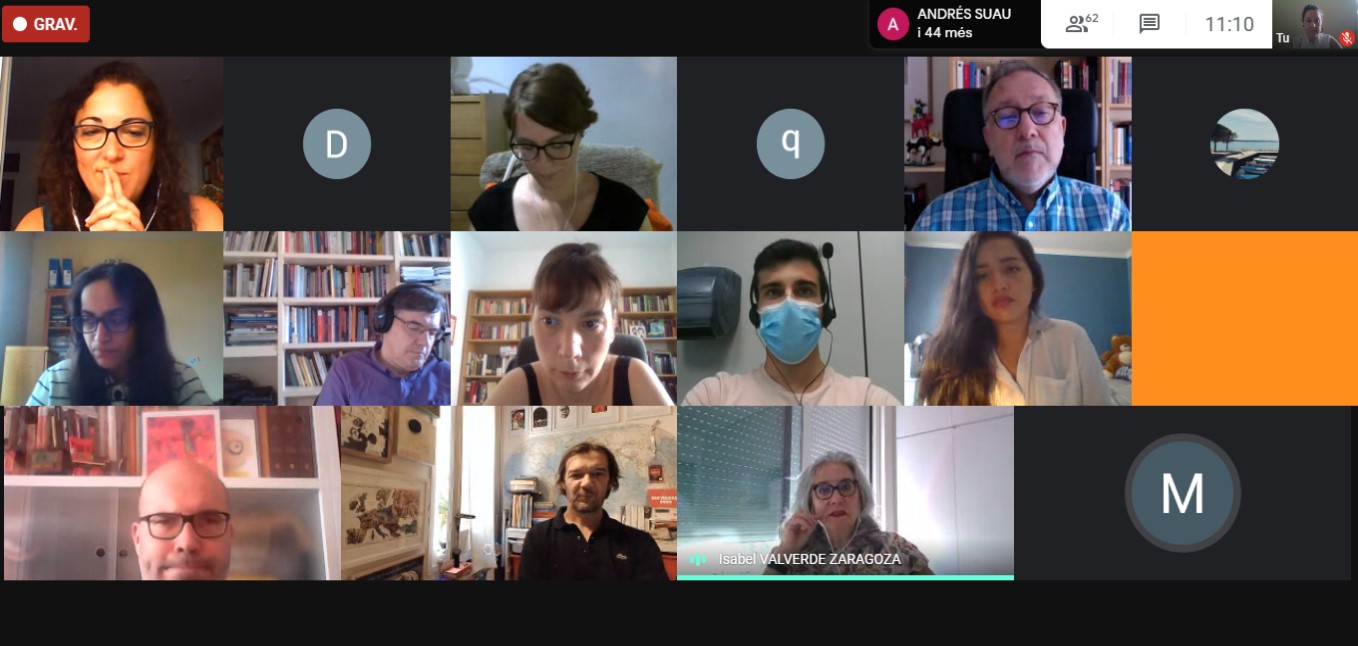
The Barcelona International Summer School (BISS) has become established as the summer offer for UPF undergraduate students and also for students from around the world. Previous years’ summer schools had attracted a good number of students from all parts who filled classrooms across the Ciutadella campus during the month of July. This year, however, the courses will be held for two weeks, from 13 to 24 July, online.
A total of 114 students have enrolled for courses that deal with current issues and enable enriching their curriculum with cross-disciplinary topics and highly applied approaches. The range of subjects laid on by the 2020 BISS reflects on issues such as the impact of health inequalities, time and existence, law and memory, justice and social responsibility, ethical issues in entrepreneurship, social network analysis, human rights, the challenges of sport, and transmedia storytelling, among others.
A total of 114 students from 15 different countries will be taking part this year. As a novelty, a “BISS Virtual Cafeteria” has been set up where participants can exchange impressions, participate in forums and meet each other via videoconference, beyond interaction in class.
The BISS still presents a great opportunity for the internationalization of UPF and will bring together students from 15 different countries: Chile, China, Colombia, Ecuador, Estonia, Germany, Italy, Mexico, Moldova, Peru, Portugal, Russia, Spain, Sweden and Switzerland. International students will share the experience with UPF students from all faculties, who have responded enthusiastically to the BISS, whose participation will exceed that of previous years. For all of them, the summer school is sure to provide quality education that will help them earn early credits in the summer in a new environment.
On 9 July, a virtual session was organized targeting all participants. Isabel Valverde, vice-rector for internationalization projects, welcomed the students accompanied by the teachers and the BISS team. During the session, the students were able to familiarize themselves with technological resources to study the subjects and discovered the “BISS Virtual Cafeteria”, created by La Factoria, where they can exchange impressions, participate in forums and meet each other via videoconference, beyond interaction in class.
Related Assets

Catalan government
Catalan development cooperation aims to help prevent and respond to emergency situations. This page explains how you can collaborate on the provision of foreign aid both in general and to specific regions.
European Commission
Through cooperation and assistance programmes, the European Commission offers humanitarian aid and coordinates efforts with other international actors to promote peace and stability in war-torn regions.
Oxfam Intermón
Oxfam Intermón works in 90 countries. They have launched a fundraising campaign, which is more necessary than ever, given the magnitude of today’s wars. The NGO is also sponsoring a campaign to collect signatures to call for a ceasefire in Gaza.
Doctors Without Borders (MSF) is a medical-humanitarian action organization that provides assistance in 70 countries to people threatened by armed conflicts, violence, epidemics or neglected diseases, natural disasters and exclusion from medical care. They have also promoted a campaign to collect signatures to ask for a ceasefire in Gaza.
Red Cross
The Red Cross also provides emergency humanitarian aid in regions in crisis.

Legal Clinic
The UPF Legal Clinic regularly holds talks and roundtables on the protection of human rights in crisis regions.
Libraries Without Borders
The Libraries Without Borders programme, sponsored by the Catalan Development Cooperation Agency (ACCD), offers Catalan public library patrons knowledge and insight into situations of human rights violations and provides resources to take action.
Council for At-Risk Academics
The Council for At-Risk Academics, in partnership with universities and higher education institutions, provides urgently-needed help to academics in immediate danger, those forced into exile, and many who choose to work on in their home countries despite serious risks.