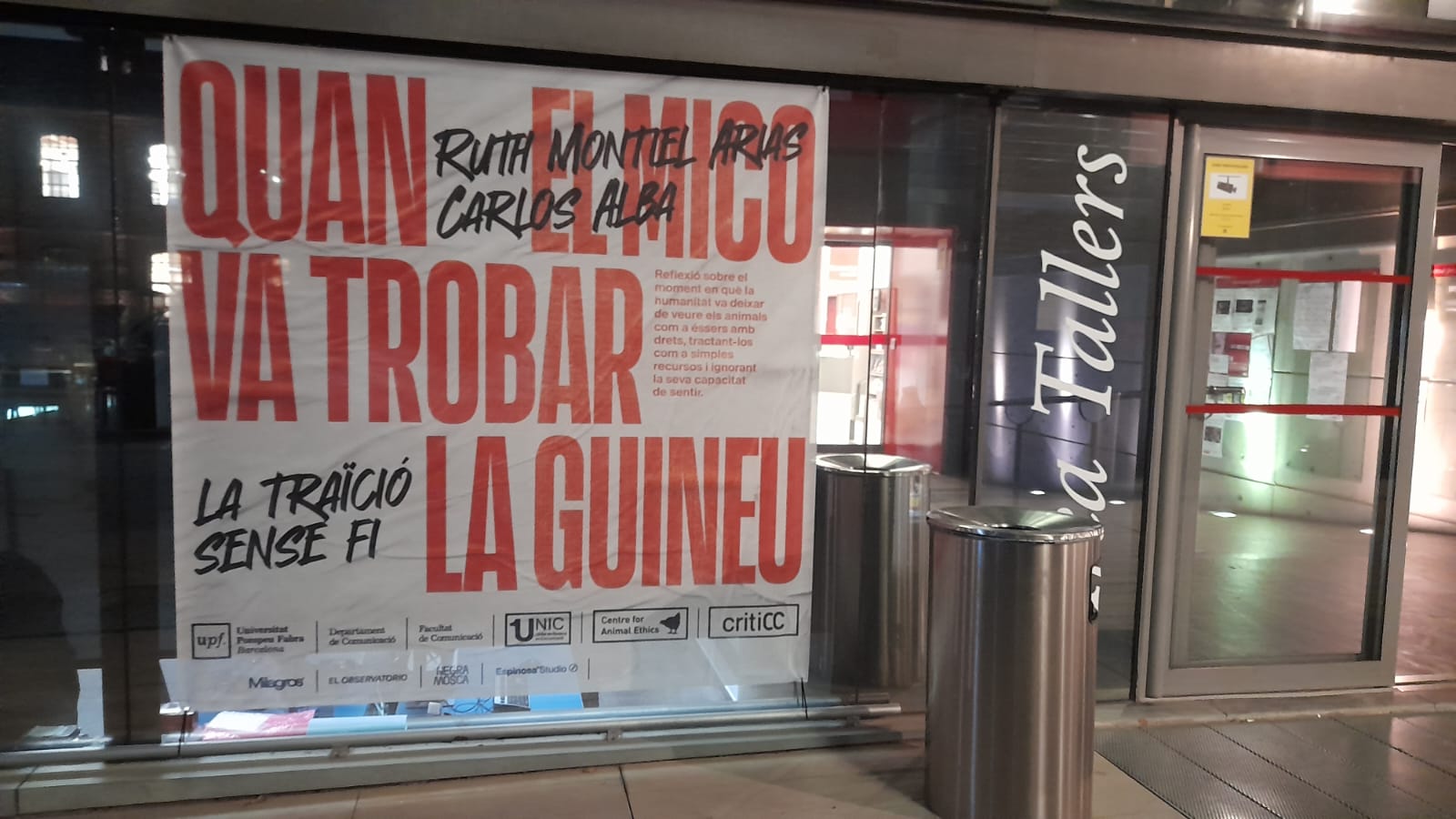
When the Monkey Met the Fox: The Endless Betrayal
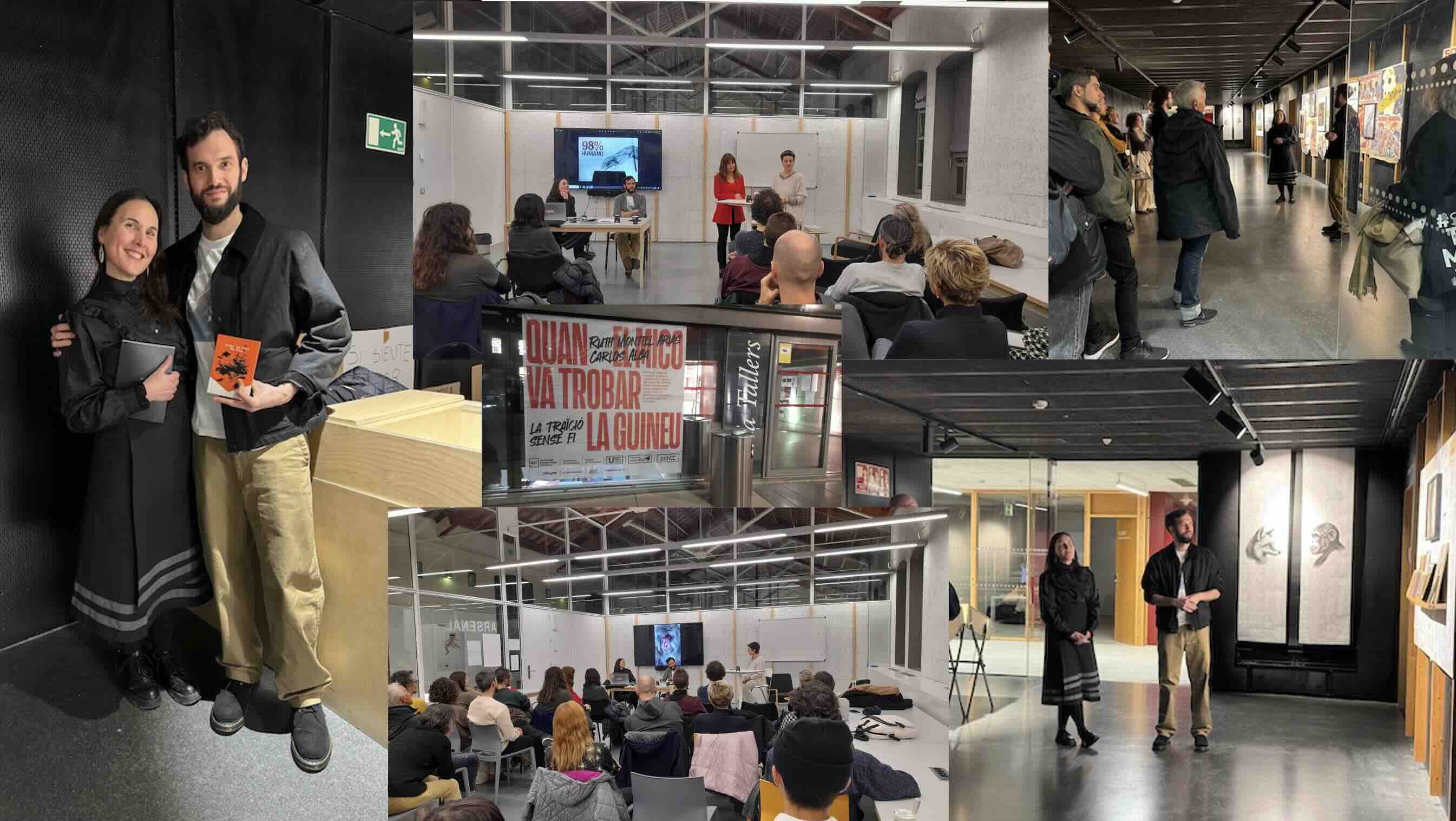
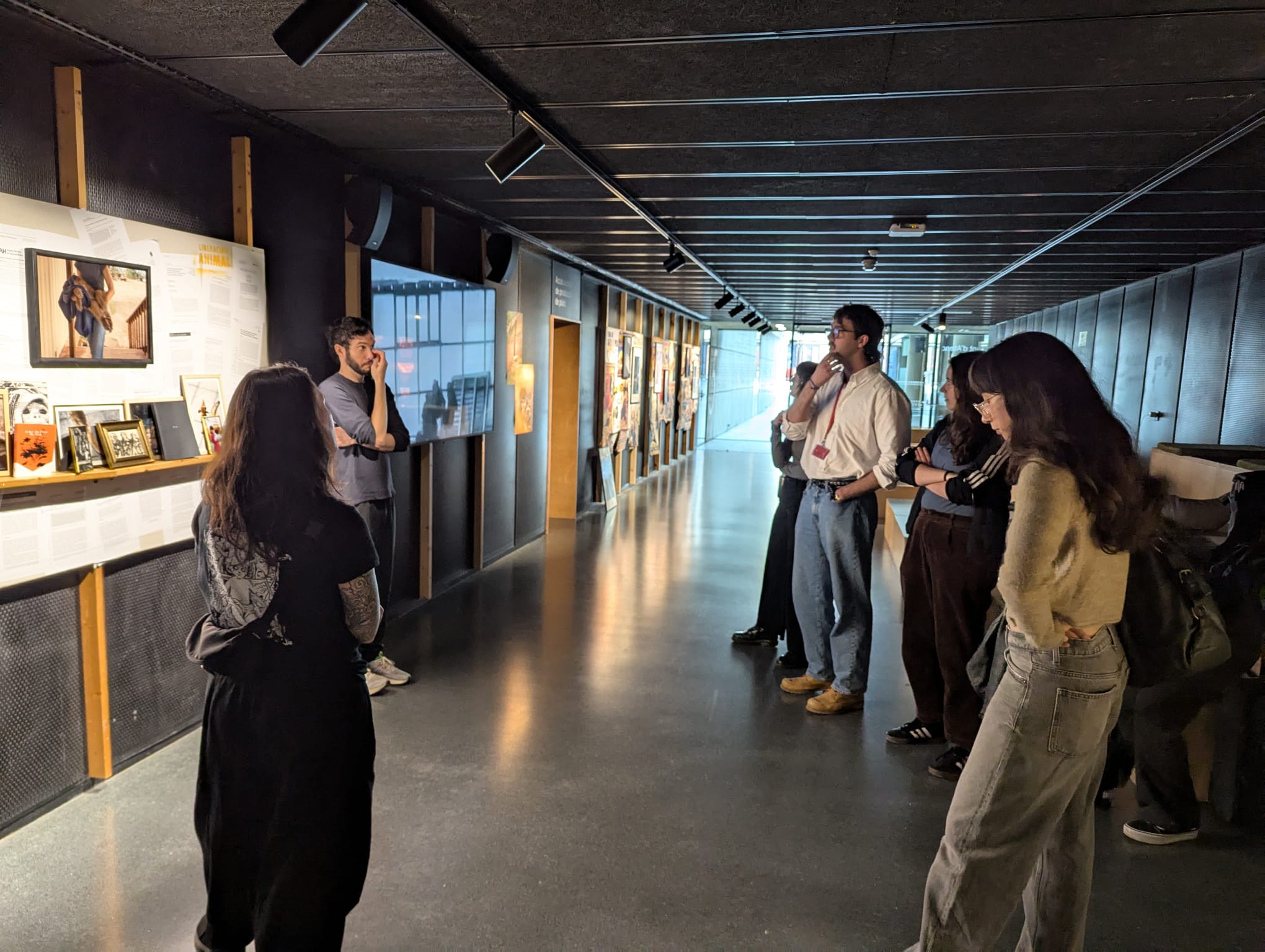
Welcome to the exhibition When the Monkey Met the Fox: The Endless Betrayal, an invitation to reflect on how humanity has forsaken its own animality and degraded individuals of other species to an inferior category, reducing them to mere objects at the service of human needs and desires.
Artists Ruth Montiel Arias and Carlos Alba present this separation and discrimination as a betrayal that, like all betrayals, carries a burden of shame and discomfort, often driving us to hide or deny it. However, hiding a betrayal does not stop its negative consequences; on the contrary, it intensifies them, as the lack of acknowledgment prevents addressing its causes and repairing the damage done. This exhibition seeks, precisely, to reveal this betrayal, to expose it, nullify the effects of the silence that perpetuates it, and open pathways for reflection and transformation in our relationship with other animals.
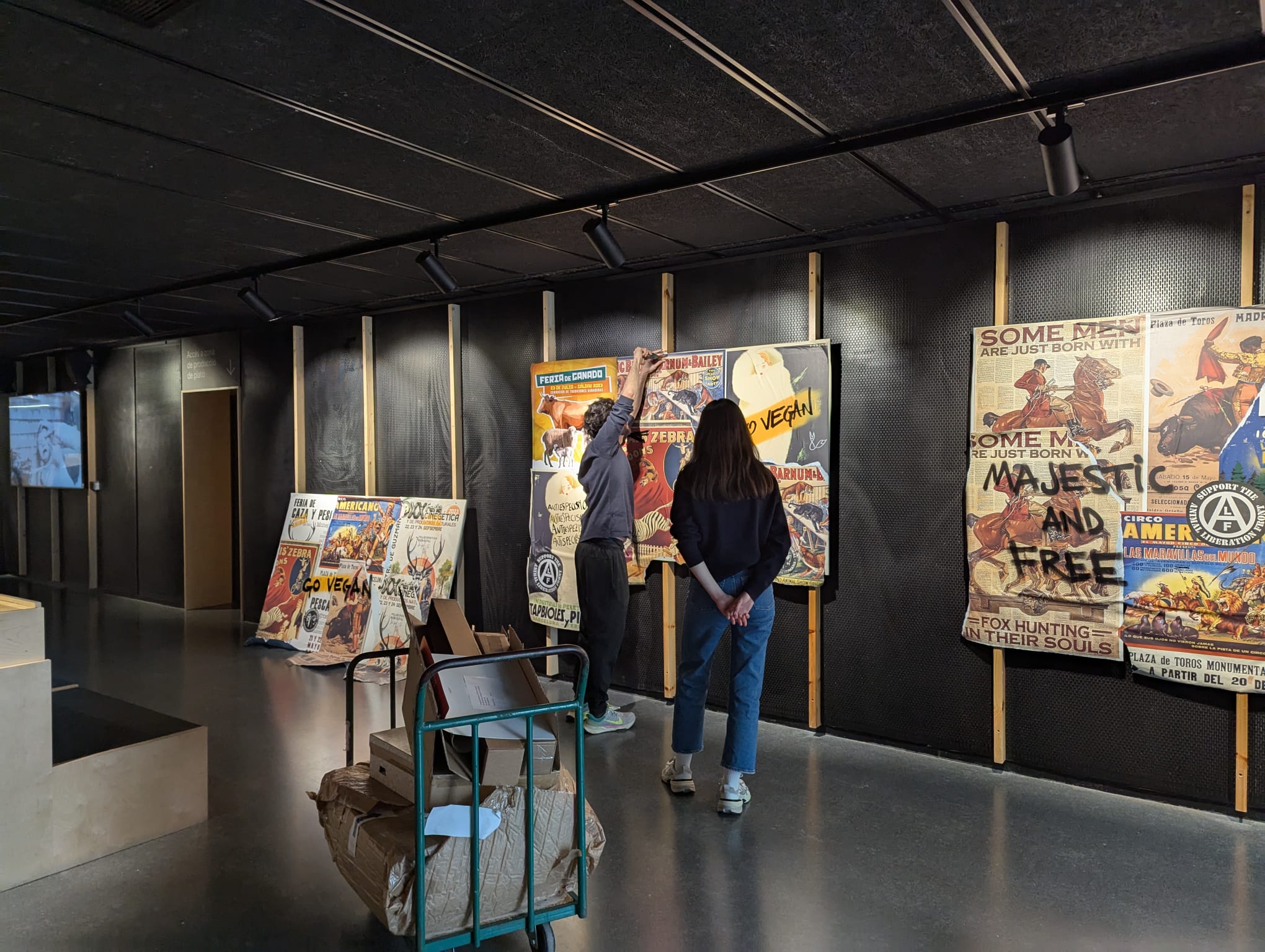
To this end, the artists invite us to engage in a dialogue between two visual and conceptual narratives that, although they may seem different, are deeply interconnected, particularly in the context of exploitation and interdependence between human and non-human animals. Ruth Montiel Arias’s EL 2% and Carlos Alba’s I’ll Bet the Devil My Head explore the potential to transcend the boundaries of power relations and hierarchies between species, questioning the limits between humans and animals.
In EL 2%, Ruth Montiel Arias offers an analysis of the systematic exploitation of animals, focusing on non-human primates. Through a series of visual and narrative interventions, the artist disrupts the dynamics of dominance and stability, compelling viewers to reflect on our relationships with individuals of other species. It becomes a tool for questioning the normalisation of exploitative economies and interspecies cultural domination.
Meanwhile, in I’ll Bet the Devil My Head, Carlos Alba uses autobiographical and documentary methods to construct a narrative that explores the social structures shaping our perceptions and relationships with other animals, in this case, foxes. Alba portrays the interactions between humans and non-humans in urban environments, demonstrating how these relationships are mediated by opportunities, cultural connections, and systemic barriers.
What these two projects have in common is their ability to reveal the complexities of animal exploitation and human responsibility from different perspectives. Montiel Arias approaches these issues from a macro perspective, while Alba adopts a micro perspective, observing specific experiences as reflections of broader systems. Together, their works invite the public to inhabit a space of shared contemplation, where personal stories and global landscapes intertwine, questioning notions of domination and coexistence between non-human and human animals.
Here, we bring together the contributions of two artists and activists in the defence of animals, opening a discursive space that challenges us not only as spectators but also as participants in the social, economic, and political structures that uphold this system of domination and exploitation.
The silence and oblivion that have so far surrounded this domination and exploitation—this betrayal that the exhibition denounces—have contributed to perpetuating a system that successive stages of human history have only exacerbated. For other animals, the consequences are terrible. But for human animals, they are as well.
For other animals, this system of exploitation consumes the lives of trillions of beings each year through the food industry, scientific experimentation, entertainment, fashion, the trafficking of exotic species, hunting, or traditional medicine, among others. The two examples featured in this exhibition clearly reflect this system. For non-human primates, this involves habitat destruction, hunting, confinement, exhibition, and experimentation, primarily. As for foxes, historically persecuted and stigmatised for cultural, economic, and symbolic reasons, they are now also criminalised for coming too close to us, entering cities.
For the human species, this act of betrayal towards animals has profoundly shaped our relationship with the natural world and with ourselves. This destructive relationship has devastating consequences, such as environmental destruction, increasing public health problems, and the perpetuation of violence. It also confronts us with a serious issue of conscience.
Confronting the hierarchical and discriminatory divisions we have created between human and non-human animals leads us to ask profound questions about the place we occupy and the impact we have on all forms of life. This gives rise to an opportunity: an opportunity to adopt an open, critical, and reflective perspective, and to join a conversation that affects not only animals but also the values and ethics that define our society.
We invite you to embark on this journey of reflection and discovery, with the hope of transforming not only how we view other animals but also how we see ourselves.
Núria Almiron, UPF-Centre for Animal Ethics