
Project Members

Prof. Marco Madella (Principal Investigator)
Prof. Marco Madella is an ICREA Research Professor at Universitat Pompeu Fabra, Barcelona. He is interested in the socio-ecological dynamics of plant resources exploitation and food production. His background is in archaeobotany and environmental archaeology, and his research explores the trajectories of social change and co-evolutionary processes by modelling and simulation. Prof. Madella's main interest is in long term trajectories of biodiversity and sustainability, especially in arid or hyper-wet environments. His research is based in South Asia, Turkey, Brazil and South Africa.


Prof. Eduardo Góes Neves (Co-Principal Investigator)
Prof. Eduardo Neves is a Professor of Archaeology at the University of São Paulo, Brazil. He directed the Central Amazon Project in the Brazilian Amazon. His current area of research is southwestern Amazonia, at the current border of Bolivia and Brazil, where he has been studying middle Holocene occupations on fluvial shell mounds, as well as the archaeology of late pre-colonial mound building societies. Prof. Neves is a past president of the Brazilian Archaeological Society and has been visiting professor in several universities in the Americas and Europe.
Prof. André Menezes Strauss (Co-Principal Investigator)
Prof. André Strauss is an archaeologist and geologist. He is a professor at the University of São Paulo, Brazil, and is the coordinator of the Laboratory of Archaeology and Environmental Anthropology. As a specialist in virtual archeology he works with the emergence of symbolic behaviour in South Africa and Lebanon. Dr. Strauss has collaborated with the Max Planck Institute, and was a pioneer in the extraction of ancient DNA and archaeological human remains in Brazil.
Prof. Luiz Eduardo Oliveira e Cruz de Aragão (Co-Principal Investigator)
Prof. Luiz Aragão is the leader of the TREES laboratory, National Institute for Space Research (INPE), Brazil. He is a full-time Scientist at the National Institute for Space Research (INPE), and is associated with the University of Exeter, UK, as a Senior Lecturer. Dr Aragão is an expert in tropical ecosystems and environmental sciences using remote sensing. His research focuses on carbon dynamics in forest ecosystems, climate and environmental change, ecosystem ecology and remote sensing of forest disturbances, including deforestation and fires.
Prof. Juan Carlos Vargas Ruiz (Co-Principal Investigator)
Prof. Juan Vargas is a researcher in the Anthropology Department at the Universidad del Magdalena in Colombia. He is interested in social complexity, settlement patterns, agroecology, and social conflict. His current research compares the socioecological systems of the prehispanic societies from the North of South American lowlands and the Caribbean region in Colombia using qualitative and quantitative methods.
Prof. Hector Orengo (Co-Principal Investigator)
Prof. Orengo is an ICREA Research Professor at ICAC, an Honorary Research Associate at the McDonald Institute for Archaeological Research at Cambridge, and co-directs the Landscape Archaeology Research Group (GIAP) at ICAC. He currently works on a wide range of landscape-related topics. His research has mainly focused on the analysis of human-landscape dynamics in Mediterranean environments. Prof. Orengo is also interested in theoretical approaches to the study of landscapes. During the last years he has developed extensive research on computational archaeology that includes but is not restricted to GIS and remote sensing techniques, field survey, and site detection methods. He is currently working on the application of machine learning to archaeological research using cloud computing and big data sources (mostly multisource multitemporal satellite data, drone imagery, and LiDAR).
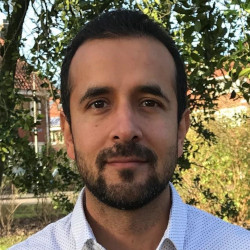
Dr. Sebastian Fajardo Bernal (Co-Principal Investigator)
Dr. Sebastian Fajardo is an archaeologist engaged in the analysis of long-term relationships between collective action, community formation, settlement patterns, and landscape. These questions are approached using quantitative and qualitative material analysis, geospatial analysis, soil analysis, network analysis, and computer modelling. His previous research compared the creation, adaptation, and sustainability of human communities in Andean and Caribbean landscapes. He also has extensive experience in environmental assessment, stakeholder management, and cultural heritage management.
Dr. Javier Ruiz-Pérez (Co-Principal Investigator and Project Manager)
Dr. Ruiz-Pérez is an archaeologist and paleoecologist focused on tropical South America, where he investigates past human-environment interactions and the long-term ecological role of fire in shaping savannas and forests. He is a National Geographic Explorers since 2017 and, since 2021, he has been a board member of the International Committee on Open Phytolith Science and the International Committee on Phytolith Morphometry at the International Phytolith Society.
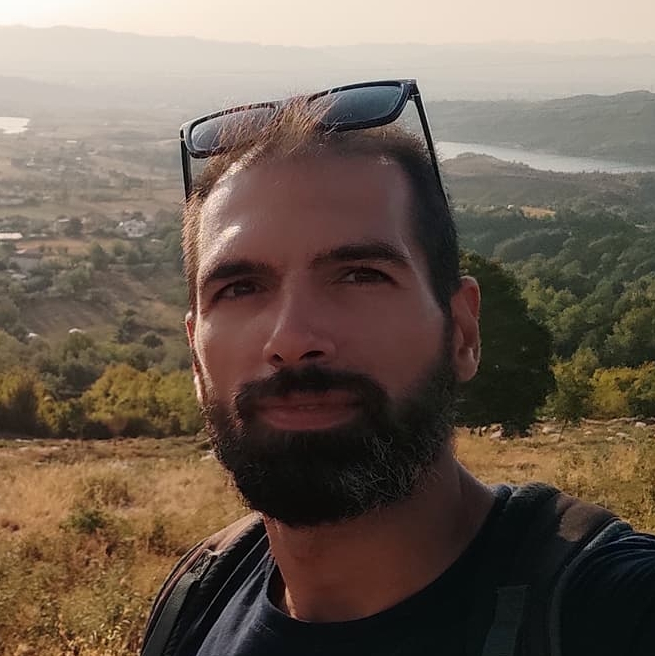
Dr. Marco Moderato (Project Researcher)
Dr. Moderato completed his PhD in 2016 in Landscape Archaeology, and worked as a postdoctoral fellow at Chieti University (Italy). His research interests range between GIS, settlement dynamics, and spatial analysis, with a focus on the use and training on FOSS tools. He is member of several archaeological missions in India, France, Albania, and the United Arab Emirates. He is also involved in historical and archaeological dissemination through the YouTube channel Accademia dei Pugni (https://www.youtube.com/@Accademia_dei_Pugni).

Dr. Soheila Shaabanzadeh (Database Manager and Project Researcher)
Dr. Shaabanzadeh obtained her Ph.D. from Universitat Politècnica de Catalunya, where her research focused on the applicability of machine learning, deep learning, and big data analysis in Wi-Fi communications. Her academic background is in software engineering, and she has also worked in the private sector.

Dr. Daniela Dias Ortega (Project Researcher and Outreach and Training Officer)
Dr. Ortega is a Brazilian archaeologist. She earned her Ph.D. from Universitat Pompeu Fabra and the University of São Paulo. Her research investigates long-term plant use and management from the Pleistocene–Holocene transition throughout the Holocene. She applies phytolith and starch analysis to examine plant processing and the functional analysis of stone tools and ceramics. She has extensive research experience at archaeological sites in the Cerrado of Central Brazil.

Dr. Rafael de Almeida Lopes (Project Researcher)
Dr. Rafael Lopes' research has focused on indigenous expansions in Late Holocene Amazonia, through a combined approach of site excavation, pottery analysis, studies on historical records, and computational archaeology. He also has experience in community-based archaeology and documentary archaeology.

Dr. Vinicius Peripato (Project Researcher)
Dr. Vinicius Peripato is a geographer and a PhD in remote sensing at the Brazilian National Institute for Space Research (INPE). His research uses a variety of remote sensors to investigate the interaction between humans and the ecosystem over time, seeking to understand how the pre-Columbian societies' environmental transformation was absorbed and incorporated into contemporary ecosystems.

Dr. Sina Mohammadi (Project Researcher)
Dr. Sina Mohammadi is a researcher at Leiden University, the Netherlands. He received his PhD in 2024 from the University of Twente, where his research focused on crop type mapping using deep learning. His main research interests include remote sensing data analysis with machine learning and deep learning, computer vision, time-series classification, and computational archaeology.

MSc. Omar Leonardo Ovalle Blanco (Project Researcher)
Omar Leonardo Ovalle Banco (Project Researcher) is an archaeologist graduated from the Universidad Externado de Colombia and holds a Master’s degree in Social Project Development, NGO Management, and Social Entrepreneurship from Aina Institute and the Universitat de Barcelona. He coordinates archaeological projects at the Universidad del Magdalena, developing documentation, recording, and evaluation processes in mountainous regions, lacustrine zones, and other landscapes across the Colombian territory. His work integrates fieldwork, laboratory analysis, and data management, strengthening the regional coverage of MAPHSA project research. In addition, he is the director of Fundación Sankofar, an initiative focused on the safeguarding of archaeological, environmental, and cultural heritage through collaborative work with communities, identification of local challenges, characterization of heritage at risk, and strategic planning for collective well-being, in collaboration with the CITS of the Universidad del Magdalena.

Dr. Rodrigo Elias de Oliveira (Project Researcher)
Dr. Rodrigo Elias de Oliveira's research has focused on the health and subsistence of the first inhabitants of the Cerrado biome (Central Brazil) during the Early and Middle Holocene, through a combined approach of site excavation, Bioanthropology, Dental Anthropology, Paleopathology, studies using medical imaging, and research in Human Ecology.

Dr. Fernando Montejo Gaitán (Collaborating Researcher)
Dr. Montejo Gaitán is a Colombian anthropologist and geographer. He specializes in applying Geographic Information Systems to archaeology. He earned his Anthropology degree from the National University of Colombia, a Master's in Latin American Studies, and a PhD in Geography from the National Autonomous University of Mexico, along with a GIS specialization from the Agustín Codazzi Geographic Institute and Francisco José de Caldas District University. His research focuses on the archaeology of the Momposina Depression, human landscape transformation, pre-Hispanic agriculture, archaeobotany, and GIS applications in archaeology. As a leader of the Archaeology and Heritage Groups at the Colombian Institute of Anthropology and History (ICANH), he has made significant contributions to managing and protecting Colombia's archaeological heritage.

MSc. César Yair Ardila Peña (Collaborating Researcher)
César Yair Ardila Peña is an anthropologist and archaeologist from the National University of Colombia with a specialization in archaeological impact assessment from the University of Buenos Aires. He is currently pursuing a Master's in Historical-Archaeological Studies at the University of Buenos Aires, a Master's in Anthropology at the National University of Colombia, and a Master's in Latin American Cultural Heritage. His main interests include applying geophysics to archaeology, remote sensing, and integrating Geographic Information Systems into archaeological studies. His work focuses on interdisciplinary research and the use of advanced technological tools for analyzing, conserving, and managing archaeological heritage.
Alice de Andrade Schlindwein (Collaborating Undergraduate Student)
Alice de Andrade Schlindwein is an undergraduate student in History at the University of São Paulo. She is currently an intern at the Tropical Archaeology Laboratory of the USP Museum of Archaeology (MAE-USP), focusing on the remote sensing of geoglyphs.
Pedro Ribeiro Sampaio (Collaborating Undergraduate Student)
Pedro Ribeiro Sampaio is an undergraduate History student at the University of São Paulo. He conducts research in the fields of Environmental History, Indigenous History, and Amazonian Archaeology, with a focus on geoglyphs and earthworks in the Western Amazon. He is a member of the Mesoamerican, Amazonian, and Andean Studies Center at USP (CEMAA-USP) and the Tropical Archaeology Laboratory (ARQUEOTROP-USP). He is currently carrying out his undergraduate research project on geoglyphs, funded by a FAPESP scholarship.