
Alan Tapscott and Jordi Justicia present an analysis of review bombing in Assassin’s Creed Shadows

Alan Tapscott and Jordi Justicia present an analysis of review bombing in Assassin’s Creed Shadows
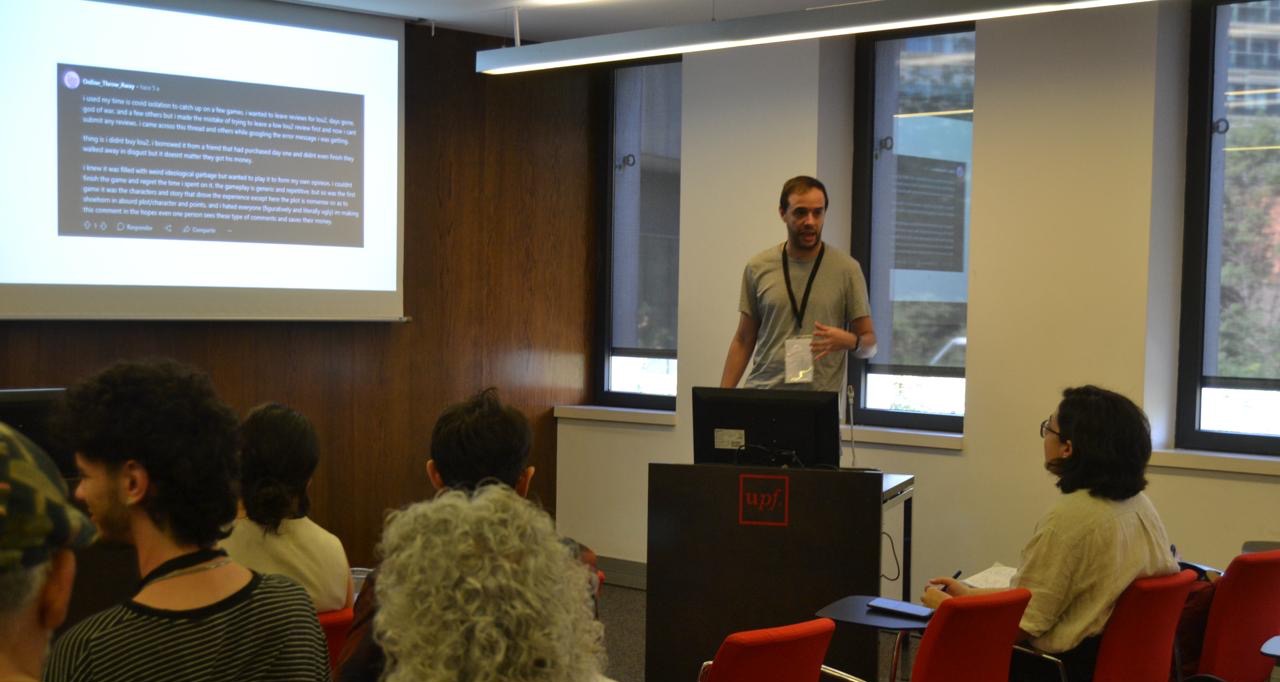
Barcelona, June 2025 – As part of the International Congress of Cultural Studies held at Universitat Pompeu Fabra on June 26 and 27, 2025, Alan Tapscott and Jordi Justicia from the INPOLITYOUNG project presented a study on digital dynamics and cultural representations in interactive entertainment.
The researchers shared preliminary findings from an investigation into the phenomenon of review bombing, using the case of the video game Assassin’s Creed Shadows (Ubisoft, 2025) as their focus. The presentation, situated within the fields of cultural studies, game studies, and platform studies, analyzes how ideological discourses emerge, consolidate, and are moderated within digital spaces such as Metacritic.
The study is based on a longitudinal corpus of more than 2,000 user reviews, collected through automated scraping during the first month after the game’s release on the PlayStation 5. Of these reviews, 635 were later removed by the platform itself, allowing the researchers to compare visible discourses with those that were moderated.
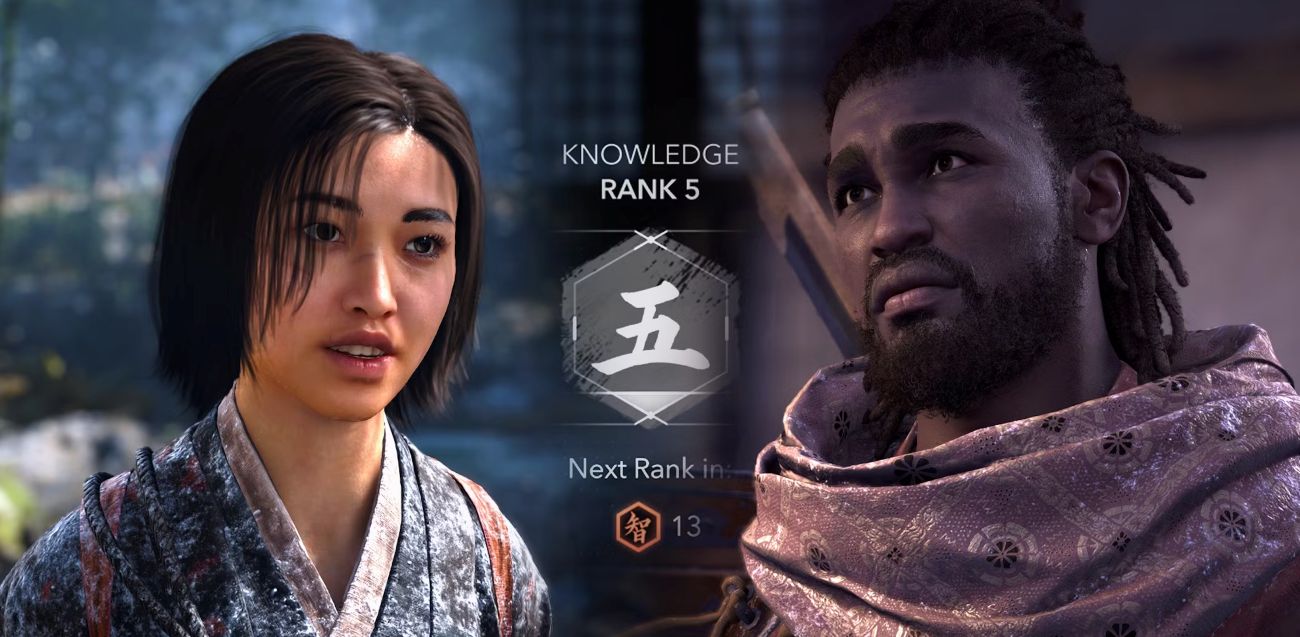
Assassin’s Creed Shadows has sparked controversy due to its inclusion of diverse protagonists: Yasuke, an African samurai based on a historical figure, and Naoe, a Japanese kunoichi warrior, as well as queer characters and non-normative romantic relationships. These narrative choices were interpreted by some users as a "politicization" of the product, triggering a review bombing campaign.
The study combines both quantitative and qualitative analysis. On the quantitative side, BERTopic was used for topic modeling and automated detection of dominant discourses in the reviews. On the qualitative side, thematic analysis was conducted on a representative sample of deleted comments, identifying codes related to the rejection of racialized characters, the inclusion of non-traditional gender identities, and accusations of historical inaccuracy.
Preliminary findings highlight that:
- Review bombing is structured around a discourse of “historical authenticity” used to delegitimize inclusive representations.
- Deleted reviews frequently contain explicit ideological expressions, while retained ones tend to adopt a more moderate tone.
- There are patterns of intentional polarization, in which users not only criticize the game but also target Metacritic’s scoring and moderation dynamics.
Furthermore, the research underscores the ambivalent role of review aggregation platforms: on one hand, they act as cultural mediators; on the other, they reproduce algorithmic logics that shape the visibility and legitimacy of certain discourses.
Tapscott and Justicia conclude that review bombing should not be understood solely as a form of boycott, but rather as a symbolic battleground where social values, cultural identities, and power structures in contemporary digital culture are contested.
The research is ongoing, and among the limitations acknowledged by the authors are the lack of data saturation, the focus exclusively on PS5 reviews, and the need for deeper exploration of positive discourses and their role in the conflict dynamics.
Here you can download the presentation of the work: