For the third consecutive year, UPF is among the 150 best in the world, according to Times Higher Education

Contra el genocidi i contra la violació dels drets humans, a Gaza i arreu del món

Peace comes when you talk to the person you most hate. And that’s where the courage of a leader comes.
Desmond Tutu (1931-2021), first recipient of an honorary doctorate from UPF
These words, spoken by Desmond Tutu, the first person ever to be awarded an honorary doctorate by UPF, are more applicable today than ever. The UPF condemns, and will always condemn, the use of violence to settle disputes. At UPF, we advocate approaching political or territorial conflicts based on dialogue and respect for all peoples and minorities.
As a university, we also want to show our support to the academic community in countries at war. Universities and scientific institutions are more necessary than ever in these regions. Access to education and the promotion of critical thinking, in the context of strong independent institutions, are the way to ensure the informed debate and reflection that can open the door to new avenues for finding solutions.
At UPF, we are aware of the university community’s concern for the human rights violations we are seeing in the conflicts around us. That is why on this website you will find information about campaigns and actions related to current conflicts, as well as opinion pieces and institutional statements. We also offer a dedicated e-mail address – [email protected] – to contact the university and let us know about your interests and concerns.
For the third consecutive year, UPF is among the 150 best in the world, according to Times Higher Education
For the third consecutive year, UPF is among the 150 best in the world, according to Times Higher Education
In the 2020 edition of the World University Rankings, UPF comes 143rd in the world, 60th in Europe and 1st in Spain. The University has improved in the areas of research, international outlook and industry income, and continues to stand out in citations.
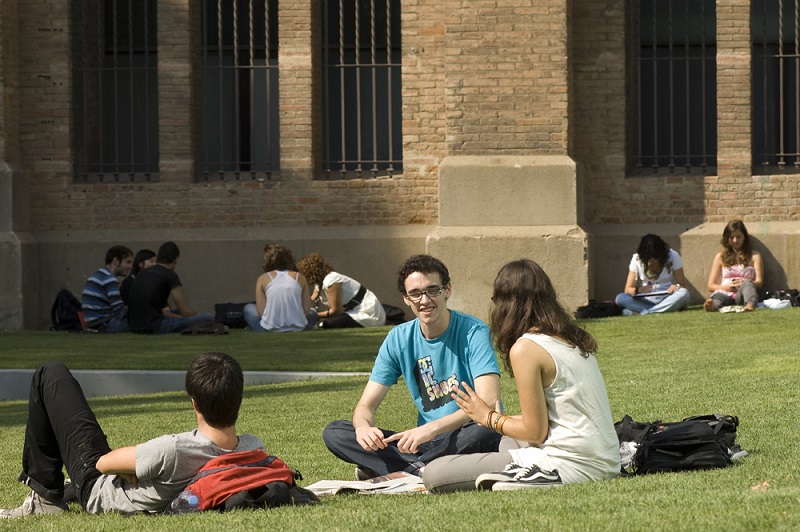
Pompeu Fabra University has managed to remain among the 150 best universities in the world and first in Spain, according to the 2020 edition of the World University Rankings published by Times Higher Education (THE).
According to the sixteenth edition of the recently published rankings, UPF ranks 143rd world wide and 60th in Europe. Last year, the University was ranked 135th and 58th, respectively, the best results in its history.
”Despite the adverse environment and thanks to the efforts by the entire university community, UPF continues among the 150 best universities in the world”, affirms Jaume Casals, UPF rector.
With these results, the University has established its positive progress in the classification: in the 2010 edition UPF came 325th; 164th in 2014, while in the last three editions, it has come in the top 150 (140th in 2018, 135th in 2019, and now 143rd in 2020).
THE’s World University Rankings, which includes nearly 1,400 universities (200 more than in the previous edition) this year from 92 countries, is produced from a combination of thirteen indicators relating to five major areas of knowledge: teaching (30%), research (30%), citations (30%), international outlook (7.5%) and industry income (2.5%).
UPF improves in research, international outlook and industry income
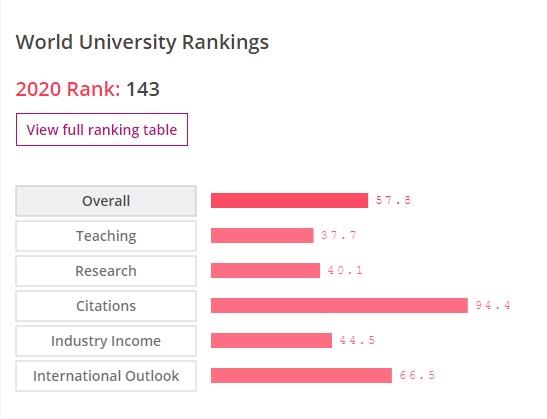 The University, which scored 57.8 points overall (half a point less than last year), has improved in the areas of research (from 39.1 to 40.1), international outlook (from 64.3 to 66.5), and industry income (from 42.4 to 44.5).
Regarding citations, UPF scores 94.4, slightly below last year, but still the area in which UPF stands out most, achieving 81st position in the world. In the last area, teaching, it obtained a score of 37.7 (40 last year).
Results at state and international level
Behind UPF, the only Spanish university among the top 150, come the Autonomous University of Barcelona (157th), the University of Barcelona (201-250 bracket) and the Autonomous University of Madrid and the University of Navarre (both in the 251-300 bracket).
This year’s ranking includes a total of 45 Spanish universities, seven more than last year. These figures make Spain the third European country for the number of universities appearing in the ranking, behind Great Britain and Germany, and tied with Italy.
Globally, the University of Oxford ranks first for the fourth consecutive year; California Institute of Technology (Caltech) has risen to second place, while the University of Cambridge has fallen from second to third place. Rounding off the top five, in order, are the universities of Stanford and the Massachusetts Institute of Technology (MIT).
Related Assets

Catalan government
Catalan development cooperation aims to help prevent and respond to emergency situations. This page explains how you can collaborate on the provision of foreign aid both in general and to specific regions.

European Commission
Through cooperation and assistance programmes, the European Commission offers humanitarian aid and coordinates efforts with other international actors to promote peace and stability in war-torn regions.

Oxfam Intermón
Oxfam Intermón works in 90 countries. They have launched a fundraising campaign, which is more necessary than ever, given the magnitude of today’s wars. The NGO is also sponsoring a campaign to collect signatures to call for a ceasefire in Gaza.
Doctors Without Borders (MSF) is a medical-humanitarian action organization that provides assistance in 70 countries to people threatened by armed conflicts, violence, epidemics or neglected diseases, natural disasters and exclusion from medical care. They have also promoted a campaign to collect signatures to ask for a ceasefire in Gaza.
Red Cross
The Red Cross also provides emergency humanitarian aid in regions in crisis.

Legal Clinic
The UPF Legal Clinic regularly holds talks and roundtables on the protection of human rights in crisis regions.

Libraries Without Borders
The Libraries Without Borders programme, sponsored by the Catalan Development Cooperation Agency (ACCD), offers Catalan public library patrons knowledge and insight into situations of human rights violations and provides resources to take action.
Council for At-Risk Academics
The Council for At-Risk Academics, in partnership with universities and higher education institutions, provides urgently-needed help to academics in immediate danger, those forced into exile, and many who choose to work on in their home countries despite serious risks.