UPF sets up its Global Advisory Board to improve its international strategy

Contra el genocidi i contra la violació dels drets humans, a Gaza i arreu del món

Peace comes when you talk to the person you most hate. And that’s where the courage of a leader comes.
Desmond Tutu (1931-2021), first recipient of an honorary doctorate from UPF
These words, spoken by Desmond Tutu, the first person ever to be awarded an honorary doctorate by UPF, are more applicable today than ever. The UPF condemns, and will always condemn, the use of violence to settle disputes. At UPF, we advocate approaching political or territorial conflicts based on dialogue and respect for all peoples and minorities.
As a university, we also want to show our support to the academic community in countries at war. Universities and scientific institutions are more necessary than ever in these regions. Access to education and the promotion of critical thinking, in the context of strong independent institutions, are the way to ensure the informed debate and reflection that can open the door to new avenues for finding solutions.
At UPF, we are aware of the university community’s concern for the human rights violations we are seeing in the conflicts around us. That is why on this website you will find information about campaigns and actions related to current conflicts, as well as opinion pieces and institutional statements. We also offer a dedicated e-mail address – [email protected] – to contact the university and let us know about your interests and concerns.
UPF sets up its Global Advisory Board to improve its international strategy
Made up of experts in the field of higher education from all over the world, it aims to advise and steer the University in international development matters

The University has set up its Global Advisory Board (GLOAB), a consultative body, with the aim of providing UPF management and faculty with advice and guidance on key strategic activities and initiatives for international development.
The main functions of the GLOAB include providing strategic advice on UPF’s internationalization policy, evaluating the University’s international strategy, and overseeing the development and achievement of the objectives set.
For Toni Luna, UPF vice-rector for Internationalization, “Pompeu Fabra has always had a great international outlook while maintaining the values and peculiarities of a public, quality Catalan university”. And he added that “to be among the best universities you need to be in touch with the best practices from around the world and attract the best talent”.
“it is a privilege for the University to have on board experts in higher education belonging to the GLOAB, with protracted international track records. They will help us improve UPF’s position internationally, which is one of the strategic objectives that we set ourselves as a University”
The body, made up of a minimum of 8 and a maximum of 10 members, includes experts in the field of higher education from all over the world who will oversee and measure UPF’s progress in improving international competitiveness with respect to world-renowned teaching and research centres.
In the words of Oriol Amat, UPF rector, “it is a privilege for the University to have on board experts in higher education belonging to the GLOAB, with protracted international track records”. And he emphasizes that, “of course they will help us improve UPF’s position internationally, which is one of the strategic objectives that we set ourselves as a University”.
The first face-to-face meeting of GLOAB members will take place on Monday 16 May at 10 am on the Ciutadella campus, just before the start of the THE Europe Universities Summit.
GLOAB members
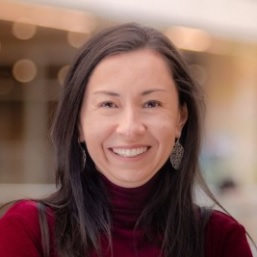 Raquel Bernal Salazar, rector of the University of the Andes. Bogotá (Colombia)
Bernal holds a master’s degree and a PhD in Economics from New York University (2003). She is an expert on impact assessment. Professor Bernal is among the 10 most cited economists in Colombia. She was a professor at the University of Northwestern (Evanston, Illinois) between 2002 and 2007 and director of the Los Andes Center for Studies on Economic Development (CEDE), between 2012 and 2017.
Hans de Wit, emeritus professor, distinguished member and former director of the Center for International Higher Education at Boston College (CIHE), United States
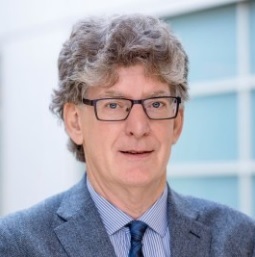
Before joining the CIHE, he was director of the Centre for Higher Education Internationalization at the Catholic University of the Sacred Heart in Milan and professor of Internationalization of Higher Education at the University of Applied Sciences in Amsterdam. He was vice-president for International Affairs at the University of Amsterdam from 1996 to 2003. He is a founding member and former president of the European Association for International Education (EAIE). He is the founding editor of the Journal of Studies in International Education (SAGE).
Funmi Olonisakin, vice-president for Global Engagement at King’s College London
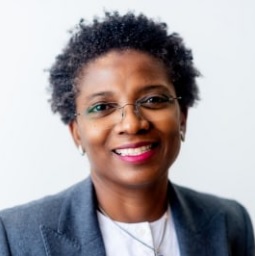
She is a founding member of the African Leadership Centre and was director of the Conflict, Security and Development Group (CSDG) at King’s College London, from 2003 to 2013. Previously, she worked in the United Nations Office of the Special Representative of the Secretary-General for Children and Armed Conflict. In 2015, she was appointed by the United Nations Secretary-General, Ban Ki Moon, as one of seven members of the UN Peacebuilding Advisory Group of Experts. Also, in 2016, she was appointed as a member of the Advisory Group of Experts for the United Nations Progress Study on Youth, Peace and Security.
Jan Palmowski, general Secretary of The Guild
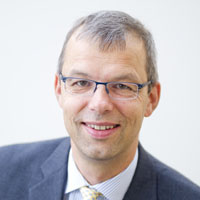
A contemporary historian, he began his career at the University of Oxford before moving to King's College, London, where he taught European politics and EU integration. He was head of the Faculty of Arts and Humanities at King’s College London (2008-12), and pro-vice-chancellor and academic vice-president at the University of Warwick from 2013 to 2018.
His work on international issues includes membership of the German Science Council’s Strategy Commission (2013-16), and the German Excellence Commission’s joint expert Group (2016-18). He also served on the Humanities panel of the Comparative Expert Assessment of Lithuanian Universities (2018), and currently chairs the International Advisory Board of the Université Paris Citée.
Francesc Pedró, director of the UNESCO International Institute for Higher Education in Latin America and the Caribbean (UNESCO IESALC)
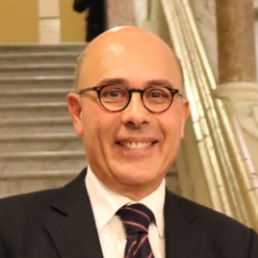
He previously led the education policy advisory service, including national policy reviews as well as international comparative studies, in the education sector at UNESCO in Paris. He also worked at the OECD Centre for Educational Research and Innovation (CERI) as a senior policy analyst.
He is a professor of Comparative Education Policy with the Department of Political and Social Sciences at Pompeu Fabra University.
Rocky S. Tuan, president of the Chinese University of Hong Kong
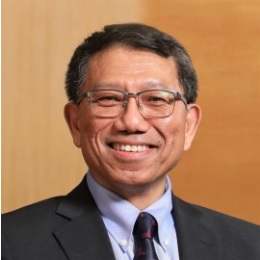
He assumed the position of President of the Chinese University of Hong Kong (CUHK) on 1 January 2018. He studied higher education in the United States and received his PhD in Life Sciences 1977 from the Rockefeller University in New York. Prior to joining the CUHK in 2016 as a distinguished visiting professor and founding director of the Institute of Tissue Engineering and Regenerative Medicine, he was a distinguished professor of Orthopaedic Surgery at the University of Pittsburgh School of Medicine, where he was the founding director of the Center for Cellular and Molecular Engineering.
Leila Triki, dean of the Mediterranean School of Business of Tunisia
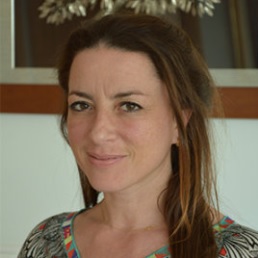
She has a degree in Applied Mathematics from the University of Paris XI, a master’s degree in Economic Modelling and a PhD in Economic Theory from the University of the Sorbonne. She also holds an Executive MBA from the Mediterranean School of Business. She worked as a consultant for the World Bank Group in Washington D.C. in 2006. In 2007 she was appointed as a researcher and postgraduate teaching assistant at the London School of Economics and Political Science. In 2008 she joined the Mediterranean School of Business as director of Accreditation and Development of Full-Time Programmes and in 2016 she assumed her current position. Her areas of interest include higher education, youth unemployment, competition and economic development.
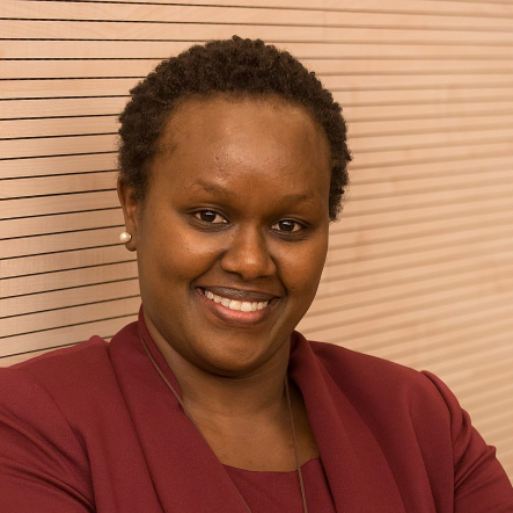 Dorcas Muthoni, kenyan engineer and entrepreneur. Honorary doctor by Pompeu Fabra University
She graduated in computer science specializing in wireless networks, radio communications and strategic technology planning. Muthoni is the founder and CEO of OpenWorld, a software consulting company operating in the East African region. She is also the founder of the organization AfChix, which offers mentorship in information and communication technologies (ICT) to women and girls through conferences, meetings and training.
Randall Martin, Executive Director at British Columbia Council for International Education Vancouver (Canada)
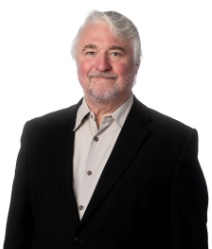
Since 2006, Randall has led BCCIE in advancing the Province of British Columbia’s agenda on international education. His experience spans more than 30 years in post-secondary education, development education, project management and implementation, and international education, having worked on projects in institutions, associations, and societies across BC. He regularly engages in external reviews and consultations for institutions and other jurisdictions. Randall is the author or co-author of numerous papers and is a sought-after speaker and regular presenter at national and international conferences and symposia.
Multimedia
SDG - Sustainable Development Goals:
Contact
Related Assets

Catalan government
Catalan development cooperation aims to help prevent and respond to emergency situations. This page explains how you can collaborate on the provision of foreign aid both in general and to specific regions.

European Commission
Through cooperation and assistance programmes, the European Commission offers humanitarian aid and coordinates efforts with other international actors to promote peace and stability in war-torn regions.

Oxfam Intermón
Oxfam Intermón works in 90 countries. They have launched a fundraising campaign, which is more necessary than ever, given the magnitude of today’s wars. The NGO is also sponsoring a campaign to collect signatures to call for a ceasefire in Gaza.

Doctors Without Borders (MSF) is a medical-humanitarian action organization that provides assistance in 70 countries to people threatened by armed conflicts, violence, epidemics or neglected diseases, natural disasters and exclusion from medical care. They have also promoted a campaign to collect signatures to ask for a ceasefire in Gaza.

Red Cross
The Red Cross also provides emergency humanitarian aid in regions in crisis.

Legal Clinic
The UPF Legal Clinic regularly holds talks and roundtables on the protection of human rights in crisis regions.

Libraries Without Borders
The Libraries Without Borders programme, sponsored by the Catalan Development Cooperation Agency (ACCD), offers Catalan public library patrons knowledge and insight into situations of human rights violations and provides resources to take action.
Council for At-Risk Academics
The Council for At-Risk Academics, in partnership with universities and higher education institutions, provides urgently-needed help to academics in immediate danger, those forced into exile, and many who choose to work on in their home countries despite serious risks.