Keith Miller, University of Missouri - St. Louis: "If blockchain technologies are not able to decrease their environmental impact, their adoption will diminish."
Keith Miller, University of Missouri - St. Louis: "If blockchain technologies are not able to decrease their environmental impact, their adoption will diminish."
Keith Miller, University of Missouri - St. Louis: "If blockchain technologies are not able to decrease their environmental impact, their adoption will diminish."
Professor Miller is one of the most authoritative voices to talk about ethical aspects in blockchain technologies and, this coming October 18, the DeepTech Talks organized by UPF Engineering will give us the chance to hear him at the Auditorium on the Poblenou Campus.
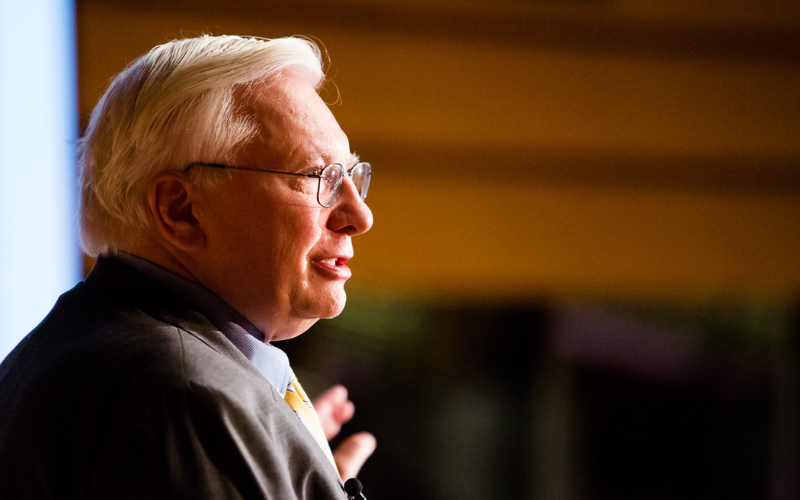
Professor Keith Miller is Orthwin Chair of Lifelong Learning in Science at the School of Education and the Department of Computer Science at the University of Missouri-St. Louis. He has a PhD in computer ethics and a master’s degree in mathematics. His focus on computer ethics has made him one of the most authoritative speakers on ethics in blockchain technologies.
Before his speech at DeepTech Talk "Ethical Guidelines for Blockchain Systems within the EU", we had the opportunity to interview him and we would like to share it with you:
In your opinion, which industries do you believe will be most significantly transformed by blockchain technology in the next five years, and how do you see these transformations unfolding?
According to an article by Elijah Henry in the online magazine Medium decentralized finance, the integration of AI and blockchain, supply chain management, and non-fungible tokens are likely to grow in importance during the next few years. I think that these applications (and others I haven't mentioned) will grow in fits and starts. I also think that the environmental effects of widespread blockchain deployment will be crucial - if those effects can be minimized, blockchain applications will gain popularity. If the effects continue to escalate, I think the adoption of blockchain will be diminished.
How do you envision blockchain technology redefining economic models and structures, particularly in terms of decentralization and democratization of financial services?
As the question suggests, decentralization is a key concept in blockchain applications in financial services. People who want to distance themselves from governments and large multinational corporations will increasingly embrace blockchain. I am less optimistic about "democratization." I may be an outlier on this issue, but I think strong democracies often need at least some centralized power, so blockchain may not always be a force that encourages democracy.
While blockchain promises increased transparency and security, what are some of the biggest challenges it faces in terms of scalability and widespread adoption, and how can these be addressed?
I think the single biggest challenge is environmental. There has been some progress on technical approaches to reduce environmental damage, but so far these new ideas have not significantly reduced the environmental damage of current and future blockchain applications. I think blockchain advocates should make the environmental challenges their number one priority, and I think everyone else should require that priority, to the point of resisting blockchain adoption until the environmental effects are significantly curtailed.
Beyond financial and business applications, what are some potential societal impacts of blockchain technology that you believe people might not yet fully appreciate or understand?
Because blockchain is tied to crypto-currency in the public mind, blockchain is also connected to secrecy for most people. However, the opportunity to make transactions broadly available via blockchain is less well understood. This openness, at least to people who have access to a blockchain, may be an increasingly important aspect in the future.