
Engineering UPF brings together experts to analyze the impact of AI on engineering
Engineering UPF brings together experts to analyze the impact of AI on engineering
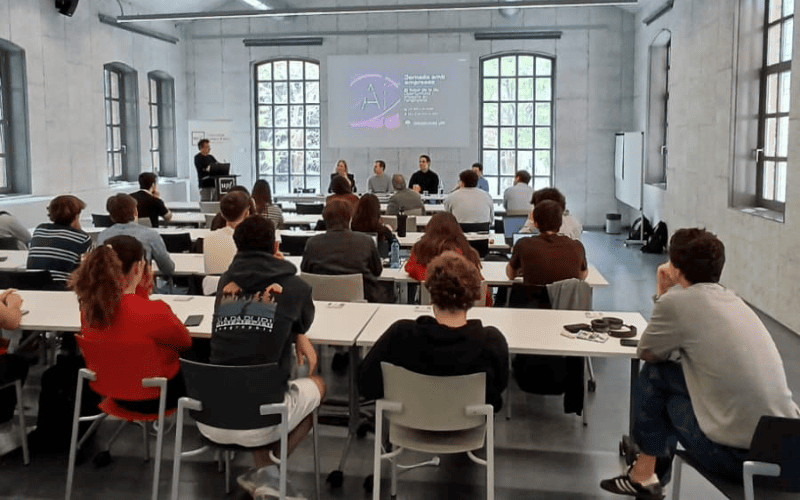
Engineering UPF held a new industry-focused session under the title “The Future of AI: Opportunities and Impact on Engineering”, bringing together professionals from the technology sector to reflect on how artificial intelligence is transforming the workplace, higher education, and the way we understand engineering.
The session featured Anna Navarro Schlegel, a technology executive with extensive experience in Silicon Valley; Miquel Cornudella, ML Engineer at NeuralTrust; Carlos Yagüe, a professional specialized in software development and team management; and Ferran Busquets, a computer engineer with experience in digital companies.
Throughout the session, participants discussed key issues regarding the impact of AI on engineering, including how it is changing everyday business operations, whether LLMs can truly enhance learning capabilities, and how both students and educators should prepare for this new reality.
One of the main conclusions of the event was the importance of maintaining a critical perspective on technology. Miquel Cornudella stressed that “AI should not be associated only with LLMs,” highlighting that artificial intelligence is a much broader field and that, before applying any technology, it is essential to determine the best tool for solving each specific problem.
The speakers also agreed on the importance of prior knowledge and strong educational foundations. Ferran Busquets warned that “if LLMs do everything for you during your degree, you will be replaceable by an LLM once you graduate,” emphasizing that AI can accelerate processes and enhance capabilities, but is only truly useful when built upon solid knowledge and intellectual effort.
The session also explored how the role of engineers is evolving. Carlos Yagüe explained that programming will continue to be essential, but professionals will need to develop new skills related to business understanding, client communication, and hypothesis validation. “Engineers will increasingly interact with clients and business areas,” he noted.
Regarding the international context, Anna Navarro Schlegel shared her experience in Silicon Valley and reflected on the differences between the European and American models. While acknowledging the pace of innovation in the United States, she defended the importance of preserving the European model linked to social rights and quality of life, while also calling for greater competitiveness and innovation capacity.
The event concluded with a shared reflection among the speakers: the future of AI is unpredictable, but the ability to think critically, identify errors, and truly understand technology will become increasingly valuable. In a context shaped by rapid technological acceleration, knowledge remains the key differentiating factor.