
Cryptography and Security Hackathon: designing secure systems with blockchain
Cryptography and Security Hackathon: designing secure systems with blockchain
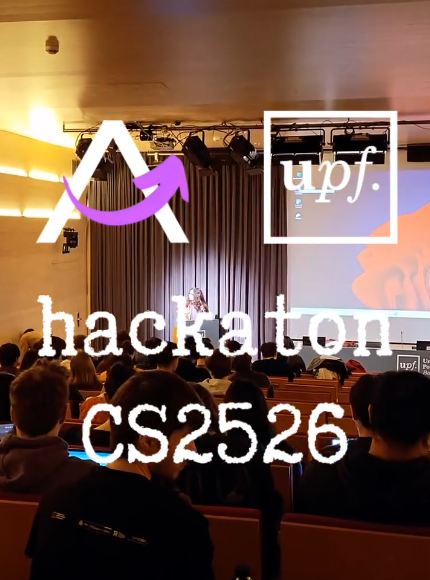
Students from the Cryptography and Security course took part in a hackathon focused on the practical application of security, privacy, and cryptography concepts in real-world scenarios. The activity, integrated within the academic program, emphasized the design of solutions based on blockchain and smart contracts.
The main objective of the hackathon was to translate theoretical knowledge into concrete situations by working on challenges that reflect common cybersecurity problems. In this context, students developed and implemented smart contracts on the Sepolia network, considering both system functionality and potential risks and vulnerabilities.
Challenges based on real-world problems
Participants worked in teams to tackle four main challenges:
- Auction: design of a secure auction system based on smart contracts.
- Escrow contract: creation of a trust mechanism between buyer and seller without intermediaries, ensuring both payment and delivery.
- Voting system: implementation of a digital voting system with guarantees of integrity and transparency.
- Social recovery vault: development of a system that allows users to recover funds if they lose access to their wallet, using a distributed trust model.
Beyond technical implementation, teams were required to reflect on key aspects such as involved actors, potential attack vectors, and system security guarantees, adopting a critical and realistic perspective aligned with professional practice.
Applied cryptography: beyond code
The hackathon highlighted that cryptography is not an end in itself, but a tool to build useful and secure systems. Students were encouraged to go beyond basic implementations and ask themselves questions such as: what real problem does the system solve, who are its users, and what could go wrong in practice?
This approach led to creative and contextualized solutions, demonstrating the importance of combining technical knowledge with analytical skills and critical thinking.
Winning teams
The winning teams of this edition were One Team Pad, Cryptonite, Fade Chain, and Pilar de 6, recognized for the quality of their solutions, the robustness of their designs, and their ability to clearly explain and defend their projects.

Learning by doing
This hackathon exemplifies the value of active learning methodologies in cybersecurity education. Facing real-world challenges allows students to better understand the complexity of digital systems and develop essential skills for their future careers.
In a context where security is increasingly critical, initiatives like this help train professionals capable of designing more secure, robust, and responsible technologies.
This publication is part of the project Artemisa, financed by “European Union NextGeneration-EU, the Recovery Plan, Transformation and Resilience, through INCIBE”.
