
Political Communication, Journalism and Democracy
POLCOM-GRP organizes two events on the future of journalism and electoral disinformation
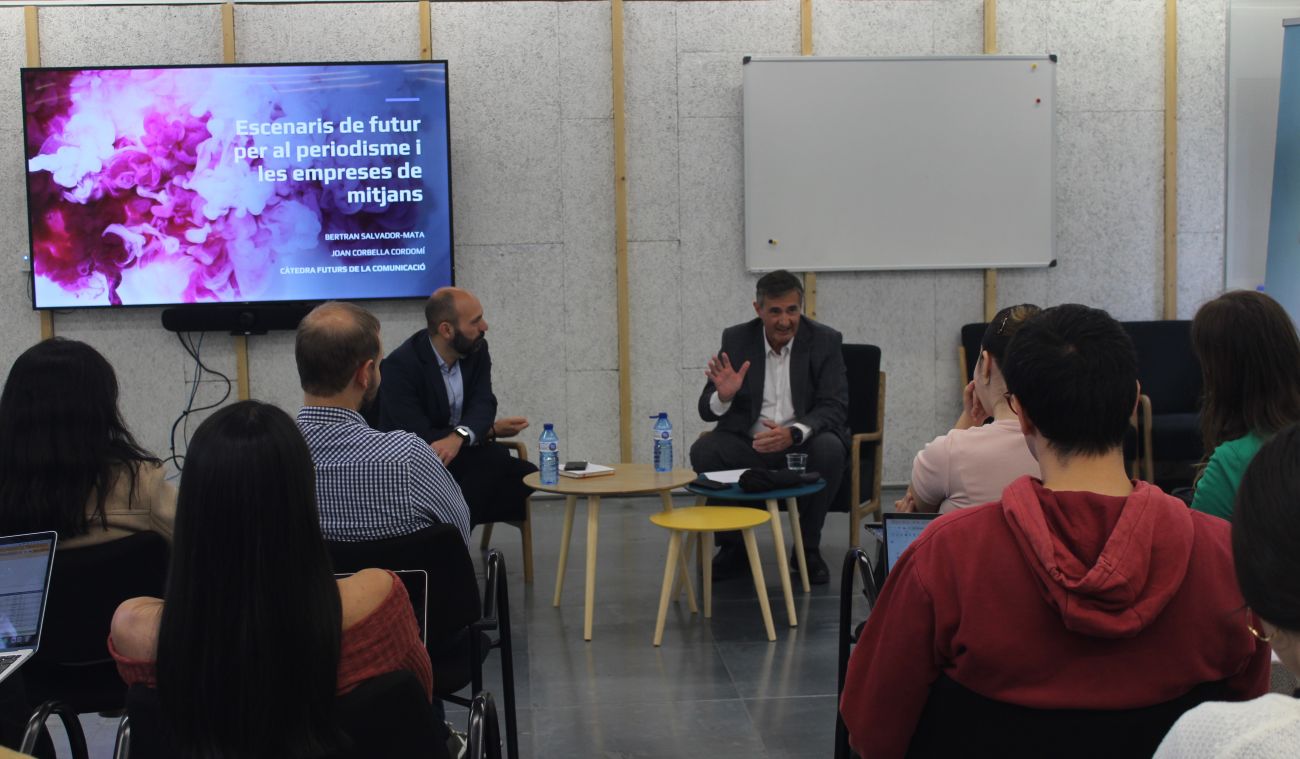
On the occasion of World Press Freedom Day, in collaboration with UNESCO, the POLCOM-GRP research group organized two events in collaboration with the Chair of Futures of Communication and the Complutense Observatory of Disinformation.
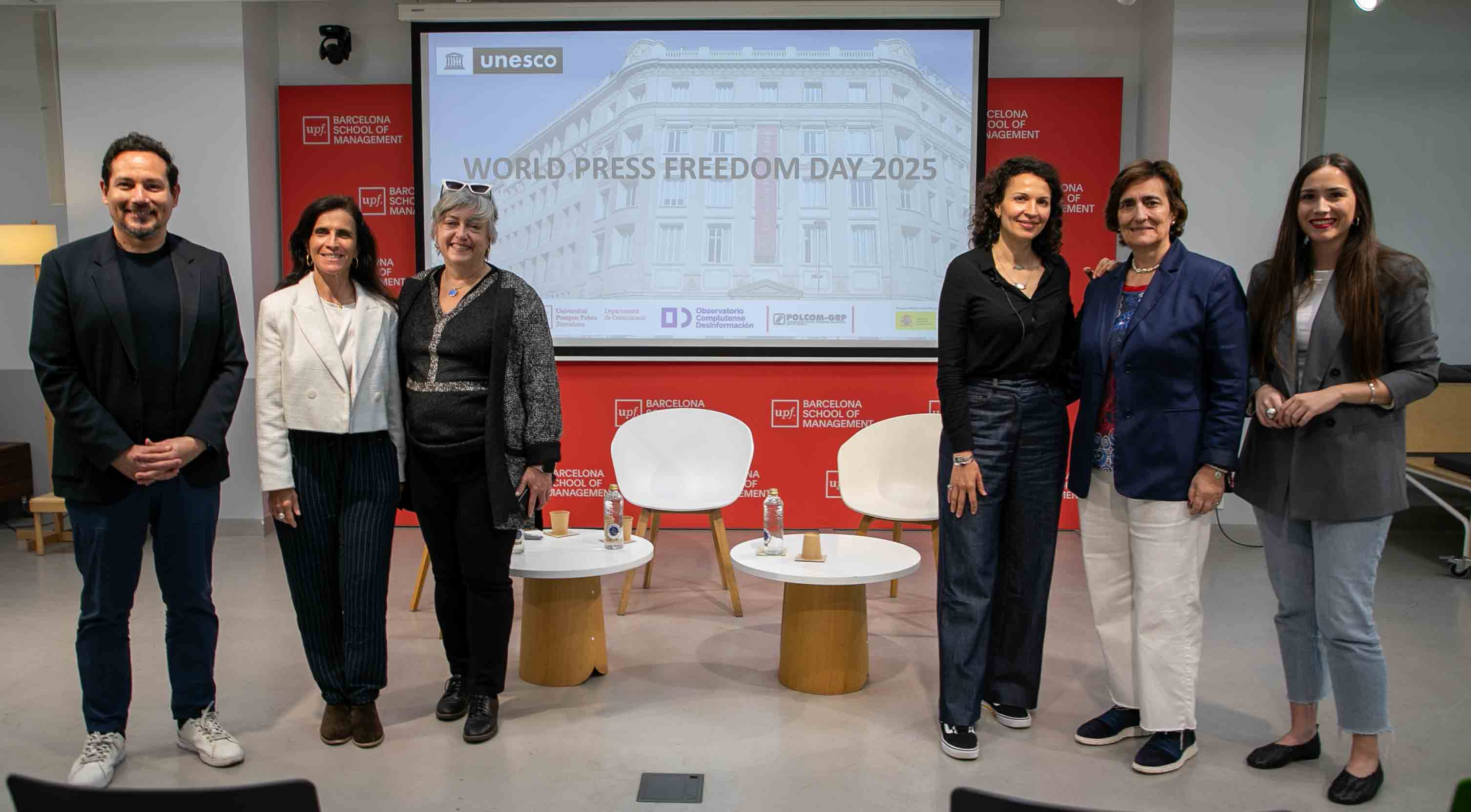
Challenges of electoral disinformation
We analyze the research of the Complutense Observatory of Disinformation during electoral periods over the last two years in various democracies around the world, both established and emerging. The researchers Loreto Corredoira (UCM), Carmen Beatriz Fernández (UNAV), Rodrigo Cetina-Presuel (UPF-BSM), and María José Labrador (UDD) participated. This has been a growing concern in Europe, especially since the 2019 parliamentary elections. One of the central themes was the intervention of external actors, such as Russia, which has orchestrated media and social media campaigns to promote Euroscepticism. Common narratives against migration, climate change, and the 2030 Agenda were also identified. In the United States, messages about electoral fraud stood out, despite measures taken by some technology platforms to curb such content. The roundtable also addressed the high number of incidents in the recent Venezuelan elections, as well as the rerun election in Romania.
The second part of the event featured Ruth Pérez, head of communications for the fact-checking platform Verificat, founded in 2019 in the context of the municipal elections. She addressed the specialty of fact-checking, especially among young and senior populations in terms of digital literacy. Ruth Rodríguez, principal investigator of the FACCTMedia project, highlighted a study conducted by the project in which journalism students reported a lack of knowledge about the concept of disinformation; she also presented the curriculum proposal for addressing it in university education. One of the greatest challenges is reaching the public through appropriate channels and using accessible language, taking into account the need to anticipate disinformation narratives. The conference discussed Meta's decision to suspend financial support for fact-checking projects in the United States, generating uncertainty about the sustainability of these entities, especially in the face of new challenges such as content created by generative artificial intelligence.
Journalism: Diagnosis of the Present and Future Scenarios
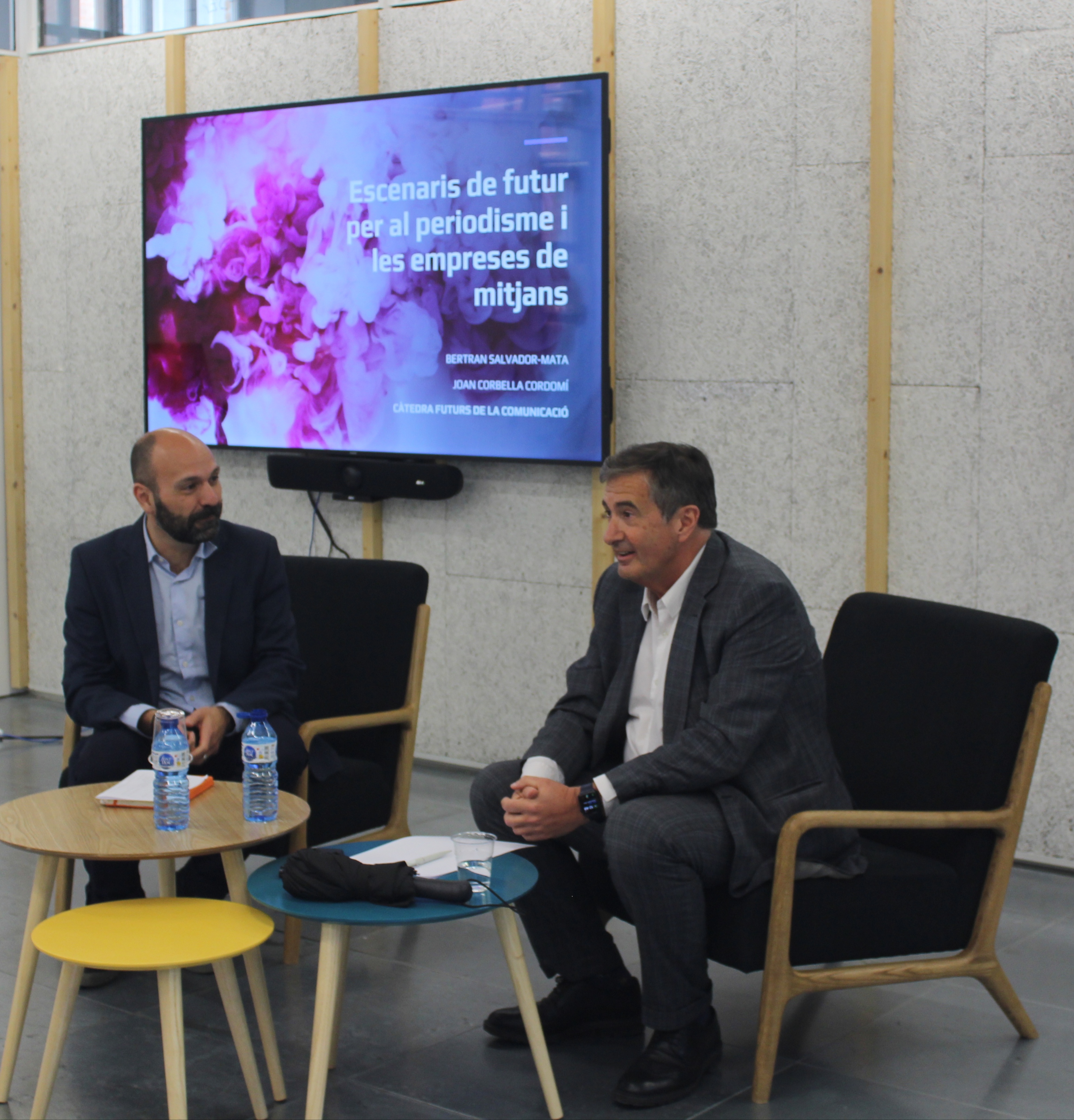
The first part of the conference consisted of the presentation of the report "Paisatges mediàtics: escenaris de futur per al periodisme i les empreses de mitjans" , prepared by Bertran Salvador and Joan Corbella, researchers at the Chair of Futures in Communication. The objective was to analyze changes in the media landscape in Catalonia and predict possible scenarios for journalism. The main uncertainties facing the sector were identified, such as control of the information value chain, the economic viability of the media, and the impact of artificial intelligence on the production and distribution of information. It projects three scenarios (continuity, reform, and disruption) depending on how variables such as funding, regulation, and the behavior of technology platforms evolve.
In the second part, Jordi Juan, director of La Vanguardia, spoke with Marcel Mauri, coordinator of POLCOM-GRP and director of the Journalism Degree at UPF, and engaged in a dialogue with students about the transformation of the sector, competition with large platforms, and the challenges of economic sustainability. He highlighted his outlet's commitment to subscriptions as a primary source of income, with notable figures, but acknowledged that convincing the public to pay for quality information remains a challenge in Spain. During the conversation, students raised questions about access to the profession, the role of artificial intelligence, information saturation, and the need for more in-depth journalism. Juan defended the commitment to differentiated content, building trust, and adapting to new formats without losing rigor.
María José Labrador's Research Fellowship Concludes
María José Labrador, professor of Journalism at the Universidad del Desarrollo de Chile, concludes her research fellowship this month in the UPF Department of Communication. She directs the UDD's Center for Applied Communication Studies, which has conducted studies on disinformation during episodes such as the 2023 Chilean constitutional referendum campaign, within the organization's six lines of research: Media Literacy; Gender and Intercultural Studies; Journalistic Ethics; Disinformation; Audiovisual Studies; and Creative Thinking.