
Menopause at the centre of the dialogue with the Quiral Report 2025
Menopause at the centre of the dialogue with the Quiral Report 2025
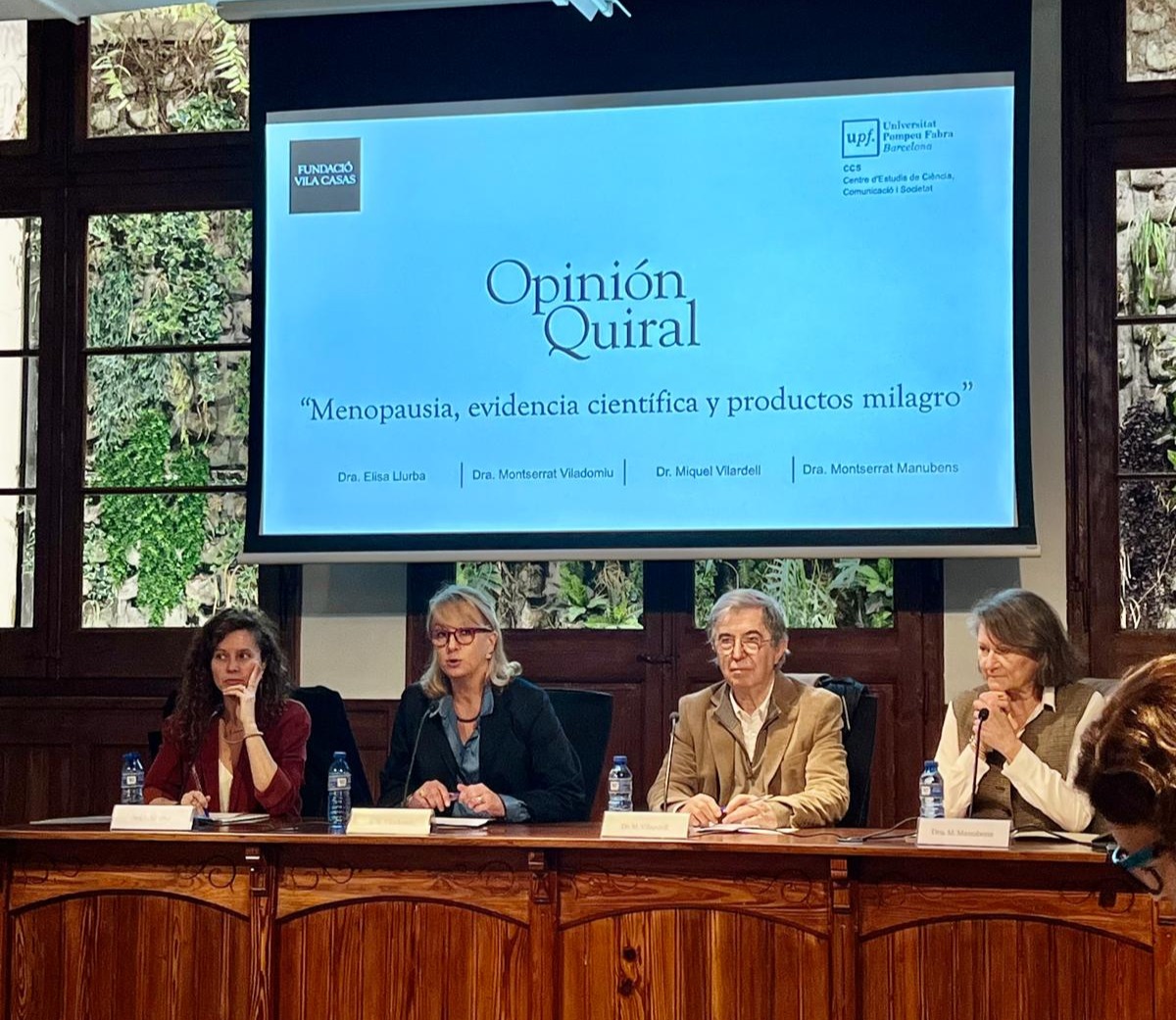
Through the Quiral Report 2025, entitled “Women’s sexual and reproductive health: information and perception”, an analysis was conducted on how society perceives menopause. The results showed that it is still a life stage surrounded by myths, prejudices and misinformation.
To continue addressing this topic, given its social relevance, the colloquium held at Espais Volart of the Fundació Vila Casas approached menopause from the perspective of scientific evidence and so-called miracle products.
The event was presented by Dr Montse Viladomiu and Dr Miquel Vilardell, trustees of the Vila Casas Foundation. It featured contributions from Dr Elisa Llurba of Hospital de Sant Pau and Dr Maria Montserrat Manubens of Hospital Universitari Dexeus and the Women’s Health Institute. Both emphasised the need to understand menopause as another stage of life, while addressing it from a scientific perspective that takes into account the changes the body undergoes, leaving stigma aside.
Here are a few ideas that stood out to us:
- Visibility. The impact of menopause extends beyond health, affecting women’s professional, social and personal lives.
- Health impact. The decrease in oestrogen levels (the main underlying process in menopause) increases the risk of osteoporosis and cardiovascular diseases. It may also affect sleep, mental health, certain cognitive functions and libido.
- Prevention. Healthy habits such as regular physical exercise (especially strength training), a balanced diet based on the Mediterranean diet, and managing risk factors such as lack of rest, stress, smoking and alcohol consumption may help minimise its impact.
- Hormone therapy. When assessed on a case-by-case basis and within each context, it may be an option to prevent bone and cardiovascular issues associated with declining oestrogen levels. However, it was noted that negative perceptions and reluctance towards its use still persist.
- Commercialisation of menopause. There has been an increase in both the supply of and demand for products claiming to improve or even eliminate certain symptoms. Most have limited effectiveness and do not prevent the consequences of hormonal deficiency.
- Communication. The need for rigorous information to combat misinformation and stigma was strongly emphasised.
To enrich the discussion, Gema Revuelta and Vladimir de Semir from the Science, Communication and Society Centre (CCS-UPF), authors of the Quiral Report 2025, also took part. The colloquium was attended by specialised journalists from Diario Médico, El País, La Vanguardia and Ara, as well as by an engaged audience who shared questions, experiences and concerns about menopause.
This colloquium highlights the importance of continuing to create spaces for informed and critical dialogue on menopause, as well as on women’s sexual and reproductive health. Scientific evidence, together with rigorous and appropriate communication, helps reduce stigma and enables people to make more informed decisions about their own health.