
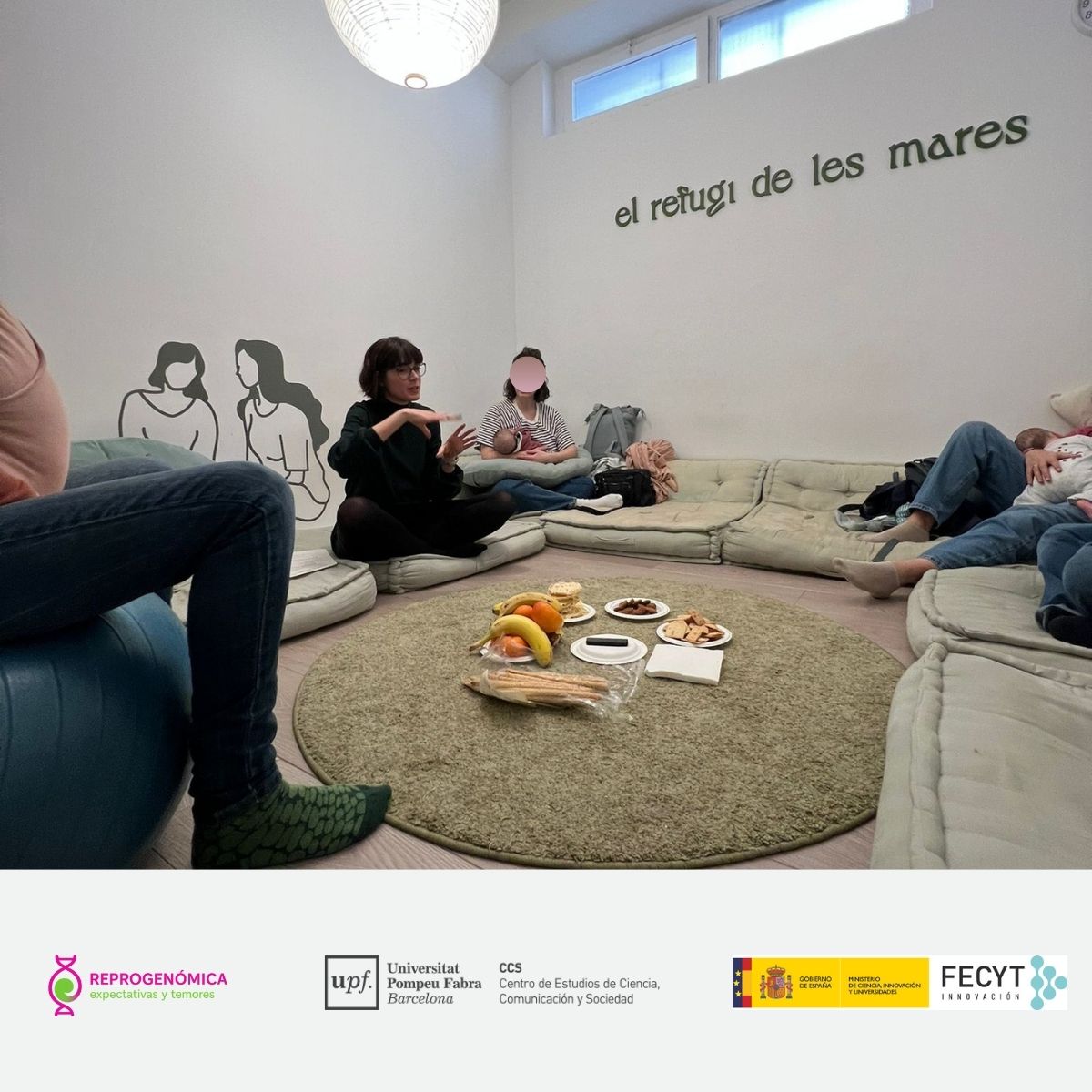
Reprogenomics project moves forward: first conversations with women at El Refugi de les Mares
Reprogenomics project moves forward: first conversations with women at El Refugi de les Mares
The project Reprogenomics: expectations and fears, funded by the Spanish Foundation for Science and Technology (FECYT), examines public perception and understanding of genetics and genomics as applied to human reproduction.
A safe space to talk about genetics and motherhood
The sessions were held in person at El Refugi de les Mares, a community space that fostered open, respectful and reflective conversations. The discussions addressed questions such as:
- How the concept of “risk” is interpreted during pregnancy
- What doubts arise around prenatal genetic testing
- What expectations exist regarding what genetics can — or cannot — provide
- How emotions influence the reception of this information
- Which communication formats are perceived as most helpful for understanding and decision-making
The conversations highlighted the importance of communication that is not only rigorous and clear but also sensitive to the emotional context in which these decisions often take place.
Now: qualitative data analysis
The research team is currently conducting an in-depth qualitative analysis of the sessions. The aim is to identify recurring patterns, common misunderstandings, shared expectations, and communication preferences to better understand the informational needs of people navigating pregnancy and early motherhood.
Next steps in the project
Following this qualitative phase, the project will move forward with:
- The design and dissemination of an online survey targeting the general population (ages 20–45), to validate and quantify the findings.
- The development of a Guidelines document for communicating genetics and genomics in the reproductive context, aimed at communication professionals and healthcare stakeholders.
- A participatory feedback session, where preliminary results will be shared and discussed with relevant stakeholders.
We would like to warmly thank El Refugi de les Mares and all the women who took part in this first phase. Their openness and insights are essential to advancing towards clearer, more inclusive, and more responsive science communication.