
Three projects led by UPF researchers receive CaixaImpulse programme grants

Contra el genocidi i contra la violació dels drets humans, a Gaza i arreu del món

Peace comes when you talk to the person you most hate. And that’s where the courage of a leader comes.
Desmond Tutu (1931-2021), first recipient of an honorary doctorate from UPF
These words, spoken by Desmond Tutu, the first person ever to be awarded an honorary doctorate by UPF, are more applicable today than ever. The UPF condemns, and will always condemn, the use of violence to settle disputes. At UPF, we advocate approaching political or territorial conflicts based on dialogue and respect for all peoples and minorities.
As a university, we also want to show our support to the academic community in countries at war. Universities and scientific institutions are more necessary than ever in these regions. Access to education and the promotion of critical thinking, in the context of strong independent institutions, are the way to ensure the informed debate and reflection that can open the door to new avenues for finding solutions.
At UPF, we are aware of the university community’s concern for the human rights violations we are seeing in the conflicts around us. That is why on this website you will find information about campaigns and actions related to current conflicts, as well as opinion pieces and institutional statements. We also offer a dedicated e-mail address – [email protected] – to contact the university and let us know about your interests and concerns.
Three projects led by UPF researchers receive CaixaImpulse programme grants
The projects led by Marc Güell, Rafael Maldonado and Quim Castellví have been selected to receive grants from the CaixaImpulse programme, created by “la Caixa” Foundation and Caixa Capital Risc.
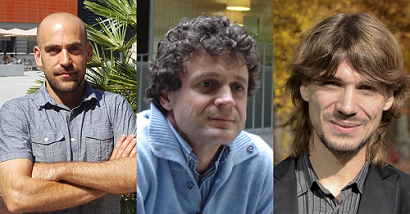
UPF has received three of the twenty grants awarded by the CaixaImpulse programme to proceed with therapies for congenital dystrophy, chronic pain and a system to improve prostate biopsies. The three projects are led by Marc Güell and Rafael Maldonado, at the Department of Experimental and Health Sciences (DCEXS), and Quim Castellví, at the Department of Information and Communication Technologies (DTIC).
The selected projects at UPF are:
UNI-LARGE: Advance Gene Editing Technologies
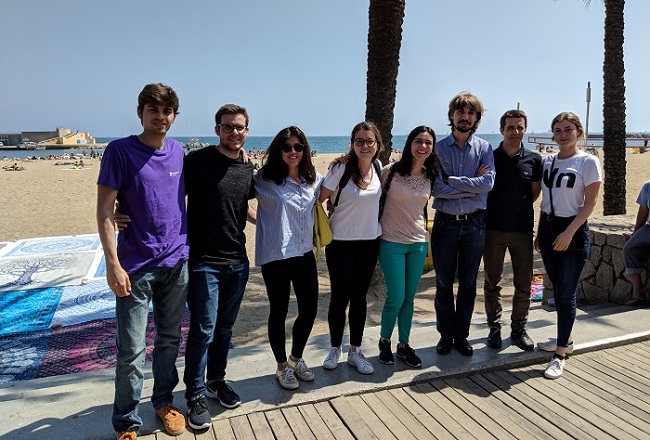 The group led by Marc Güell has developed Uni-large, a new generation of medication that combines the precision of CRISPR/cas9 and the efficacy of viral vectors established in the clinical practice. They are developing a first therapy aimed at treating congenital type 1A dystrophy (MDC1A), a disease that affects 1 in 30,000 people. It is produced by mutations in laminin alpha-2, a protein that exceeds the size limit of other vectors and therefore requiring the development of alternative therapies. They will perform the necessary steps for the preclinical development of this technology for its safe use in humans to treat muscular dystrophy and other diseases.
NeedleSafe: Antiseptic biopsy system
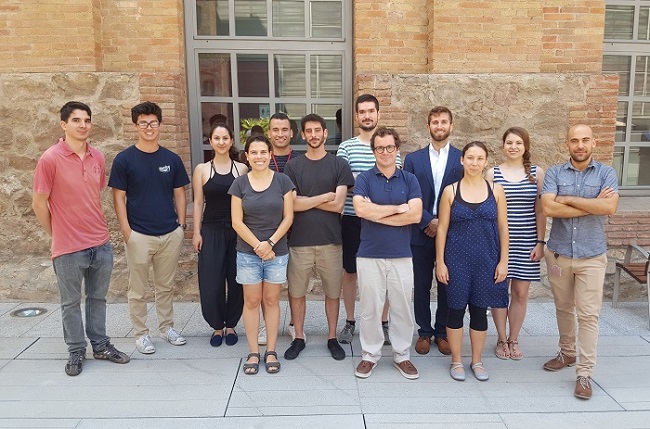 Transrectal ultrasound-guided prostate biopsy is the gold-standard for diagnosis of prostate cancer. But this procedure is not harmless since the rectal wall is perforated during the biopsy allowing the bacteria naturally confined within the rectum to cause infectious complications. Currently, between 2 and 5% of the patients undergoing a transrectal prostate biopsy are reported to develop a severe infection.
The project NeedleSafe is led by team led by Quim Castellví, Quim Castellví, researcher at the Biomedical Electronics Researche Group (BERG), which is led by Antoni Ivorra, researcher at the Department of Information and Communication Technologies (DTIC). Rsearchers from Hospital Clínic, Vall d'Hebron Research Institute, and IESE Business School also participate in the project. NeedleSafe uses a technology capable of eliminating the risk of infection after biopsy procedures. It is based on the electrical release of silver ions from a thin silver coating on the biopsy needle to obtain a long-term bactericidal effect.
Cannabis Fighting-Pain: Fighting pain with cannabis avoiding the side effects
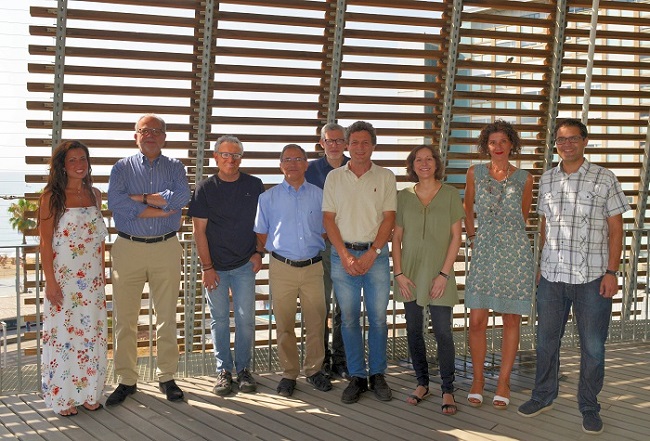 Chronic pain is a health problem that affects 20% of the world's population. Cannabinoid compounds have enormous potential for the treatment of this pathology due to the analgesic properties of delta9-tetrahydrocannabinol (THC), but they have major side effects. The Cannabis Fighting-Pain project, led by Rafael Maldonado, aims to bring to the market a new set of compounds capable of maintaining the analgesic effect of cannabinoids, avoiding their side effects. The team from UPF, Autonomous University of Barcelona (UAB) and University of Barcelona (UB) has developed peptides with greater specificity, selectivity and efficacy, while avoiding the cognitive deficits typically associated with the use of cannabinoids.
An enhancement, marketing and support plan
“La Caixa" and Caixa Capital Risc launched this programme in 2015, with the aim of facilitating the transfer to society of scientific knowledge originated in research centres, universities and hospitals, through patents, the creation of transfer companies or agreements. The programme has already allocated 7.5 million euros and has promoted 58 initiatives, 10 of which have already become spin-off companies and a further 7 are currently being created.
Each project selected by CaixaImpulse can receive up to 100,000 euros. In addition, the researchers will have access to a support programme that will guide them through mentorship, training, expert advice and establishing contacts.
Related Assets

Catalan government
Catalan development cooperation aims to help prevent and respond to emergency situations. This page explains how you can collaborate on the provision of foreign aid both in general and to specific regions.

European Commission
Through cooperation and assistance programmes, the European Commission offers humanitarian aid and coordinates efforts with other international actors to promote peace and stability in war-torn regions.

Oxfam Intermón
Oxfam Intermón works in 90 countries. They have launched a fundraising campaign, which is more necessary than ever, given the magnitude of today’s wars. The NGO is also sponsoring a campaign to collect signatures to call for a ceasefire in Gaza.

Doctors Without Borders (MSF) is a medical-humanitarian action organization that provides assistance in 70 countries to people threatened by armed conflicts, violence, epidemics or neglected diseases, natural disasters and exclusion from medical care. They have also promoted a campaign to collect signatures to ask for a ceasefire in Gaza.
Red Cross
The Red Cross also provides emergency humanitarian aid in regions in crisis.

Legal Clinic
The UPF Legal Clinic regularly holds talks and roundtables on the protection of human rights in crisis regions.

Libraries Without Borders
The Libraries Without Borders programme, sponsored by the Catalan Development Cooperation Agency (ACCD), offers Catalan public library patrons knowledge and insight into situations of human rights violations and provides resources to take action.
Council for At-Risk Academics
The Council for At-Risk Academics, in partnership with universities and higher education institutions, provides urgently-needed help to academics in immediate danger, those forced into exile, and many who choose to work on in their home countries despite serious risks.