
A new approach to eliminate specific strains of a bacterium related to acne identified

Contra el genocidi i contra la violació dels drets humans, a Gaza i arreu del món

Peace comes when you talk to the person you most hate. And that’s where the courage of a leader comes.
Desmond Tutu (1931-2021), first recipient of an honorary doctorate from UPF
These words, spoken by Desmond Tutu, the first person ever to be awarded an honorary doctorate by UPF, are more applicable today than ever. The UPF condemns, and will always condemn, the use of violence to settle disputes. At UPF, we advocate approaching political or territorial conflicts based on dialogue and respect for all peoples and minorities.
As a university, we also want to show our support to the academic community in countries at war. Universities and scientific institutions are more necessary than ever in these regions. Access to education and the promotion of critical thinking, in the context of strong independent institutions, are the way to ensure the informed debate and reflection that can open the door to new avenues for finding solutions.
At UPF, we are aware of the university community’s concern for the human rights violations we are seeing in the conflicts around us. That is why on this website you will find information about campaigns and actions related to current conflicts, as well as opinion pieces and institutional statements. We also offer a dedicated e-mail address – [email protected] – to contact the university and let us know about your interests and concerns.
A new approach to eliminate specific strains of a bacterium related to acne identified
An international team of researchers led by Marc Güell has tried a new approach that consists of manipulating the microbiome to achieve a potential therapeutic strategy to treat acne without affecting its equilibrium.
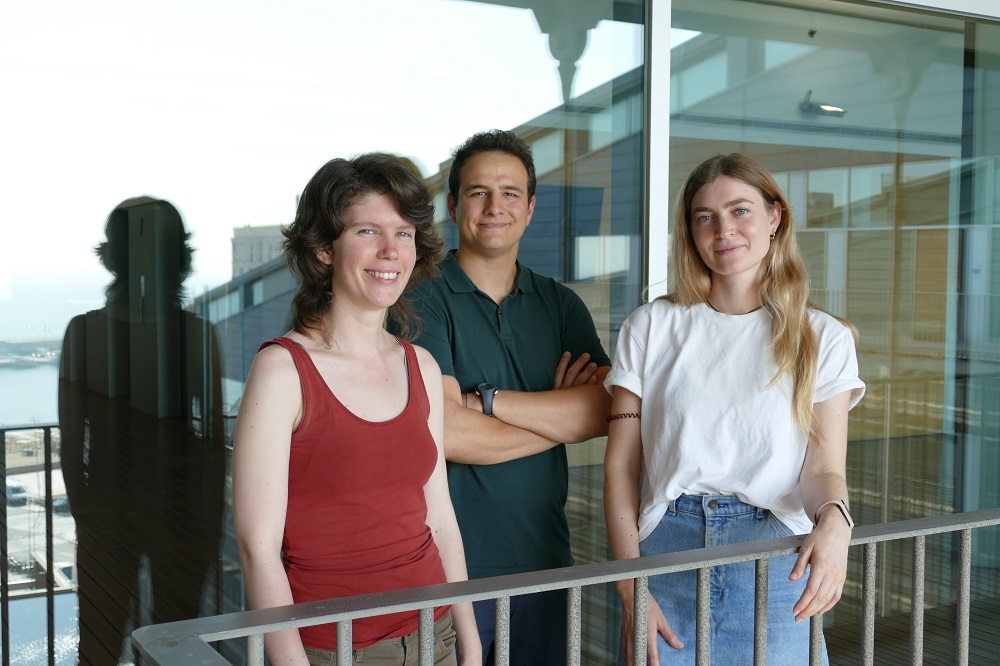
A new study by the Translational Synthetic Biology research group at UPF presents a new approach to eliminating specific strains of a bacterium related to acne. The paper, published in the journal Plos Pathogens, has also involved scientists from the company S-Biomedic and the University of Lund, in Sweden.
Our microbiome is made up of the microorganisms that live inside and outside our body. This complex microbial community primarily inhabits the skin, the oral mucosa and the gastrointestinal tracts, it is different in each of us and we live in symbiosis with it. Specifically, the skin microbiome is made up of multiple organisms such as bacteria, viruses and fungi. They live in equilibrium and some skin diseases, such as acne vulgaris, are associated with alterations to them.
The bacterium Cutibacterium acnes (C. acnes) is the most abundant in human skin. There are different strains of this bacterium, some predominate in healthy skin and others are associated with acne, which is a multifactorial disease. In healthy skin there is a balance and in acne there is a change in the abundance of certain strains, which brings about an imbalance known as dysbiosis.
Therefore, the use of antibiotic treatments is not optimal, as they usually kill the different strains of C. acnes and even other skin bacteria, thus altering the equilibrium. To address this problem, the team of researchers has tried a new approach that consists of manipulating the microbiome to achieve a potential therapeutic strategy to treat acne without affecting its equilibrium.
Through bacteriophage therapy it is possible to modulate the composition of C. acnes strains over time. We can reduce the strains associated with acne without affecting the ones that have beneficial features.
The strategy is based on one of the organisms found in the skin’s microbiome: bacteriophages. These are viruses that infect bacteria and can help regulate them. “In our study we demonstrated that through bacteriophage therapy it is possible to modulate the composition of C. acnes strains over time. We can reduce the strains associated with acne without affecting the ones that have beneficial features”, explains Marc Güell, study coordinator.
To address these strains specifically through bacteriophages, the scientists resorted to a mechanism that precisely bacteria have to prevent infections. They introduce modifications to their DNA that allow them to differentiate their own genetic material from that of others. “Using specific bacteriophages we attack pathogenic strains, which are the ones that do not have this defence strategy. The beneficial strains do have this defensive system against bacteriophages, so they are protected against infection”, explains Nastassia Knödlseder, first author of the article.
As for future applications, Nastassia Knödlseder explains that “we could, for example, use bacteriophages to “clean” some of the existing strains that inhabit the skin. This would allow us to have more space available to better incorporate new bacteria and for them to remain”.
“This work can help us to modulate the microbiome more efficiently, both to eliminate unwanted strains and to facilitate the introduction of new therapies”, Marc Güell concludes.
Reference article:
Knödlseder N et al. Engineering selectivity of Cutibacterium acnes phages by epigenetic imprinting. Plos Pathogens, March 2022. https://doi.org/10.1371/journal.ppat.1010420.
Multimedia
Profiles of the protagonists:


Categories:
Contact
Related Assets

Catalan government
Catalan development cooperation aims to help prevent and respond to emergency situations. This page explains how you can collaborate on the provision of foreign aid both in general and to specific regions.
European Commission
Through cooperation and assistance programmes, the European Commission offers humanitarian aid and coordinates efforts with other international actors to promote peace and stability in war-torn regions.
Oxfam Intermón
Oxfam Intermón works in 90 countries. They have launched a fundraising campaign, which is more necessary than ever, given the magnitude of today’s wars. The NGO is also sponsoring a campaign to collect signatures to call for a ceasefire in Gaza.
Doctors Without Borders (MSF) is a medical-humanitarian action organization that provides assistance in 70 countries to people threatened by armed conflicts, violence, epidemics or neglected diseases, natural disasters and exclusion from medical care. They have also promoted a campaign to collect signatures to ask for a ceasefire in Gaza.
Red Cross
The Red Cross also provides emergency humanitarian aid in regions in crisis.

Legal Clinic
The UPF Legal Clinic regularly holds talks and roundtables on the protection of human rights in crisis regions.
Libraries Without Borders
The Libraries Without Borders programme, sponsored by the Catalan Development Cooperation Agency (ACCD), offers Catalan public library patrons knowledge and insight into situations of human rights violations and provides resources to take action.
Council for At-Risk Academics
The Council for At-Risk Academics, in partnership with universities and higher education institutions, provides urgently-needed help to academics in immediate danger, those forced into exile, and many who choose to work on in their home countries despite serious risks.