
The Uni-large project obtains a Caixaimpulse Consolidate programme grant to speed up its market entry

Contra el genocidi i contra la violació dels drets humans, a Gaza i arreu del món

Peace comes when you talk to the person you most hate. And that’s where the courage of a leader comes.
Desmond Tutu (1931-2021), first recipient of an honorary doctorate from UPF
These words, spoken by Desmond Tutu, the first person ever to be awarded an honorary doctorate by UPF, are more applicable today than ever. The UPF condemns, and will always condemn, the use of violence to settle disputes. At UPF, we advocate approaching political or territorial conflicts based on dialogue and respect for all peoples and minorities.
As a university, we also want to show our support to the academic community in countries at war. Universities and scientific institutions are more necessary than ever in these regions. Access to education and the promotion of critical thinking, in the context of strong independent institutions, are the way to ensure the informed debate and reflection that can open the door to new avenues for finding solutions.
At UPF, we are aware of the university community’s concern for the human rights violations we are seeing in the conflicts around us. That is why on this website you will find information about campaigns and actions related to current conflicts, as well as opinion pieces and institutional statements. We also offer a dedicated e-mail address – [email protected] – to contact the university and let us know about your interests and concerns.
The Uni-large project obtains a Caixaimpulse Consolidate programme grant to speed up its market entry
The Uni-large project obtains a Caixaimpulse Consolidate programme grant to speed up its market entry
It will receive 300,000 euros and advice to enhance the development of its technology, which allows modifying patients’ genome in order to address genetic diseases and some cancers.
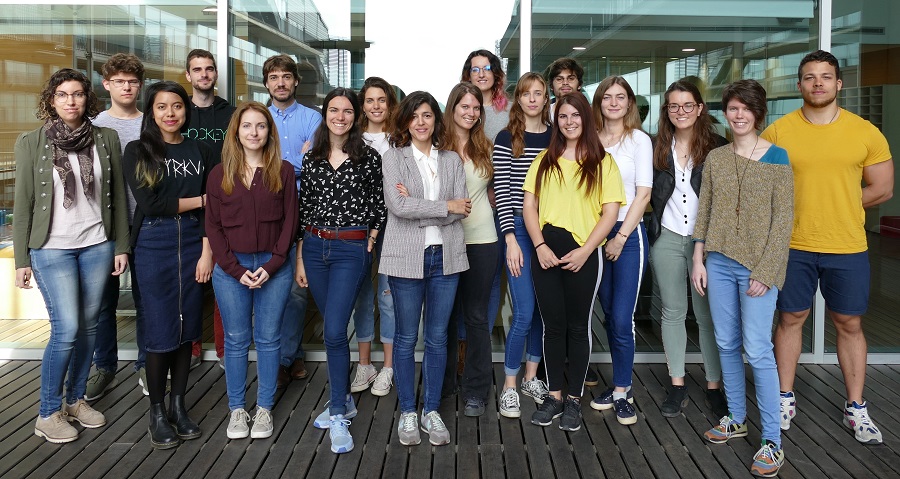
The Uni-large project, which is developing new technology capable of modifying the genome to address various diseases more safely and efficiently than other solutions, has been selected by the Caixaimpulse Consolidate programme to speed up its development. This initiative of “la Caixa”and Caixa Capital Risc will provide until 300,000 euros of funding and advice to four innovative projects in the field of health that have emerged in universities, hospitals and research centres in Spain and Portugal. The purpose of the grant is to help technologies reach maturity to drive them to the investment phase.
Uni-large is led by Marc Güell, principal investigator of the Translational Synthetic Biology Research Group at the Department of Experimental and Health Sciences (DCEXS) at UPF. It aims to create technology that serves to treat genetic diseases and some cancers arising from gene malfunction (such as leukaemia, for example). Uni-large proposes adding a copy in good condition of the damaged gene to the genome of the patient so that it regains its normal function and the disease remits. UPF has protected this invention with a patent application.
It aims to create technology that serves to treat genetic diseases and some cancers arising from gene malfunction.
Currently, the project team is investigating the usefulness of its gene editing technology in the treatment of type 1A (MDC1A) congenital muscular dystrophy, a hereditary disease for which there is no treatment. This is the most common type of congenital muscular dystrophy, causing progressive weakness and the loss of muscle mass.
Güell highlights three advantages of Uni-large. On the one hand, its “universality”: other gene editing techniques such as the CRISPR method, could correct individual mutations of each patient, while the new proposal would help all patients with a given disease. Moreover, it has safety reasons in its favour: “with CRISPR, you have to make a cut in the genome to repair the mutation and this can cause accidents such as the loss or breakage of chromosomes, whereas our technology does not cut, we just attach a gene”, which would prevent risks. Finally, Güell stresses the effectiveness of the method, especially for diseases like MDC1A where “the gene involved is very large, and in these cases, with other technologies, repairs are less efficient”.
The programme will provide funding to complete project development, and also advice from experts who will provide support for the drafting of valorization and commercialization plans.
This first edition of the Caixaimpulse Consolidate programme will provide UPF researchers with until 300,000 euros, which will be used to complete project development, and also advice from experts who will provide support for the drafting of valorization and commercialization plans. The scientists aim to take all the necessary steps to make the project commercially viable, taking it to an “advanced preclinical phase” in 2022.
“Exceptional” support
Güell shows his “immense gratitude” for having the obtained the grant and believes it will have a “major impact” on the development of Uni-large: “now, more than ever, we need this help because we are in a fairly advanced stage for a scientific project, but we are not as advanced as most of the projects receiving investment; hence, having this exceptional support is highly valuable and will enable us to work to reach patients as soon as possible”, he assesses.
In 2018, Uni-large was one of the projects selected by the Caixaimpulse Validate programme, which supports research initiatives at an earlier stage of development. On that occasion, the project received guidance and was awarded 70,000 euros, which according to Güell proved “very important” to give impetus to the project.
Multimedia
Profiles of the protagonists:


Categories:
SDG - Sustainable Development Goals:
Els ODS a la UPFContact
Related Assets

Catalan government
Catalan development cooperation aims to help prevent and respond to emergency situations. This page explains how you can collaborate on the provision of foreign aid both in general and to specific regions.

European Commission
Through cooperation and assistance programmes, the European Commission offers humanitarian aid and coordinates efforts with other international actors to promote peace and stability in war-torn regions.

Oxfam Intermón
Oxfam Intermón works in 90 countries. They have launched a fundraising campaign, which is more necessary than ever, given the magnitude of today’s wars. The NGO is also sponsoring a campaign to collect signatures to call for a ceasefire in Gaza.

Doctors Without Borders (MSF) is a medical-humanitarian action organization that provides assistance in 70 countries to people threatened by armed conflicts, violence, epidemics or neglected diseases, natural disasters and exclusion from medical care. They have also promoted a campaign to collect signatures to ask for a ceasefire in Gaza.
Red Cross
The Red Cross also provides emergency humanitarian aid in regions in crisis.

Legal Clinic
The UPF Legal Clinic regularly holds talks and roundtables on the protection of human rights in crisis regions.

Libraries Without Borders
The Libraries Without Borders programme, sponsored by the Catalan Development Cooperation Agency (ACCD), offers Catalan public library patrons knowledge and insight into situations of human rights violations and provides resources to take action.
Council for At-Risk Academics
The Council for At-Risk Academics, in partnership with universities and higher education institutions, provides urgently-needed help to academics in immediate danger, those forced into exile, and many who choose to work on in their home countries despite serious risks.