The effects of “anti-gender” policies are persistent and affect the people who suffer them deeply, according to a study led by UPF
The effects of “anti-gender” policies are persistent and affect the people who suffer them deeply, according to a study led by UPF
The effects of “anti-gender” policies are persistent and affect the people who suffer them deeply, according to a study led by UPF
A report by the European research project RESIST reveals the experience of confronting “anti-gender” policies and discourse and analyses the modalities of everyday resistance in Spain, specifically focusing on Catalonia and the Basque Country. The study sets out how 33 academics, activists, politicians, intellectuals and members of the public experience, negotiate and resist attacks related to their identities, lives, politics and work environment. In addition to being responsible for the case study of the RESIST project for Spain, UPF is the coordinator of the report for European, focusing on eight different countries and people who are in exile.
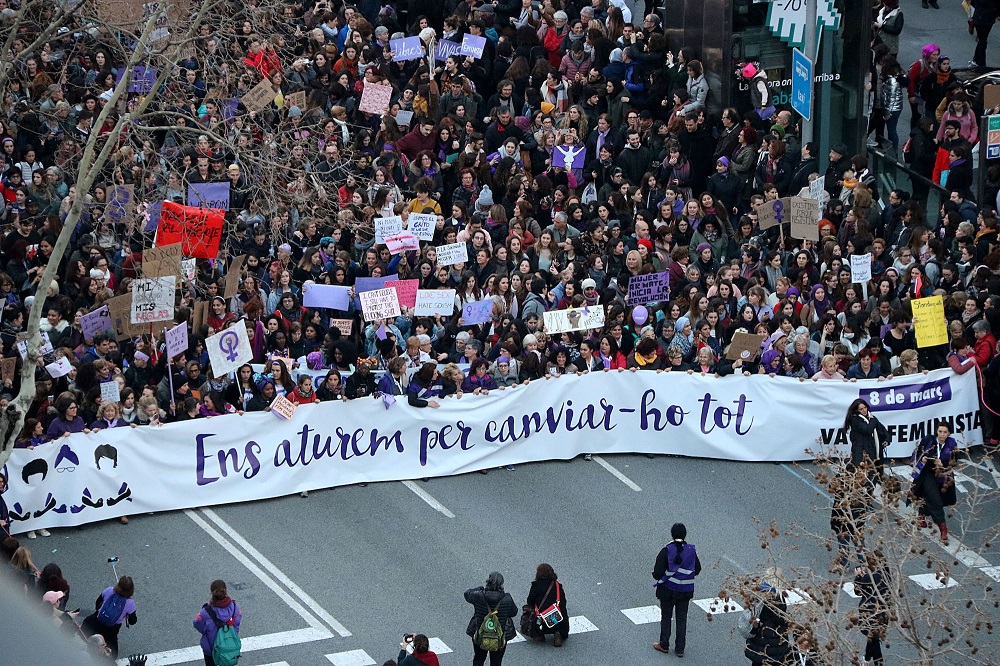
In the last ten years, Spain has seen significant advances in feminist and LGBTI rights, with the entry of the feminist movement to institutions as well as important political milestones, such as the creation of the Ministry of Equality and progressive legislation, headed by the Ley Trans (Trans Act) and the Solo Sí Es Sí (Only Yes means Yes) law. Meanwhile, the Government of Catalonia has created its own Ministry of Equality and Feminisms.
Despite this favourable context, these advances have been accompanied by intensified aggressiveness and belligerence of “anti-gender” rhetoric, with the rise of far-right political entities. This has led to a persistence of gender-based violence, social, political and economic inequalities, as well as constant discrimination of and violence towards LGBTI people.
A case study for Spain led by UPF, with data for Catalonia and the Basque Country, within the framework of the European project RESIST (Fostering Queer Feminist Intersectional Resistances against Transnational Anti-Gender Politics), highlights the persistent nature of “anti-gender” discourse and policies, the emotional and psychological effects on activists who suffer them, and the broader socio-political context that shapes these dynamics.
Maria Rodó: “Although it is difficult to separate ‘anti-gender’ violence from other everyday forms of sexist, homophobic, transphobic and racist discrimination, what is clear is that the phenomenon of 'anti-gender’ violence takes place in a concrete way, with a lot of aggressiveness, and that it has consequences for the lives of the people who suffer it”
The study, led by Maria Rodó, a researcher at the UPF Department of Political and Social Sciences and director of the GRETA Research Group, accompanied by Leon Freude, a postdoctoral researcher, provides the testimony and experiences of 33 academics, activists, politicians, intellectuals and members of the public, established in Catalonia and in the Basque Country, through twelve individual interviews and four focus groups.
The analysis identifies that the political nature of “anti-gender” attacks is deliberate and intentionally seeks to achieve political ends, with political violence that is experienced collectively. It largely affects public or visible figures of feminism, and also has a profound impact on society, especially people in marginalized positions.
Maria Rodó, director of RESIST in Spain, highlights the purpose of the attacks and the intersectional nature of this continuum of violence and discrimination: “Although it is difficult to separate ‘anti-gender’ violence from other everyday forms of sexist, homophobic, transphobic and racist discrimination, what is clear is that the phenomenon of 'anti-gender’ violence takes place in a concrete way, with a lot of aggressiveness, and that it has consequences for the lives of the people who suffer it”.
The study groups the results into ten different areas:
-“Anti-gender” is experienced as an old discourse with new forms: although the concept is not widely used, it is identified through the lived experience as being organized, aggressive and global.
-“Anti-gender” as political violence: attacks are experienced as a form of political violence against people who demonstrate their commitment to feminist, LGBTI and anti-racist principles or practices.
-Online violence and threats of violence are central to “anti-gender” experiences: insults, death and rape threats, and “doxing” are commonplace.
-“Anti-gender” appears as physical violence in public and private spaces: physical attacks and verbal abuse are reported, targeting feminist institutions, workplaces, homes and public spaces, ranging from intrusions and insults to threats and surveillance.
-The emotional dimension of “anti-gender” effects: a general feeling of fear of attacks and harm is coupled with the exhaustion of dealing with “anti-gender” in everyday life.
-“Anti-gender” changes the behaviour of those affected: the real change in behaviour arising from political violence involves avoiding and ceasing to go to certain places, moderating discourse and silencing.
-Self-defence and solidarity as responses to cope with defencelessness: the absence of legislation and policy frameworks to protect vulnerable people from attacks reinforces the need to seek autonomous means of self-defence and solidarity.
-The creation of bubbles for liveable lives: this creation of bubbles, that is, safe spaces where people can live without having to deal with “anti-gender”, is seen as one of the main strategies to live liveable lives.
-People create many forms of active and organized resistance, from local to global: ranging from boycotting targeted campaigns, digital protection strategies, or starting a dialogue to sway potential “anti-gender” actors, among others.
-“No passaran” (they shall not pass): feminist public figures persistently resist: despite the attacks they suffer, they remain committed and fearless and use their influence to resist and continue their work.
UPF, coordinator of the RESIST European report
The study is part of a broader RESIST report (the second since the project began in 2022) that includes nine case studies from eight European countries (in addition to Spain, Belarus, France, Germany, Greece, Ireland, Poland, and Switzerland) and people in exile. This transnational report examines the consequences of “anti-gender” mobilizations, discourse and policies on affected feminist and LGBTIQ+ individuals and groups, while highlighting the responses they offer to address them.
The transnational report is based on qualitative data collected from 254 people, including academics, journalists and activists, through 104 interviews and 36 focus groups conducted between January and May 2024. The results, even in societies perceived as “progressive”, show a prevalence of verbal attacks, systemic discrimination and political violence, especially in public spaces and on social networks, as well as various forms of resistance deployed by individuals and groups who are affected.
This violence contributes to the marginalization of the people involved, and its recognition is hindered by legal and administrative obstacles, in addition to a lack of institutional support.
According to the report, “Despite the widespread nature of ‘anti-gender‘ attacks, feminists and LGBTIQ+ people do not see themselves as mere passive victims. They are actively engaged in actions aimed at challenging these discourses and policies, while seeking to create safer and more liveable spaces”.
On 23 October, the online meeting will take place to present the conclusions of the second “Work Package” (WP2), which focuses on creating new knowledge concerning the effects of “anti-gender” policy; in daily life and forms of resistance, coordinated by Maria Rodó, and with the involvement of the different RESIST project member institutions.